Showing posts with label Budget Speech. Show all posts

Thursday, 22 February 2018

Now we Grow


To market to market to buy a fat pig. It was budget day yesterday, which made many people nervous. Back in the days of Trevor Manual, the anticipation was around how big your tax cut would be. The market reacted favourably to the budget, with the All-share swinging from red to green and our bonds dropping below 8% for the first time in three years (read 'before Nenegate'). The reason for the positive reaction from the equity and bond market is due to the government showing they are willing to do what needs to be done by raising VAT.

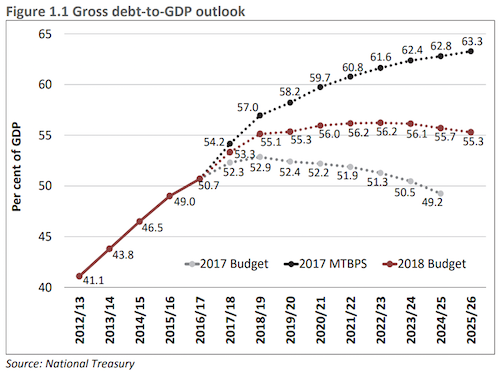
Step one has been completed, we have avoided a debt downgrade. There is very little room to raise taxes further. Going forward, the government needs to be more effective and SOE's need to send corrupt employees to prison. Let's not kid ourselves though, there is still a monster hole in our budget. We desperately need growth, to get back to a balanced budget and to bring our debt to GDP ratio under control.


A VAT increase means less money for both rich and poor. The reality however is if we did not have a VAT increase, we would as a nation be in an even worse position down the line. A debt downgrade and potential bailout from the IMF won't stimulate the economy. Zero economic growth hits the poor the hardest.

An unintended consequence of raising VAT or a tax on consumption, may be increased savings. There are studies that indicate taxing consumption, leads to less consumption and higher savings. As you can imagine though, trying to predict people's spending habits is fraught with assumptions.

Market Scorecard. It was a very mixed day for US markets yesterday. Things were going along swimmingly until the Fed minutes were released, then all fall down. The Fed noted that the US economy is in its best shape since the crisis. What the market heard was that there are going to be more interest rate hikes than currently assumed. The Dow was down 0.67%, the S&P 500 was down 0.55%, the Nasdaq was down 0.22%, and the All-share was up 1.17%.


Linkfest, lap it up

One thing, from Paul

One of our core holdings in New York, Priceline, is changing its name to Booking Holdings. The company will begin trading under a new ticker symbol on the NASDAQ: BKNG from February 27. Remember that the group is made up of these six primary brands: Booking.com, priceline.com, KAYAK, agoda.com, Rentalcars.com and OpenTable.


The CEO Glenn Fogel said yesterday, "Over the last two decades, our business has expanded from just priceline.com, operating solely in the United States, into six primary brands with headquarters around the globe, operating in more than 220 countries and territories in over 40 languages, fulfilling one unified mission of helping people experience the world. Today, our largest brand is Booking.com, which has more than 1.5 million properties, averages over one million bookings per day and produces a significant majority of Booking Holdings' gross bookings and operating profit."

I approve of this kind of thing! Investors like simple names, simple business models and simple corporate structures. Some of my favourite companies have names made up of letters that you can count on both hands. Like Amazon, Netflix, Discovery, Google, Aspen, Naspers, etc. Oh, and Vestact too!


Michael's Musings

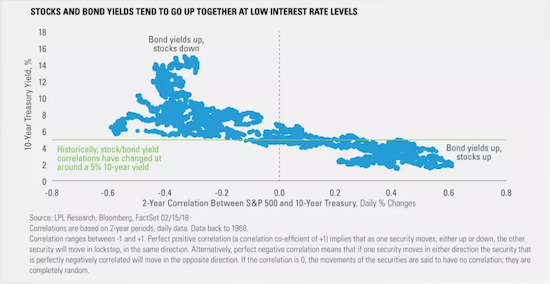
With all the concern about rising interest rates, what does history tell us about how markets react? It seems that when interest rates come off a low base, rising interest rates are coupled with higher stock returns. It is only when interest rates are above 5% that an increase in rates has a significant negative impact on the stock market. History is not the future, interesting numbers none the less - Are We Out of the Woods Yet?.


How can a disease that requires an inexpensive shot, be returning ? - The return of measles in Europe is "a tragedy we simply cannot accept"


Home again, home again, jiggety-jog. After the finish for US markets, it is no surprise that the Alsi is lower this morning. The prospect of higher interest rates from the Fed has also strengthened the Dollar, currently we are at $/R 11.66. Data out later today is GDP from the UK, the expectation is for YoY growth of 1.5%.


Sent to you by Team Vestact.

Email us

Follow Michael, Byron, Bright and Paul on Twitter

078 533 1063

Thursday, 25 February 2016

On a Budget


"Whilst every economist would have worked feverishly on the budget and their summaries, and what it may mean ahead, perhaps the cheerfulness of the recovery leading to higher collections is a little overdone. Treasury growth forecasts are more rosy than those of the IMF, Michael points out."


To market to market to buy a fat pig The Vestact budget special is below. We did our best. We are equity guys. So markets, and specifically equities markets are important to us and our clients, and whist the budget impacts on people and their ability to spend freely (or not), that filters through to companies. Companies work around regulation. I was snooping yesterday around the history of taxation, Chinese written literature (and the preservation thereof) is around 3000 years old, there is of course references to taxation there. The word only appears in english literature officially around the 14th century. Augustus of Rome, you have him to thank for inheritance tax, Julius Caesar, you have him to thank for sales tax, or VAT as we know it here. Benjamin Franklin said you can be certain of death and taxes, his reward was to find his face (and completely awful hairstyle) on the 100 Dollar bills. What kind of hairstyle is that sports lovers?

Our Rand weakened after the budget speech sending markets better on the day, stocks still closed down nearly 0.9 percent. Sliders (not the burger kind) included Anglo American, down over ten percent on the day, BHP Billiton also fell sharply, Glencore fell over ten percent. In the winners column were the precious metals stocks, GoldFields and AngloGold Ashanti were up over ten percent. Is there an instrument that measures volatility on the commodity producers? Jeepers, that thing would be on fire.

Stocks across the world, in New York, New York, traded from the depths of despair to much higher on the session, tech stocks closed the session up 0.87 percent after all was said and done. I said (on the very exclusive Vestact WhatsApp group) that I was researching the correlation between rising oil prices and Facebook. I was of course being sarcastic, a terrible character trait apparently. The S&P 500 ended the day up 0.44 percent, with the Dow Jones Industrial up around one third of a percent.

The reason for the about turn in stocks was an oil price ramping up. At the same time as the market was turning and the oil price was increasing, an "alert" flashed up on my mobile screen, saying that oil could "crash" to 20 Dollars and stay there. Something like that. And then the oil price was increasing. JP Morgan reported some stresses in energy loans (JPMorgan Says Long-Term $25 Oil Means $1.5 Billion Reserve Boost), impacting their core business. You see, it has a knock on impact everywhere, lower energy prices. At the same time however, the wealth transfer into the hands of consumers globally is an excellent outcome. I always think that it would be better spent.

Across the seas this morning out East, Chinese stocks markets in Shanghai are getting smoked, down nearly 6 percent at one stage. Why? Small caps are getting trashed, the overnight repurchase rate jumped sharply, which is a sign of credit tightening. More cash and fewer shares this week please. Man, those markets are incredibly volatile, it is crazy. Government in that part of the world are willing to run a larger deficit, cutting corporate tax rates and encouraging investment. Sigh. Japanese stocks are up sharply, obviously in response to the strong US rally. US stock futures are mixed, slightly lower. Hey {insert sarcasm}, the oil price could swing stocks any old way today!


Vestact budget "special"

We know you are budgeted out. However .... it was budget day yesterday. Like we said, everyone hypes it up as the most important thing ever, ask them what they remember from last year and there is a whole lot of head scratching going on. It is almost like the non-farm payrolls number (that comes around every month), where the numbers and the data is so important, and then all of a sudden it is not. Although in fairness, this is seemingly a more important budget than before. Simply as a result of the outcome may be a ratings downgrade, and whilst we can sit here and say we don't really care that much for Moody's, Fitch and Standard & Poor's, the mandates of big bond funds are to buy and hold investment grade bonds, and if you are not there, you exclude potential buyers.

Whilst every economist would have worked feverishly on the budget and their summaries, and what it may mean ahead, perhaps the cheerfulness of the recovery leading to higher collections is a little overdone. Treasury growth forecasts are more rosy than those of the IMF, Michael points out. I am guessing that government (and most organisations for that matter) believe in their ability to score on the revenues front and contain their own costs at the same time. I did watch a few market commentators yesterday, talking about our own fiscal cliff and the like. The suggestion is that if we keep up the current borrowing pace and increases in social security and government employment (and costs of running big government), there will only be place for servicing interest and those other two items by 2026. Low growth = lower tax collection = revenue projections must be lowered = higher taxes to support big government = lower economic activities, then repeat the cycle.

I think what this budget has in it is no big tax increases, in an election year I would like to think that voters would be more sensitive to that. There is a "soda tax" to be implemented in due course and a tyre tax, I can't really understand that one. Higher house prices, those in excess of 10 million Rand see a transfer duty payable of a whopping 13 percent (up from 11, a new band here), the duty itself would buy you the average sized house in South Africa. When one thinks about it like that, it seems pretty hefty.

The best collection method, at the fuel pumps, saw a 30 cent hike. I still think that whilst it is not quite a user pay method, it is the best collection. You can't ask the petrol pump attendant to ignore the taxation part when you are filling up. The current levies and taxes (or the old one) was 423.33 cents up here on the highveld, an extra 30 cents, you do the math to see that it is comfortably ahead of inflation. In fact, as a motorist and someone who fills up, per litre you pay less than half for the actual basic fuel price. Up here in Gauteng we pay 12.15 ZAR for 93 Octane Unleaded fuel. (see Octane rating for your daily Chemistry lesson).

Herewith the breakdown, visually, via SAPIA. So there you go, now you know where cents go when you fill up.


OK, the other thing that I noticed was that State Owned Entities (SOE's) had assets valued (using what valuation, I am not too sure) at 1 trillion Rand with state guarantees on SOE debt of 467 billion Rand. There must of course be other debts associated with these entities. The speech pointed out that the value was 27 percent of GDP. Would you think that Transnet, SAA, Eskom, Denel, Safcol and Alexcor were all worth 1 trillion Rand? Ummmm .... not so sure, call me a cynic. Total government debt is projected to cross the 2 trillion Rand market for the first time next year, that is net government debt -> (according to the speech).

Here is where treasury expects to collect all of their taxes:


And here is how your taxes will be spent. The biggest component in the budget is education with basic education taking 15% of the budget and then servicing debt being the fasted growing expense going forward. A ratings downgrade would mean that the debt servicing expense will grow even faster.


Growth is the one component that will make or break the budget and solve a whole host of other social problems, the forecast for 3 years out is only 2.4%. Given that 20% of our GDP is from "Finance, real estate & business services", I would like to see government policies that set us up as a global services/skills centre. When multi-nationals look at South Africa we are still seen as a low cost centre, add to that some basic training, fast internet and less cumbersome labour laws and I think that we will see a stream of FDI. One way to address our very high youth unemployment.


Company corner

MTN released a statement yesterday which the market responded to in a Goldilocks way. Not the best via the website white labelling: MTN-update on fine imposed and cautionary renewal. In short, the company will make "without prejudice good faith" a payment of 250 million Dollars. At the unicorn rate (the official rate) that is 50 billion Naira, at the street rate i.e the real life rate of 370 Naira to the Dollar, that is equal to 92.5 billion Naira. I swear, you cannot make this up, National newspapers are talking about the parallel rate in Nigeria on their websites: Nigerians Shun Money Transfer Agencies as Exchange Rate Gap Widens, the quote:

"THIS DAY learnt that on advice of friends and family members in the country, Nigerians that live abroad now prefer to send dollar cash and other foreign currencies to the country, so that the beneficiary would be able to convert it at the black market rate at higher value. This, they do by giving the cash to anyone coming into the country to help them deliver to the beneficiaries."

I love the way that the newspaper learnt this. Friends and family taking part in the illicit trade of currency, the shock and horror of it all. What the article does point out is that Nigerians send back home around 21 billion Dollars a year, making it the 6th largest recipient of such diaspora remittances. Wow. To put this number into context, it is around 50 percent more than our entire education budget here in South Africa. If the rate of the Naira were to float freely, what impact would that have on the official inflation rate? And more importantly, what does this mean for MTN? I suspect that prices would adjust. And perhaps the country would get stronger inflows.

Anyhow, for our purposes, what does this actually mean? It means that MTN have accepted that there is likely to be some larger fine, and to appease the authorities and to come to a speedy conclusion, they have paid some money over. I guess this is progress, I suspect however until it is "solved" it will not be and there will still be an overhang of sorts. We continue to hold and monitor the situation, the poor share price underperformance is certainly testing the nerve of the most tenacious and patient "buy and hold" crowd.


Home again, home again, jiggety-jog. The Rand is weaker today, stocks are trading up sharply as a result of catchup, Discovery have results this morning, we will analyse this and report back. And of course the biggest news of the day for hipsters is that the Lumineers have pre released a song (called Ophelia) ahead of their whole album release on the 8th of April. Are you as excited as me? You bet yourself I am, that is my genre of music, even if I don't drink craft coffee or have a long beard. Byron is wearing a a borderline hipster shirt today. Talking Byron, wish him huge amounts of happiness and luck ahead of him getting married NEXT Saturday.


Sent to you by Sasha and Michael on behalf of team Vestact.

Email us

Follow Sasha, Michael, Byron, Bright and Paul on Twitter

078 533 1063
Thursday, 22 October 2015

Nene holds onto his chair


Vestact has a new number. It is a mobile number: 078 533 1063. Please record it and update your records accordingly. You can call us or SMS us, we will get back to you.


"A slowdown in economic activity equals lower tax collections. Which equals less options and not more. The minister was clear: "Without economic growth, revenue will not increase. Without revenue growth, expenditure cannot increase." Debt has piled up, government debt as a percentage to GDP is now 47 percent, having doubled since 2008. And that of course does not include State Owned Enterprises. There are many different methods to reduce debt, the first and most important in the long run is to increase economic activity"


To market to market to buy a fat pig. There was plenty of action happening away from the markets, most especially at the Parliament buildings in Cape Town where not only were the antics from the EFF becoming more predictable than Hashim Amla, rather the finance minister putting on a brave face and delivering a mid term budget speech that was tougher than any before. Outside on the street the police used heavy handed tactics to move students away, the students want to be heard, their grievances to be acknowledged by seemingly unsympathetic politicians. It is not for us to try and decide what is or isn't the right way.

The only question to ask is, as the pie is only so big, where do the students propose raising the necessary funds to make education more affordable? Or where do they propose taking the money from? UNISA fee structure looks more affordable than many other universities, plus you can earn work experience at the same time. Why not have more students here, ensuring that the model is much more scalable than any other, learning via correspondence? Pumping resources into regional studying centres to provide correspondence students with the necessary support? Sounds like a great stop gap measure.

From my very quick look at the fees of UNISA and fees of WITS, is it not a better option? Plus, part time jobs, student jobs can easily pay for the tuition and have some extra left over. These institutions are underfunded as it is, government is stretched and does not have the resources, that was quite clear in the Medium Term Budget Policy Statement delivered by Finance Minister Nhlanhla Nene yesterday.

A slowdown in economic activity equals lower tax collections. Which equals less options and not more. The minister was clear: "Without economic growth, revenue will not increase. Without revenue growth, expenditure cannot increase." Debt has piled up, government debt as a percentage to GDP is now 47 percent, having doubled since 2008. And that of course does not include State Owned Enterprises. There are many different methods to reduce debt, the first and most important in the long run is to increase economic activity to levels that mean collections rise and GDP rises at a much faster rate than debt.

In order to continue to meet our social obligations, there are 16.7 million recipients of government grants in South Africa, in the long run I am very sure all of these people receiving grants would love to be earning a whole lot more than currently. The only way that is going to happen is growing economic activity. Be more friendly to business and strange things start to happen. The best example that still exists for me is North and South Korea. You know the story, the one is rich, the one is dead poor and has an overreaching government and no civil liberties. And they both had the same starting point. All I am saying is that some economic models work, some don't. That ultimately is for the people to decide.

Away from things that are sensitive and away from matters that I don't understand, let us rather focus on Mr. Market, a "beast" that nobody is ever going to understand. Luckily for all of us, we don't need to even understand Mr. Market. We only need to understand the companies that we own. And even then, the recent events at Volkswagen, one of the most reliable manufacturers of any product on the planet has been tainted in ways that we don't quite comprehend. And what it means for the longer term vehicle consumption patterns. What really worries me in our platinum industry is whether people will say, OK, I can completely diminish my emissions by going with an electric vehicle. It may cost more for now, the cost of energy (and alternative energy supply is increasing) is lower over time, the vehicles themselves will get cheaper. That will mean less Platinum Group Metals consumption, no doubt.

After all was said and done the local market lifted off as a result of a weaker currency, perhaps it was the Dollar, I did see that the commodities complex dropped at about the same time. We closed up shop here on the local front up 0.22 percent, a smidgen away from 53 thousand points. Lonmin rose nearly five percent (it had been up over 15 percent at one stage) after the company announced drastic measure to raise capital (it looks like unless you follow your rights you are going to get diluted out of sight) and sweat really hard in order to save costs and survive this tricky period for producers. As we know, this is something that we should continue to follow closely.

Over the seas and far away, in New York, New York stocks sank in the second half of the session to close out over half a percent lower. Healthcare and energy stocks continued to feel the heat, I saw that Valeant was down another 20% on the session. Ever since "that tweet" from Hillary Clinton, most likely the next president of the US. Here it is:


In one month, Valeant is down nearly 50 percent. That is quite simply astonishing. This time it is a little more worrying for investors and patients alike, read here: Valeant Pharmaceuticals Intl Inc (VRX) Stock Tumbles 40%, Shares Halted After Analyst Report Trumpets 'Enron Part Deux'. All I can say is that there are some big names there, Bill Ackman included. Serious allegations from a short seller led the stock down heavily, a trading halt, Ackman stepped into the breach and said he had bought more shares. Another reminder that there is no such thing as a safe investment, this is a massive business (smaller now at 50 billion Dollars) with speciality drugs in a new part of the market. Citron versus Pershing, the winner takes all the spoils.


Linkfest, lap it up

Watches are one of those things that can be past from one generation to the next, something that can show wealth and can cost an arm and a leg - A Rare Look Inside Patek Philippe's Geneva Headquarters. Here is an inside look at one of the worlds top watch brands and the very fine details that watch makers need to focus on, you get an idea why they cost so much.

Generally when a conversation about how it is better for government to be smaller than bigger, the Scandinavian countries come up as a model society where big government has been good - 7 myths about Scandinavia's social democratic 'paradise'. The basic conclusion is that Scandinavian countries were already doing well socially before government started playing a more central role and the countries statistics seem to have dropped steadily as governments have played a bigger role.

As competition heats up in the retail space, companies brand's matter more than ever. The result is that more needs to be spent on building your brand, your image and do things outside of the retail space to bolster that brand - Apple To Raise China Solar Investment Fivefold with Climate Bid. It is always nice to be able to say that the company who you support, in turn supports the environment and makes the world a better place.

Humans are naturally cautious which can sometimes lead to being negative on the world as our default. The way this plays out is that people who make big statements about how the market is going to crash get far more air time over those who say things are just fine and will get better - Predictions No One Ever Makes. "What if the future is better thank we think?"


Home again, home again, jiggety-jog. European stocks are set to open lower, they are pointing that way, we would possibly follow suit. Asian stocks on balance are lower too, a few stand outs here are there, Aussie up, as is mainland China. China should start participating in rugby, they certainly would have the numbers to draw down on. Or cricket. Talking of which, our chaps are over in India today, trying to secure a series victory, that would be something. We can also look forward to many more results (companies that is) over the coming two weeks, next week being the busiest.


Sent to you by Sasha and Michael on behalf of team Vestact.

Email us

Follow Sasha, Byron and Michael on Twitter

078 533 1063