Showing posts with label OPEC. Show all posts

Tuesday, 19 September 2017

Until The Next High


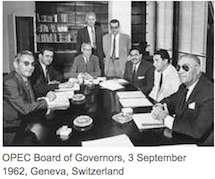
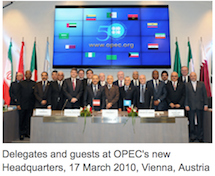
To market to market to buy a fat pig. Last week was the 57th birthday of OPEC, who were created at a conference in Baghdad in 1960. Here is a brief history of the organisation.


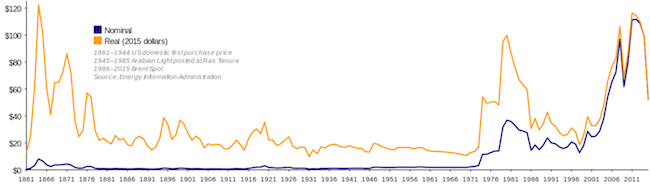
It is interesting to note that in its first 13 years, oil prices (WTI) were mostly flat at $3 a barrel. Then at the end of 1973, OPEC implemented an oil embargo against the nations they felt assisted Israel during the Yom Kippur War, prices almost quadrupled overnight.


Found at 1973 oil crisis

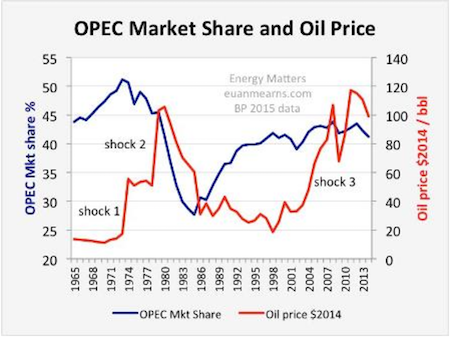
I have never been a fan of the cartel nature of the organisation, who would rather be labelled as a market and price stabiliser. I didn't know though, at forming there was another dominant force in the oil market, called the Seven Sisters controlling 85% of the oil reserves at the time. At the end of last year, OPEC said they controlled 81% of the globes oil reserves, the tables have turned. Even though fracking has taken off, OPEC still produces around 40% of annual production, see below how that number has changed over time. What will OPEC look like in the next few decades given how central oil is to certain countries and how quickly developed nations are going green?


Found at OPEC's $900 Billion Mistake


Yesterday there were fresh records for the Dow and S&P 500. How many more days of records do we need until people start to feel that records are boring and just part of what the market does? Locally, we crossed 56 000 points and are heading for 57 000 for the first time. Here is the scorecard, the Dow was up 0.28%, the S&P 500 was up 0.15%, the Nasdaq was up 0.1% and the All-share was up 0.73%. Interestingly, the list of JSE shares currently at 12-month lows is longer than the list of 12-month highs. Stocks on the wrong list include Life Healthcare, Netcare and Taste Holdings. Speaking of Taste, they are busy building a Starbucks next to our offices, when it opens I suspect people will be queueing into the street. At an all-time high is Richemont, up 34% since January.


Linkfest, lap it up

One thing, from Paul


Byron's Beats

As investors in the apparel sector I sometimes ask myself how much more innovation can be done in this sector. Well Nike have just answered my question. The latest NBA shirts have a chip inside the label which you can scan with your phone. Once you scan the chip you have access to stats, cheap tickets, discounted Nike shoes, Spotify playlists of certain players and more interactive features. Take a look at more details as well as a cool youtube clip in the article below titled How The NBA, Nike Partnership Leads To Smart, Connected Uniforms.


Michael's Musings

Ben Carlson talks about why he loves writing but more relevant to us is the reasons he loves the market - Why I Love Writing About theMarkets. One of the things he points out is how big global equity markets are; "On an average day, over 80 million shares trade hands in equity markets around the globe totalling more than $350 billion."

Millennials have been the talking point generation as of late, Gen Z are about to enter their 20's meaning their significance to companies is growing - Meet Generation Z, the 'millennials on steroids' who could lead the charge for change in the US.


Home again, home again, jiggety-jog. Asian markets are mixed this morning, Japanese stocks are up over 1% as they play catch up after being closed yesterday. The most important Asian stock, Tencent is up another 0.5% this morning so expect a green Naspers on our open.


Sent to you by Team Vestact.

Email us

Follow Michael, Byron, Bright and Paul on Twitter

078 533 1063

Friday, 26 May 2017

Brand Moats for Oats

"The company manufactures South African favourites that are found in most middle income households across the depth and breadth of the country, All Gold, Albany, Tastic, Fatti's and Moni's (did those brothers really exist, like Charles Glass?), Koo, Oros, Black Cat and of course the old favourite, Jungle Oats."


To market to market to buy a fat pig There was a whole ton of stuff going on yesterday. Results from Tiger Brands, which we will deal with in a moment, in the below segment and another slew of company news from the likes of Impala Platinum offering convertible bonds through 2022, to replace an existing program. The Foschni Group (TFG) were out with year end numbers, the stock sold off heavily through the day. The Massmart CEO was putting on a brave face against the backdrop of a tricky environment, the stock sold off really heavily. All retailers were "re-rated" alongside the rather glum sounding outlook.

The Massmart CEO spoke of green shoots being extinguished, in fact as follows: "The nascent signs that some or all of these positive influences were coming to bear were unfortunately washed away by the negative economic impact of political events in late March and April that culminated in two credit-rating downgrades." Green shoots washed away? I have seen pictures of old vines emerging from the dusty bowls of dams dried up in the Cape (Theewaterskloof dam in Villiersdorp), the language being used is almost the same as the pictures. See one below ->



Obliterated, parched, extinguished, the green shoots have disappeared, this is what Massmart CEO said. TFG looked a little better than that Massmart release. The Massmart folks writing that piece may well be up for a Pulitzer, or was it Guy Hayward himself? Check it out - CEO's AGM Statement.

The Easter sales period is always a moving target for businesses reporting quarterly or half year numbers to March, sometimes it is in, sometimes it is out. Sales are flat to lower. Jeepers, it is increasingly difficult out there, a crisis of confidence. So much so that the company has the following to say about the outlook for the balance of the year: "The current levels of political, business and consumer uncertainty make it difficult to provide any useful trading expectations for the remainder of the 2017 financial year, but we do not expect the SA consumer economy to show any noticeable improvement during this time." If you needed reminding ...... The next sales update from the company is expected at the end of June, in around 4 weeks time. Understandably the stock was sold off heavily, down six and nearly three-quarters of a percent by the close of business. Eish.

Another "event" happening was the OPEC meeting during the day. Byron was outraged that such a cartel still exists. I said that it would encourage humans to innovate and find better ways to remove their shackles and reliance on sellers that are intent on keeping a price at a certain level to balance their budgets. It just seems strange that you would "control" the supply to the users. Eventually humans will decide what is cheapest for them. Business responds in this manner, the higher the price, the greater the efficiencies (i.e. your vehicle will use less fuel). This graph below is the projected miles per gallon usage in a motor vehicle.
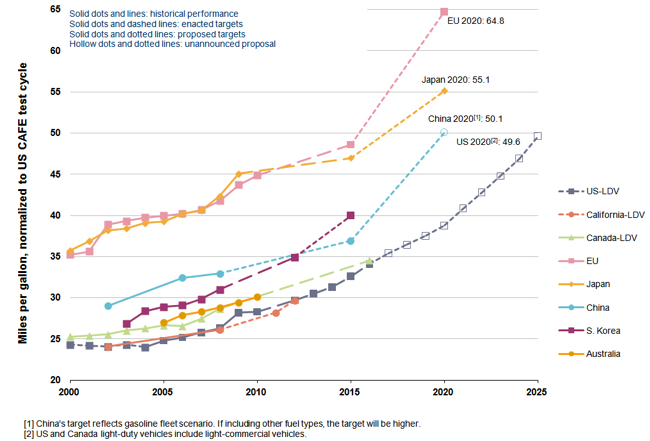


Whatever OPEC tried to achieve by sticking to quotas, does not seem to be working. At least in my mind. Oil prices tanked over five to six percent. If oil prices go up too much, users will adopt more and more on the EV (electric vehicle) front. As the battery technology improves markedly and that component becomes cheaper and cheaper, consumers will adopt cheaper EVs. As oil prices increased, engines will improve their usage. As fracking technology improves markedly, and the cost per barrel of extraction plunges (as it has), the supply meets the local US demand. Opec loses. Again. Fossil fuels ....... I am not too sure that it is a multi decade investment theme with any certainty.

If that was not enough for you, there was a Reserve Bank Monetary Policy committee (MPC) meeting yesterday - Statement of the Monetary Policy Committee - 25 May 2017. Inflation expectations in the forecasts look like they are "in the range", between 3-6 percent. In fact, the MPC suggest 5.5 percent inflation through 2019, in that sort of range. Growth prospects unfortunately (according to the MPC forecast) looks anaemic at best:
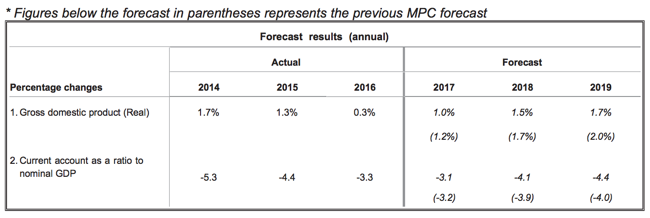


The MPC outlook, the last paragraph is a little like the Massmart assessment:

    "The MPC remains of the view that the current level of the repo rate is appropriate for now and that we are likely at the end of the tightening cycle. A reduction in rates would be possible should inflation continue to surprise on the downside and the forecast over the policy horizon be sustainably within the target range. However, in the current environment of high levels of uncertainty, the risks to the outlook could easily deteriorate, and derail the current favourable assessment."


Too much uncertainty that could derail the current favourable environment.


Company corner

Tiger Brands reported their half year numbers to March yesterday. I saw the CEO, who is now a year in the job on the box with the CFO, who has done some hard yards at that business. They were talking about how tough it has been to operate, suggesting that much unrest in South Africa has been logistically challenging at times. i.e., if a bakery needs to send their trucks out to deliver and roads are blocked, that means that there is an extra insuring cost to the company and by extension to you the shareholder. And ironically, in trying to recuperate the costs, staples prices would have to go up a little.

The company manufactures South African favourites that are found in most middle income households across the depth and breadth of the country, All Gold, Albany, Tastic, Fatti's and Moni's (did those brothers really exist, like Charles Glass?), Koo, Oros, Black Cat and of course the old favourite, Jungle Oats. The other major and well known household brands are Energade, Maynards and Beacon, Doom, Ingram's, Purity and Enterprise. Whilst these brands may not be in the larder of the serious banter, or in the fridge of said hipster eaters, for most middle class citizens, these represent the staples alongside protein sources and vegetables.

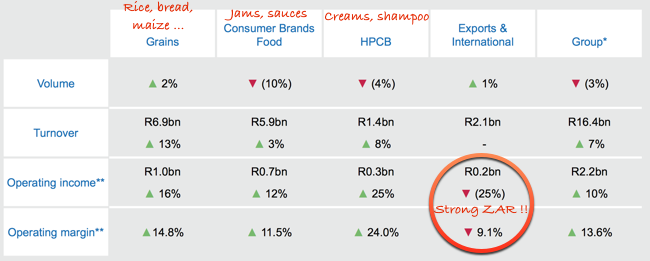
Group turnover for the period for continuing operations (they are in the process of selling various East African assets, one sold, one pending) increased 7 percent to 16.4 billion Rand. Operating income grew 10 percent to 2.2 billion Rand. The dividend was hiked 4 percent, bearing in mind that the new dividend tax is at the higher rate (20 percent as opposed to the older rate 15 percent). The company, through the watchful eye of CFO Noel Doyle, have managed to contain costs to below inflation (at least at a sales/distribution and marketing level). The main reasons that profits were flat for the period was as a result of a higher tax expense and a marginal loss (from a profit situation) from discontinued operations.

Here is a nice slide from the results that shows all the different divisions, I have tried my best to stick in the various divisions. See the impact of the much stronger Rand on the international business, which is the smallest revenue contributor.


How do we see the medium to long term prospects for this business? I quite enjoyed the part of one-year-in CEO Lawrence MacDougall who said:

    "Tiger Brands has defined its core as the manufacturing, marketing and distribution of everyday branded food to middle-income consumers. This already accounts for 70% of Tiger Brands' current sales. These consumers are a growing proportion of the South African market, are more brand loyal, have similar shopping destinations and utilise the media in a similar manner. Food is a large, attractive core that offers strong growth potential, allowing us to build on our resilient positions and good adjacencies."


We continue to hold and accumulate on weakness a quality business. One thing that I can always be sure of is that people will eat food. And keep themselves clean. And drink fluids. I am sure that Tiger will always have a business. Their brands are supreme quality, management is classy and is controlling costs in a tough environment. Buy and hold. There is a new strategy at Tiger, that they will focus on, it seems that they want to boost margins and be less a volumes business. I like that strategy, it will take many years to execute though.


Linkfest, lap it up

Is this a case of the "sins of the fathers" affecting the next generation? - If You Speak German, You're More Likely to Be a Penny Pincher. If you grow up in a household that has a strong savings culture, there is a good chance that you learn that same habit from your parents and then pass it on to your children.

If this comes to fruition it would be welcomed as an Alphabet shareholder. It is about time that the "other bets" division comes to the party given the huge amount of cash that the division chews through each quarter - Morgan Stanley: Alphabet could be sitting on a new $70 billion business


Home again, home again, jiggety-jog. Stocks locally are heading higher, having started lower! Mixed out there. Brazil, how crazy is that? Troops deployed .... phew. Venezuela, almost totally finished. As PM thatcher once said, the problem with socialism is that eventually you run out of other people's money (to spend).


Sent to you by Sasha, Byron and Michael on behalf of team Vestact.

Email us

Follow Sasha, Michael, Byron, Bright and Paul on Twitter

078 533 1063
Thursday, 1 December 2016

The $10 Billion Club

"Here we are in our market down at the Southern tip of Africa, and we believe that we have deep and liquid capital markets. We did a quick scan through of all of the stocks that have a local listing and have a market capitalisation of more than 10 billion Dollars (over 140 billion Rand). There is a grand total of 6. That is it sports lovers. Makes you think."


To market to market to buy a fat pig Yesterday was a funny old day with a whole lot going on. Analysis here on the political front, there was analysis of the SARS and Treasury release. I still am amazed that notwithstanding the economic quagmire, total taxes collected have increased by high single digits. If the economy was to turn and fire on all cylinders, a smaller and more efficient government were in place and we were getting bang for our buck, we would definitely not attract the negative attention of those ratings agencies. Pesky things, advising people on whether or not the ability to repay debt is "all good". Some may view them negatively and reactionary, I am sure that their internal structures were forced to have a deep and dark look in the mirror post the financial crisis.

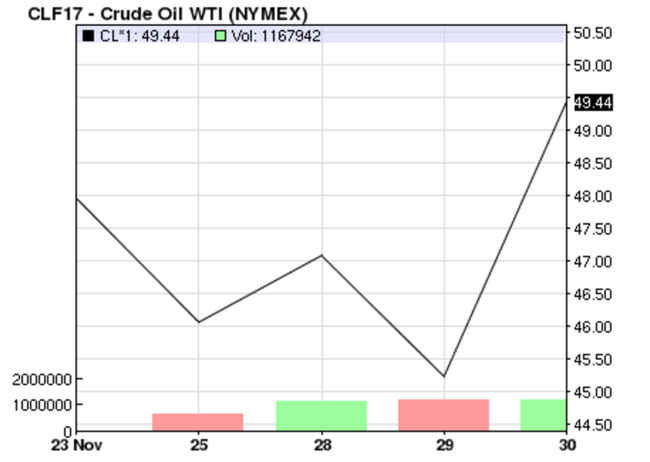
Yet that was not the main story of the day, by a long, long shot. It was all about the oil cartel folks meeting in Vienna (Austria is not an OPEC member) to discuss output cuts. And the moves then in oil prices were something to behold, perhaps the shorts were being squeezed out of sight, who knows, right? The story broke when the Iranian oil minister was jostling his way through tens of journalists at a hotel or convention centre and suggested a deal was close. In the ensuing scrum, oil traders scrambled for direction, and it was one way traffic! Herewith an average looking (hey, it is free!) graph of all the action on the day, relative to the last 7 days, from the NYMEX website - WTI (NYMEX) Price


Here is the official announcement that came a little later in the day, sending the oil price up ten percent at some stage, the presser note is simply titled - Agreement. It sets out all the targeted cuts for the members, all but Iran, who can increase production marginally. It is an agreement to cut production by 1.2 million barrels (the release actually says "by around") for a period of six months. It could be extended by another six months, if needs be. What is also important here is that the Russians are working with OPEC - "This agreement has been reached following extensive consultations and understanding reached with key non-OPEC countries, including the Russian Federation that they contribute by a reduction of 600 tb/d production."

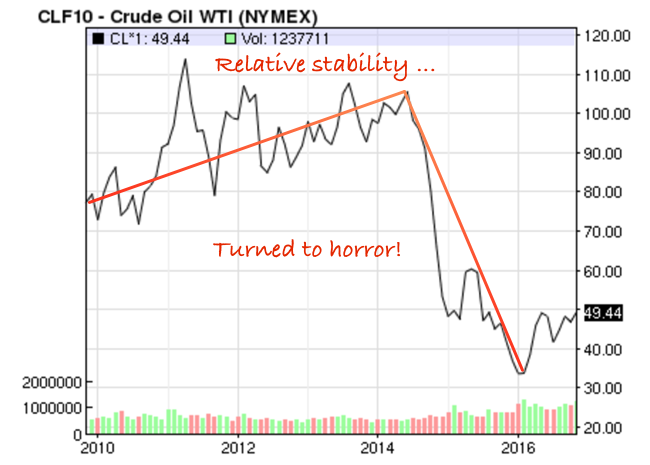
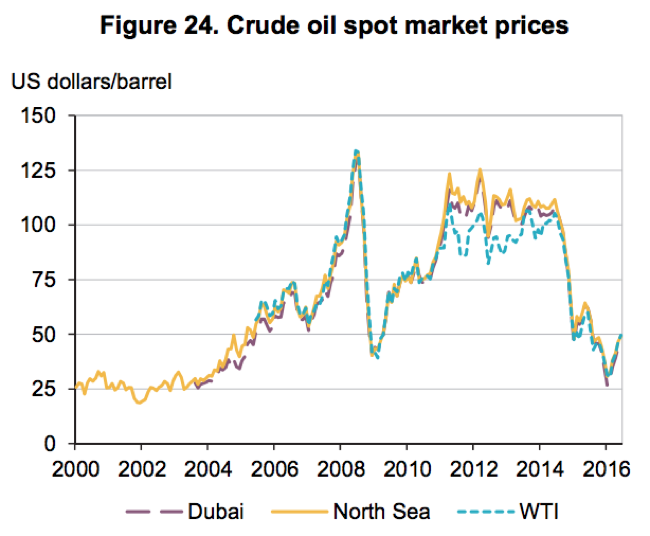
So why is all of this being done? Why is OPEC deciding that they must cut production? It is best summed up in a single graphic, a seven year oil price graph -


When these countries of OPEC, hugely reliant on oil exports to balance budgets and provide essential services to their people suddenly watched a horror show unfold, they were essentially powerless. Private enterprise, the frackers and the Russians had ramped up production significantly. Equally, some of the OPEC members themselves would not stick to production levels. And therein lies the answers to whether this works or not, budget constraints.

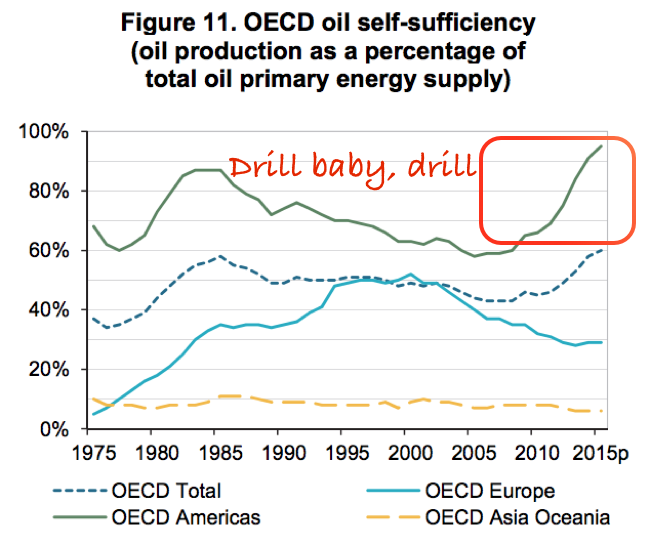
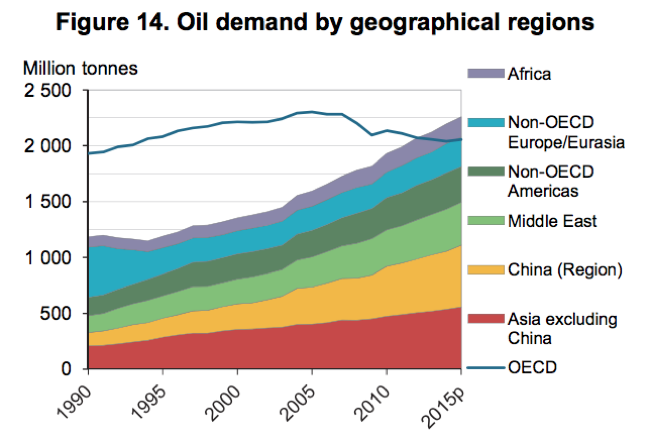
A bit of background, from the International Energy Agency - Key Oil Trends. Excerpt from: Oil information. So first, this is the OECD countries by region that are self sufficient, as you can see, North America as a result of alternative extraction methods (fracking) are becoming increasingly able to fill any void:


Lastly, this may not matter too much, the US is a huge user of oil, the biggest users have emerged as China and the rest of Asia over the last 25 years. The other regions have become less relevant to the overall mix.


Whilst this is a HUGE story yesterday, perhaps all of this is best put into context with a longer dated oil price graph. This is from way back when oil prices were half of what they are now, and just represents how hard it has been for these countries, that are extremely reliant on elevated prices to deliver meaningful change to their people. Diversification is key, and more people like Harold Hamm will be big benefactors as these countries cut production.


By the way, Harold Hamm on paper added 3 billion Dollars yesterday. This Bloomberg story confirms what we have been suggesting - Texas Shale Is Big Winner as OPEC Deal Brightens Oil Outlook.


Stocks in New York, New York, armed with this big news (and the selection of new Trump administration finance people) saw stocks as a collective down one quarter of a percent (the broader market S&P 500), with the Dow Jones Industrial Average up 0.01 percent. Tech stocks sank, the nerds of NASDAQ lost over a percent on the day. Facebook, Alphabet and Microsoft as well as Amazon all fell pretty sharply, all the oil businesses ramped up sharply. Petrobras was up over ten percent, Royal Dutch Shell ramped up over four and a half percent. Banks also "did well", Bank of America was up four and a half percent too. Wells Fargo added just over two percent. Energy as a collective added nearly five percent, with some huge moves in some minors, businesses with huge losses. Seems like a big knee jerk trade last evening.


Locally we had another mixed bag. There is an interesting pattern (humans are great at picking that up) in that we start well and then the EM trade comes later in the day here, we sell off. Yesterday stocks locally ended one-tenth of a percent higher. Understandably Sasol was at the top of the pile in the majors, up nearly 5 percent. Here is an amazing statistic. Here we are in our market down at the Southern tip of Africa, and we believe that we have deep and liquid capital markets. We did a quick scan through of all of the stocks that have a local listing and have a market capitalisation of more than 10 billion Dollars (over 140 billion Rand). There is a grand total of 6. That is it sports lovers. Makes you think.


Linkfest, lap it up

It seems that politics is moving towards the extreme edges, where to solve problems one camp is arguing that governments are the solution and the other camp is arguing that free markets are the way (but only behind trade barriers, walls and labour flow restrictions?) - Capital and Capitalism. The reality is that governments are inefficient, so less is normally better. Having said that, we don't live in a perfect world, we don't have perfect information and perfect flow of capital and labour. The result is that governments are needed to help fill the gaps and help level the playing field of opportunities. I think like most things in life, a balance normally works best.

The one item that is synonyms with Mc Donald's is their big mac, which almost never made it out of one franchises kitchen - Jim Delligatti, Big Mac Inventor at McDonald's Chain, Dies at 98

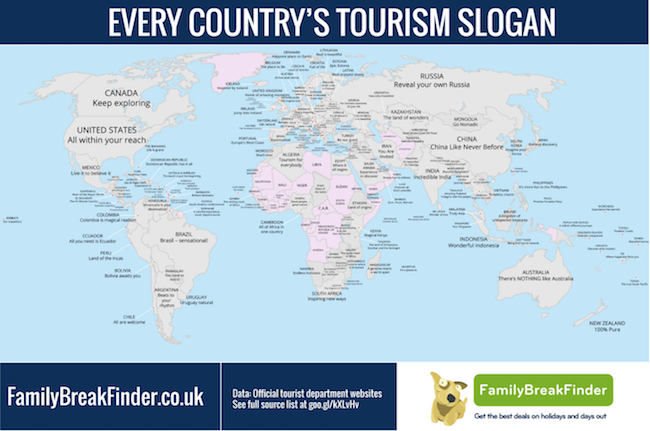
Here is a cool map - Map Shows Every Country's Tourism Slogan


Home again, home again, jiggety-jog. Stocks across Asia are better, stocks here have started better, how many times have we said that over the last couple of weeks? We certainly haven't been the benefactor of the new president elect in the US, emerging markets have been under loved.


Sent to you by Sasha, Byron and Michael on behalf of team Vestact.

Email us

Follow Sasha, Michael, Byron, Bright and Paul on Twitter

078 533 1063