Thursday, 9 November 2017

Price Flat Lined


To market to market to buy a fat pig. It is one year on since we found out that Trump was going to be the next president of the US. In a speech he gave this morning in China, he took the opportunity to remind people of the 25% rise in the stock market over the last year, which has created $5.5 trillion in wealth. If he is taking credit for these record highs, what will he do when the next market crash happens?

It still hasn't fully sunk in that he is president, it probably won't for his whole 4-year term. I remember watching the US futures market tank over 4% on the news of his victory, a very temporary decline. By the time their market opened, things were well in the green and if memory serves the market was up around 2% on the close.

Market Scorecard. It was another quiet day on Wall Street, the market there actually started the day off in the red. The Dow was up 0.03%, the S&P 500 was up 0.14%, the Nasdaq was up 0.32% and the All-share was down 0.17%.

The saying 'when it rains, it pours', applies to Steinhoff at the moment; Steinhoff shares down on allegations of $1bn non-disclosures in Europe. The company released a SENS yesterday afternoon saying that they have complied with all regulations; time will tell if they are investigated around the allegations. Dr Wiese bought R120 million worth of shares last week, which tells you what he thinks of the current value being offered in the stock.


Company corner

Byron's Beats

Many people do not know Priceline. The name of the of the company is not synonymous with it's strongest brands. In reality, this is an $80 billion online travel booking behemoth. Who better to explain what they do than the company itself. The following comes from their latest results report.
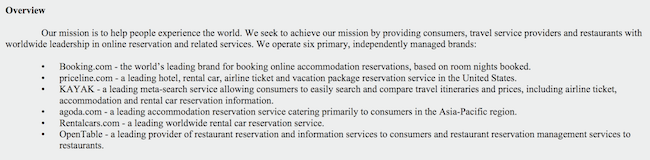


Incredibly, out of the brands mentioned above, 88% of Priceline's profits come from outside of the US Expedia (a competitor) is the biggest US player. Booking.com is Priceline's largest brand with nearly 1.5 million listed properties. The company reported third-quarter results yesterday which were horribly received by the market. The stock fell 13.5%, ouch. Let's take a closer look.
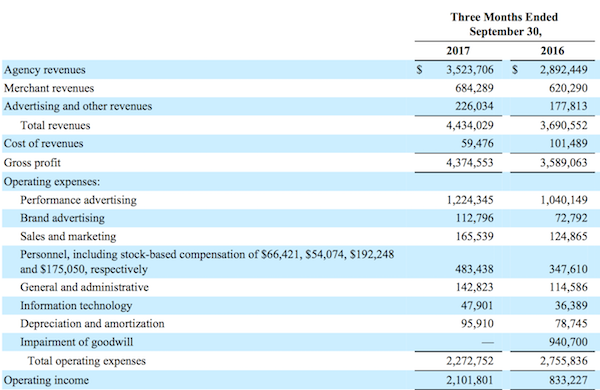


Agency revenues are travel related transactions where the group does not facilitate the payment. For example, if your guest books a hotel room via booking.com but pays directly to the hotel.

Merchant Revenues are derived when the payment is actually facilitated by the group.

Advertising and other revenues are derived mostly from KAYAK which is big referral system used by travel agents. OpenTable the restaurant booking service is included here.

The numbers were pretty good and beat expectations. Bookings increased by 19% to $22bn. Room nights increased 19%, while gross profits increased 22%. Earnings for the full year are expected to come in at $71 a share. That puts the stock at 23.5 times earnings after the share price drop. Not expensive at all for a fast growing tech stock with low capital costs and high profits.

Why did the share price fall so much then? It all relates to costs going forward. Sound familiar? I remember when Facebook shares fell heavily last year when management stated that margins would come down because of reinvestment in the business. Short term "investors" are fickle.

As you can see from the numbers above, their biggest cost is advertising. A vast majority of that actually goes to Google. Priceline is trying to take on Airbnb in the smaller home market. The problem with this market is that there are fewer rooms per advert. One advert for a 500 room hotel covers 500 rooms. An advert for an exclusive guest house with three rooms, will cost the same but result in fewer bookings. Priceline plans on spending big on advertising to continue growing their business; this will include TV commercials in over 30 countries in 2018. Those increased costs, pushed forward earnings guidance down and is why the share price took so much heat.

We see this short-term pullback as great buying opportunity into a world class business.


Linkfest, lap it up

Michael's Musings

Yesterday we spoke about Tencent's new listing of China Literature, which created about $6 billion in value for Tencent. There is another listing coming to market this week from the Tencent stable, their search engine Sogou - Tencent Could Repeat Its China Literature Trick.

Sticking with Tencent, it was revealed yesterday that they have at least a 12% stake in Snap Inc - The Chinese giant behind WeChat, Tencent, is taking a 10% stake in Snap. This means that owning Naspers means that you also have a small stake in Tesla and now Snap.

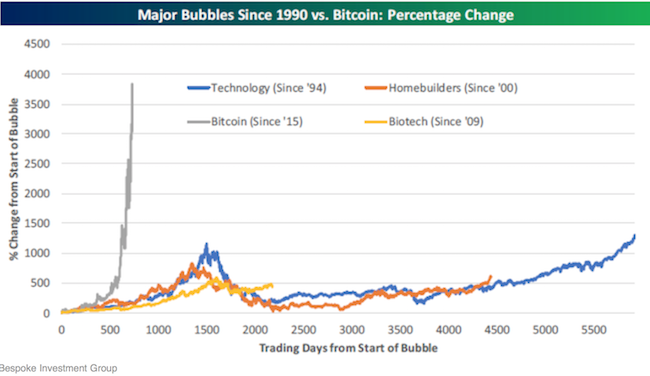
Are you brave enough to buy Bitcoin now? I avoided it when it was below $1 000, so I am definitely avoiding it above $7 000 - Bitcoin's 'bubble' is unlike anything we've seen recently. The price action around cryptocurrencies is fascinating; time will tell where these things settle.


Bright's Banter

What I am reading this morning:

- Gupta Leaks Are Finally Public
- In Saudi Desert Worlds Business Leaders Follow The Money
- Companies To Watch In 2018
- Russian Influence Reached 126 Million Through Facebook Alone
- What Could Apple Buy With Its Offshore Cash

Infographic: What Could Apple Buy With Its Offshore Cash?  | Statista You will find more statistics at Statista


Home again, home again, jiggety-jog. Data out today, pertinent to us in South Africa is our Manufacturing Production, Mining Production and Gold Production numbers. Moving across the ocean, it is Thursday so that means Initial Jobless claims from the US. Lastly, Apple finished off yesterday's session with a closing value above $900 billion for the first time! Onwards and upwards.


Sent to you by Team Vestact.

Email us

Follow Michael, Byron, Bright and Paul on Twitter

078 533 1063

Wednesday, 8 November 2017

Sweet Apple Juice


To market to market to buy a fat pig. This week marks 100 years since the Bolsheviks seised control of Russia in the October Revolution. Depending on what calendar you use it either took place on the 25 October or the 7 November. Part of the process to consolidate power included a 5-year Russian civil war and the basic eradication of the bourgeoisie class through what was known as the Red Terror. The irony is that Lenin came from a wealthy middle-class family.

The Wall Street Journal had this to say (100 Years of Communism-and 100 Million Dead):

    "If we add to this list the deaths caused by communist regimes that the Soviet Union created and supported—including those in Eastern Europe, China, Cuba, North Korea, Vietnam and Cambodia—the total number of victims is closer to 100 million. That makes communism the greatest catastrophe in human history."


I'm not sure if I would go as far as saying 'the greatest catastrophe in human history', there are a number of contenders for the title. History has shown though that communism has not worked and the system generally ends up spreading misery instead of lifting people out of poverty.

Market scorecard. The Dow set another intra-day high on the open yesterday, which thanks to daylight saving is at 16:30 our time instead of last week's 15:30. The Dow was up 0.04%, the S&P 500 was down 0.02%, the Nasdaq was down 0.27% and the All-share was up 0.35%. Brait released a trading statement after the market closed, showing that their NAV sits in a range of R65.50 and R67.50, representing a 12% decrease since their last NAV release. The New Look asset, which is the main reason for the shareholder pain recently, now has a zero value on their books. We will get the exact number next week Wednesday. The share is up around 5% this morning.


Company corner

Byron's Beats

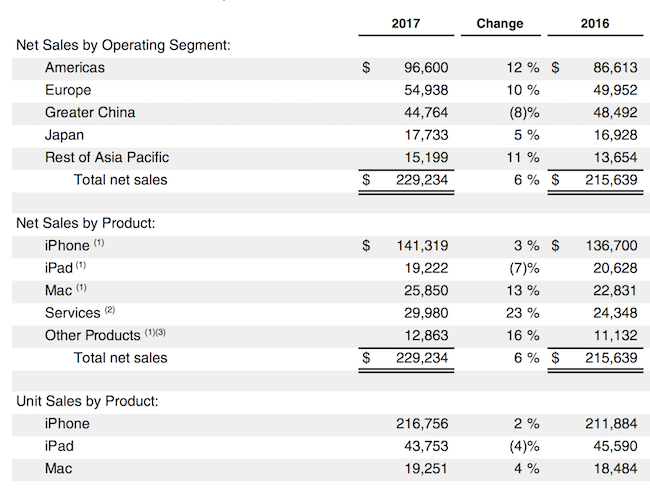
It was a good year for Apple according to the stock market. The share price is up 60% from precisely 1-year ago. When those full-year results were released in November 2016 there were big concerns about a lack of innovation and how the jewel of the crown, the iPhone, was losing its shine. On the 2nd of November this year Apple released its full-year numbers for the year ending 30 September 2017, which painted a very different picture to these "expectations" from a year ago.

It sure was a busy year. Sales in China were disappointing, however everywhere else seemed to flourish. A stronger dollar had a negative impact on the numbers. Numerous fines and legal battles also took its toll on the biggest listed company in the world. The company announced an increase in its capital return program to $300 billion through to March 2019. Share repurchases will be responsible for $210 billion of that.

Sales increased by 6% to $229 billion. The graphic below shows you the geographic and product mix of these sales.


As you can see, sales in the Americas were solid (42% of sales), China not so much. Africa doesn't even get a mention. The iPhone was stable (nearly 217 million units sold) while 'services' and The Mac had a great year. The Other Products division which includes the watch also showed good progress.

From those $229 billion in sales the company made an incredible $48.4 billion in net income. Those margins are juicy! This equated to earnings per share of $9.27. Next year that number is expected to rise to $11.50. Trading at $175 a share, the stock trades at 15 times forward earnings. That is well below the market average, even before you consider the $260 billion in cash they are sitting on.

That was the year gone by, what does the future hold for Apple? The hype over the iPhone X is as heated as ever. Expect record sales when these go mainstream into the festive season. That vital part of the business is in good hands.

I am also excited about the services business that is slowly becoming more influential. Music, tv shows, movies, games, apps. That world is enormous, and Apple has over 1 billion activated devices in circulation with access to these services.

The watch also has huge potential. I am looking forward to seeing all the health benefits they can implement into that wearable device. There is still a long way to go to bring the watch up to standard, but we can afford to be patient while Apple churns out billions in its other divisions.

The Mac continues to steal market and profit share. Even more crucial is that it keeps bringing more people into the Apple network. Once you are in, it is hard to leave.

The future looks bright for this incredible company. Even after a 60% rise in the share price, we see massive value in the stock. This is a must-have in every portfolio.


Linkfest, lap it up

Michael's Musings

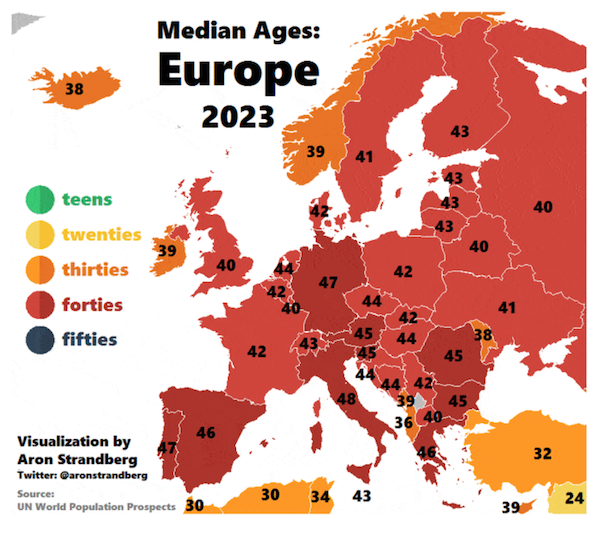
The problems of an ageing population is not a new topic. Visual Capitalist has two great infographics, showing the changing population age for Europe, and then North and South America - Animation: The Rapidly Aging Western World. As investors, healthcare is one of our main investment themes because of this trend of an ageing population.


Tencent's recent spin off China Literature Ltd soared on its IPO. It shows how valuable the Tencent ecosystem is - China Literature Soars inHong Kong Debut After Tencent Spinoff. The company can be compared to Amazon's Kindle division.


Home again, home again, jiggety-jog. Tencent in Honk Kong continues to set all-time highs, expect Naspers to do the same locally. Things are rather quiet today on the news front, the only thing on the cards is Oil Inventories from the US. Hopefully, for the consumer, they indicate supply is up and demand is down; current price for a barrel of Brent Crude is $63.38.


Sent to you by Team Vestact.

Email us

Follow Michael, Byron, Bright and Paul on Twitter

078 533 1063
Tuesday, 7 November 2017

Apple in Paradise


To market to market to buy a fat pig. The Paradise Papers will be a talking point for the coming weeks as more details emerge. The latest big name revealed is Apple, who went 'tax haven shopping' after their setup in Ireland ran into issues - (Apple had five burning questions about the best tax haven for its billions). These multinational companies spend millions to ensure that they are structuring their tax affairs legally. The problem is that tax codes can be open to interpretation, as seen with Apple and Ireland. The EU feels that Apple pushed things too far and should pay Ireland $13 billion, Ireland is appealing the decision. When a country doesn't want $13 billion in tax revenues, you know how subjective tax codes can be.

As I said on CNBC yesterday, it is management's job to pay as little tax as possible legally, and it is government's job to decide what the tax codes should be. The problem for governments at the moment is the ambiguity in the way tax codes and treaties that have been drawn up. Loop holes are being closed and standardisation of definitions are being implemented. We have also seen that large financial institutions have had pressure put on them not to do business with entities linked to tax havens. If you want to read further about the initial names linked to the papers, here is a brief summary - Here's a guide to the major revelations in the Paradise Papers. What is interesting to me is how many of the 'big guns' are intertwined in many business deals.

Market Scorecard. Our market powered through the 60 000 mark yesterday on the open, meaning it has taken just under 3-years to climb 20% from 50 000 points to 60 000. The Dow was up 0.04%, the S&P 500 was up 0.13%, the Nasdaq was up 0.33% and the All-share was up 0.57%/. Lonmin was down another 5.9% yesterday, but after being one of the best-performing stocks for October it is still trading higher than it was in September.


Company corner

Byron's Beats

Last week we received third-quarter numbers from Cerner which disappointed the market. The share dropped 9% on the news as forward guidance was revised down. We should put that drop into perspective. Even after that fall, the share price is up 38% so far this year. It all depends on where you draw the line in the sand. Having said that, this has been a volatile ride. This business is a high margin software company with high expectations. A volatile ride usually comes with that package.

Bookings for the quarter came in at $1.1bn. This was much lower than expectations because a few large contracts will now only be included in the fourth quarter numbers. When these bookings reflect, it should result in an all-time high bookings for the full year. It has been a good year with some big government institutions signing up for their healthcare software services.

Revenues came in at $1.276bn which was 8% higher than the comparative quarter; $928 million of that came from support, maintenance and services. You can see that this is a retention business. Once you have signed up a hospital or an institution, their annuity business is a key driver of Cerner's future profits.

Another important factor to note is that only $142 million of these revenues came from outside the US. The potential to expand globally is massive.

Earnings for the year are expected to come in at around $2.42 per share, putting the company at 27 times forward earnings. The business does have gross margins of 83% and very impressive cash flows which explains the high multiple somewhat.

We remain buy rated on this stock as it continues to secure solid government contracts in the US. We will do a more detailed analysis of the full year when those numbers come out next quarter.


Linkfest, lap it up

One thing, from Paul

The biggest aggregate client position in our New York business is Apple. Not surprising really, because it is a must-own stock and has done really well in recent months. The total value of our Apple holding at Fidelity Clearing & Custody Solutions (where the shares are held in safe custody) is $15.1 million.

At its current share price of $174.25, Apple has a market value of just a whisker over $900 billion. That makes it the most valuable listed company in the world. It is the first time that any listed company has breached that mark. Well done Tim Cook. Onwards to $1 trillion!

The reason that the stock is trading so well is that this coming holiday season will probably be the biggest ever, as shoppers go mad for its new iPhone X. Those have the new larger OLED screens and cost over $1,000 each. They are selling out as they hit the stores, but Apple's formidable production system will soon have them available for sale around the world.

This article provides some updates on the opening iPhone X weekend - Apple iPhone X draws lines, and some activation errors on AT&T and Verizon services


Michael's Musings

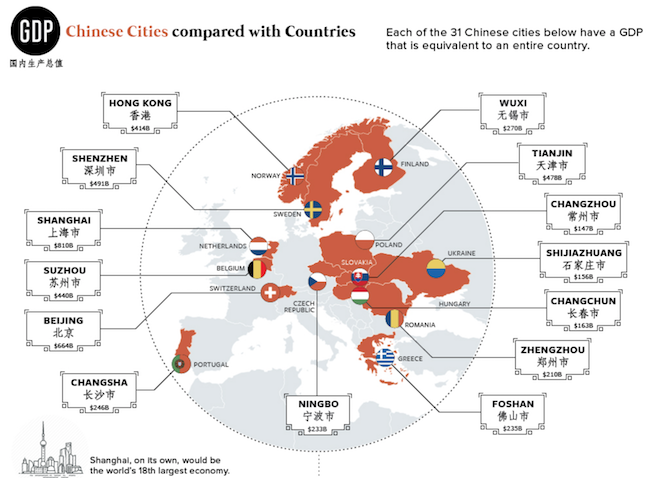
We sometimes forget how massive China really is. The following graphic shows how China's biggest 31 cities are a similar size to certain countries - 31 Chinese Cities With Economies as Big as Countries.


A question that is as important as when to buy is when to sell. Given that we are not market timers, and don't try jump in and out of the market, we look to sell when something has fundamentally changed at the company - The Question of When to Sell Isn't So Simple. The last point that Barry makes is important, even a well-timed sell and then corresponding buy can be break-even at best due to taxes and transaction costs. How much does a stock need to drop before your losses would be more than the taxes and costs incurred in selling?


Bright's Banter

One of my favourite quotes from Howard Marks taken straight from his book The Most Important Thing

    "When people say flatly, 'we only buy A' or 'A is a superior asset class,' that sounds a lot like 'we'd buy A at any price; and we'd buy it before B, C or D at any price.' That just has to be a mistake. No asset class or investment has the birthright of a high return. It's only attractive if it's priced right.

    Hopefully, if I offered to sell you my car, you'd ask the price before saying yes or no. Deciding on an investment without carefully considering the fairness of its price is just as silly. But when people decide without disciplined consideration of valuation that they want to own something, as they did with tech stocks in the late 1990s---or that they simply won't own something, as they did with junk bonds in the 1970s and early 1980s---that's just what they're doing.

    Bottom line: there's no such thing as a good or bad idea regardless of price!"


In the following article, Howard Marks explains why passive investing is not the silver bullet you have been looking for! - Howard Marks On Passive Investing


Home again, home again, jiggety-jog. Tencent is up over 3% in Hong Kong, expect a raging Naspers when the bell goes at 9:00 our time! There is CPI data out of the EU around lunch time and then this afternoon, the JOLTs number from the US. As the US reaches full employment, the JOLTs data becomes more important.


Sent to you by Team Vestact.

Email us

Follow Michael, Byron, Bright and Paul on Twitter

078 533 1063
Monday, 6 November 2017

The Answer To All Your Questions


To market to market to buy a fat pig. Friday was US Jobs day where their unemployment rate clocked another improvement, coming in at 4.1%, the lowest since December 2000. October and November 2000 both had an unemployment rate of 3.9%. If we get to that number you will have to go back to the 60's to find a better unemployment rate. During October the US economy added 261 000 jobs, lower than the 310 000 expected by economists.

Typically, a dropping unemployment number is coupled with rising wages. Economics 101, lower supply of labour and a rising demand for labour means companies need to pay more to attract the talent that they need. Even though they are around the lowest unemployment rate in nearly two decades, average wages increased 2.4% YoY, slightly above inflation. When I was last in the US, I remember seeing signs that said 'help wanted', where in South Africa we are used to seeing signs saying the opposite, 'job needed'. There is a bit of a chicken and egg situation in the US. They have weak labour laws because of low unemployment, and they have low unemployment because they have weak labour laws. A company is more likely to hire if they know that they can lay off the person during an economic downturn or if they turn out to be a poor employee. The jobs number on Friday still had influences from the hurricanes that went through in September.

Market Scorecard. It was a green day across the board on Friday; our local market is half a percent away from the phycological 60 000 mark. The Dow was up 0.10%, the S&P 500 was up 0.31%, the Nasdaq was up 0.74% and the All-share was up 0.52%.. Lonmin was down 28% on Friday after a production report, saying that they may have solvency issues going forward. The company desperately needs the platinum price to pick itself up; a weaker Rand is helping. Their FY numbers were meant to be out in 2-weeks, but management has said they are delaying their release. We will have to wait a bit longer to get a better idea of the internal financials.


Company corner

Bright's Banter

Alphabet 3Q results

Stick with the theme of Prof. Scott Galloway here. In his book The Four he says that GOOGLE is a modern man's God. Where our advantage lies as a species is that we have a superior brain to all other animals.. A brain that is so robust it can ask incredibly complex, nuanced questions but our brain isn't robust enough to answer these questions. As society becomes more affluent and educated, its dependence on a super-being decreases and church attendance goes down. Our questions don't get any easier or simpler. GOOGLE appeals to our need for a super-being as it creates a cerebral attraction to the need for answers to everything thats occupying our thoughts.

You can type in anything on the GOOGLE search box and you're guaranteed to get back an answer.

The cash flush one-trick pony Alphabet reported mouth watering third-quarter numbers on the 26th of October 2017 sending the shares soaring 2.5% higher in late trade on the day.

How did the company do compared to Wall Street Expectations?

-Made a record in Revenues of $27.8 Billion, up 23.8% fastest acceleration in growth since the financial year 2012
-Operating income jumped 35% year-on-year to $7.8 Billion
-Earnings Per Share of $9.57, beat by $1.24

Alphabet's search business GOOGLE sales were up 21% to $24.1 Billion and still accounts for 87% of all the group sales, thanks to strong advertising revenues and a hawk-like eye on cost control efforts by Ruth Porat and her team. Cost-per-click also accelerated at a faster rate than ad revenues as traffic acquisition costs went up 71%. This came from expensive sources which now are mostly mobile. The company spent $3.5 Billion, 25% more than last year in capital expenditure in order to improve customer experience.

"Other Revenues" jumped 40% reporting $3.4 Billion in sales. That includes sales from the Cloud Business, Google Pixel Phone, YouTube Red, Google Play Music etc. Only $302 Million of sales came from "Other Bets" or what the company used to refer to as their "Moonshot" ideas. This includes self-driving car company Waymo, smart-home hardware provider Nest, and their fiber-to-home business Fiber.

Infographic: Alphabet's 'Other Bets' Are a Costly Hobby | Statista You will find more statistics at Statista

There has been a lot of regulatory scrutiny involving U.S. big tech firms, particularly in Communist Europe. They either hate the companies because they are too big and should be broken up, they are monopolies, they are tax efficient, and more recently the issue of fake news. The latter is a real problem for FACEBOOK and GOOGLE. Probably more for Facebook than Google because of the Russian's hand in the 2016 U.S. elections which took place on the Facebook platform. We can only hope for less fines going forward but it doesn't seem so.

Alphabet shares are up 31.6% year-to-date valuing the company at $719 Billion. The current price-to-earnings ratio of 35 and a forward price-to-earnings ratio of around 27 is the cheapest the company has been in a very long time. We are still buyers of Alphabet as we still see some value in the Video and Cloud Businesses but most importantly more growth on the Search Business as more people move to mobile and seek more answers.


Linkfest, lap it up

Michael's Musings

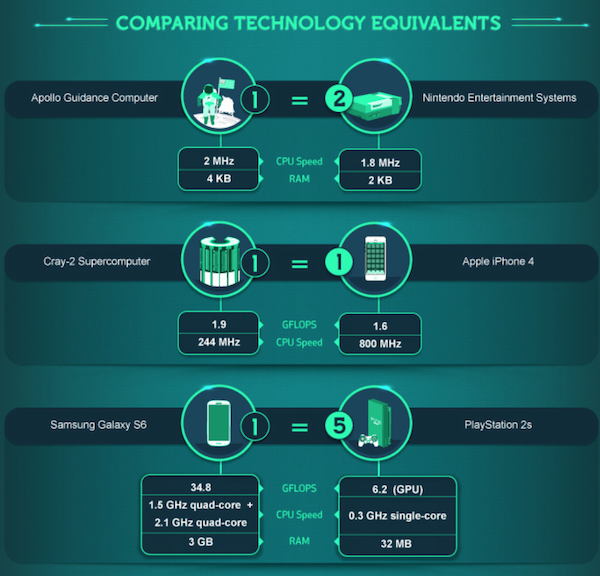
Research has shown that the human mind can't comprehend compounding growth, a perfect example of this is the massive exponential growth in computing power - Visualising the Trillion-FoldIncrease in Computing Power. Imagine telling someone in the 50's that computers would be a trillion times more powerful in the year 2017!


Are you looking for a reason why stocks are at a record high?; probably more importantly a theory for where stocks will go from here? Barry has come up with a number of explanations where bulls and bears can pick and choose the explanations that fit best into their idea of the future - How to Tell the Bulls From the Bears.

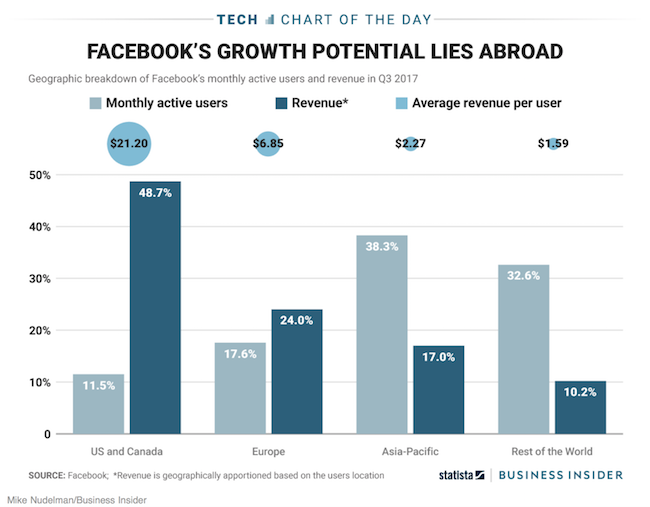
Facebook is up 745% over the last 5-years. One of the main reasons for the appreciation of the share price is future earnings growth expectations. Having a look at the graph below, there is still huge growth potential in all their territories outside of North America. Europe has a high GDP per capita, it should have a similar ARPU to that of the US, meaning there is potential for a three fold increase in revenue from Europe alone - To keep its revenue growing, Facebook needs to look outside the US


Home again, home again, jiggety-jog. Tencent is up 1.4% this morning and the Rand is slightly weaker than it was on Monday, expect Naspers to be strong out of the blocks on the open. Later today, there are results from Priceline, the world's biggest online travel company.


Sent to you by Team Vestact.

Email us

Follow Michael, Byron, Bright and Paul on Twitter

078 533 1063
Friday, 3 November 2017

The Only Jungle That is Still Growing


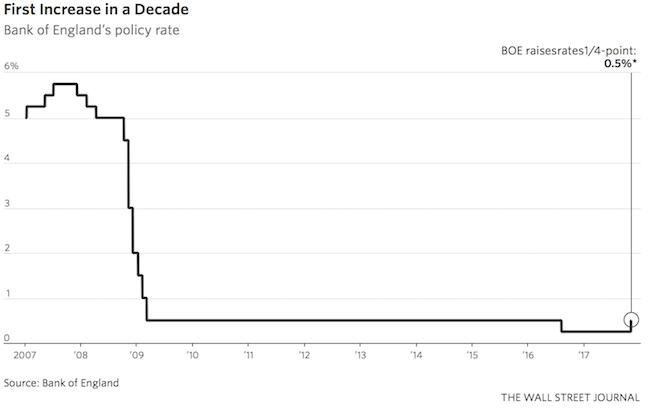
To market to market to buy a fat pig. It was a rather busy day on the international news front yesterday. Out first was the Bank of England's decision to raise rates for the first time in a decade, from 0.25% to 0.5%. Going forward though the bank only expects interest rates to reach 1% by the end of 2020. Lower for longer. As long as interest rates sit below historical averages, equity valuations will sit above historical averages.


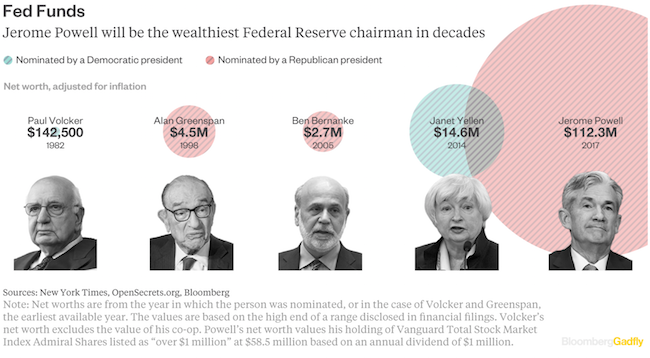
Next on the list, was the widely expected nomination of Jerome Powell by Trump as the next Fed Chair. He is an ex-investment banker and private equity guy who has spent time working in the US Treasury and has been on the Fed's board of governors since 2012. He is seen as a more 'dovish' candidate for the job, meaning the chances of lower interest rates for longer is on the cards. Even though Powell is a registered Republican, he has worked on bi-partisan projects and was initially nominated to the Fed board by Obama in 2011. The first time since 1988 that a president nominated a member of the opposition party for the role. Having both public and private sector experience is a definite advantage. The only criticism I have been able to find of him is his NAV; the argument is that having over $50 million in the stock market could influence his decisions and that he won't be sensitive to the 'average Joe' on the street.


Then the last significant piece of news is the GOP's proposed changes to the US tax system, Analysis: Winners and losers in the GOP tax plan. For us, there are two main changes to consider. The first is that corporate tax is being cut from 35% to 20%. Then more importantly for most of our tech holdings, the tax for bringing offshore cash back to the US will be taxed at a reduced 12% instead of the current 35%.

Market scorecard. With all the big news out of the US yesterday, the markets spent time in the red as well as the green, as they digested the implications for companies. At the end of the day though the Dow managed to finish at a record high. The Dow was up 0.35%, the S&P 500 was up 0.02%, the Nasdaq was down 0.02% and the All-share was down 0.31%. Apple had their full-year numbers out last night, beating expectations for top and bottom lines. The stock is up over 3% in after-hours trading, taking their market cap to just shy of $900 billion. We did the maths this morning, their profits for the last 3-months is enough to buy Shoprite in its entirety and still have around R20 billion in change!. Sticking with Apple, their iPhone X (ten) goes on sale today; news outlets are showing queues outside stores.


Company corner

Bright's Banter

Amazon's 3Q Numbers

In his new book, The Four, Prof. Scott Galloway says that Amazon appeals to our consumptive gut, taking in stuff we need to survive and sending it to our bodies. The notion of "more" is hardwired into us. Even when things are too much, there is still a desire for more. When it comes to consumption; throughout history the penalty for too little has been starvation and malnutrition which is a terrible death. The penalty for too much is lethargy, gluttony, diabetes but has a pretty long lag. Open your cupboards, open your closets you have ten to a hundred times more than you really need. It's really crazy when you think about how much stuff we have, but its so hardwired in our DNA! The ultimate business strategy is more for less. It has been the business strategy of China, Walmart, and now Amazon.

Here are some astonishing statistics: 44% of U.S. households have a gun and about half of U.S. households have a landline. However, about 64% of these same households have Amazon Prime and spend about $1400 per month on Amazon. This now means more households have a relationship with Amazon Prime than have a landline phone. If this trend continues, more people are going to have a pipeline of stuff to their house from Prime vis-a-vis than have cable television.

Amazon is about selection, convenience and value to the consumer.

Amazon the everything store reported better than expected third-quarter numbers on the 26th of October 2017 sending the shares surging 8% higher in the after-hours trade.

How did the company do compared to Wall Street's expectations?

- Made $43.7 Billion in Sales, up 34%, beat by $1.6 Billion
- Made $256 Million in Profit
- Earning Per Share of $0.52, beat by $0.49


The cloud business Amazon Web Services (AWS) is still a big growth area for Amazon which netted Sales of $4.6 Billion, growing 42% year-on-year which was the same rate as last quarter (Q2).

All eyes were on the $13.7 Billion acquisition of Whole Foods which was completed in August. We were ahead of the results when we wrote about the increased traffic in the the month of October here . Foot traffic to Whole Foods has increased tremendously, up 17% year-on-year following the acquisition. The biggest losers were Sprouts, Trader Joe's, Sam's Club, Target, CostCo, Kroger and Walmart in that order. Whole Foods had Sales of $1.3 Billion for the quarter and we expect these to accelerate with store optimisation as they move more into digital.

Another big winner for the company has been Prime Video, the original content streaming services competitor to Netflix. In the past three years Prime Video has gone from nothing to being the third biggest video streaming platform today. Prime Video now on the Microsoft's Xbox One!

The fourth quarter is going to be a big one for Amazon as it includes the December holidays. Amazon expects to make between $56 Billion and $60.5 Billion in Sales including Whole Foods and favourable exchange rates. That translates to 28% to 38% growth compared to last year.

The Amazon story has been the most fascinating. This is the only 800 pound gorilla we know that's still investing 100 cents to the dollar back into consumer experience. No company can compete with that kind of re-investment pace at the moment as it is a very rare occurrence in business. It truly defines Jeff Bezos ethos of "your margin is my opportunity."


Linkfest, lap it up

Michael's Musings

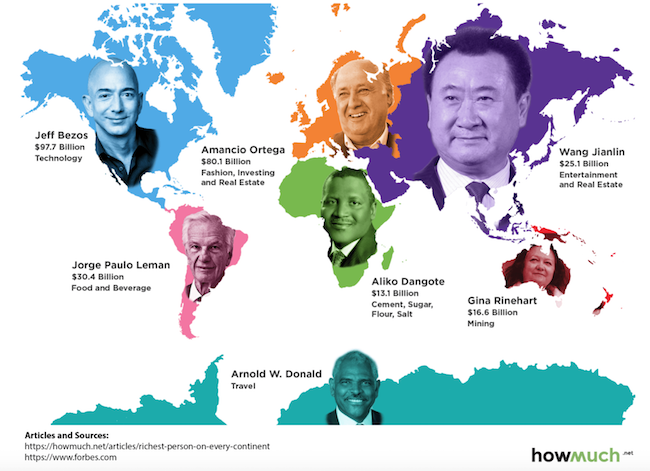
Ever wondered who the richest person on each continent is? Well now you can know - The Richest Person on Each Continent. Lehmann (misspelt on the image) is the main person behind 3G Capital, the company who put together the titan that is AB InBev.


Home again, home again, jiggety-jog. Our market is off to a green start this morning, following the direction of Asian markets. It is jobs day again in the US; we will get the initial read on unemployment and the number of jobs created in October. The data will also show us how much September's numbers were impacted by the hurricanes moving through the East Coast.


Sent to you by Team Vestact.

Email us

Follow Michael, Byron, Bright and Paul on Twitter

078 533 1063

Thursday, 2 November 2017

By Word of Ouch


To market to market to buy a fat pig. One thing that I was reminded of while writing about Famous Brands, is that business is never easy. I have never read a set of results from a company, where they said 'things were easy, all we had to do was show up and we made money'. Generally, at least one division or region is struggling because of a tough operating environment.

In Famous Brands's case, their primary operations are in South Africa where consumer spending is down due to a lack of growth. Their other significant operating region is the UK, where things are more stable but thanks to Brexit, growth is also down. Moving along to their Rest of Africa (ROA) division, growth numbers look healthy but given lack of economic diversification, growth is volatile. On top of that, operating in the ROA can be challenging because of the struggle of getting capital in and out of respective regions. Then things like electricity, fuel and fresh produce are not always guaranteed.

Out of all the regions that they operate in, the UK is probably the 'easiest', in terms of a stable country with a wealthy customer base. Due to business being easier, there is more competition and their margins are razor thin. ROA, on the other hand, has less competition, meaning there are excellent thick and juicy margins to compensate investors for the increased risk. As the saying goes, 'if it were easy everyone would be doing it', and if everyone is doing it, there is no money to be made.

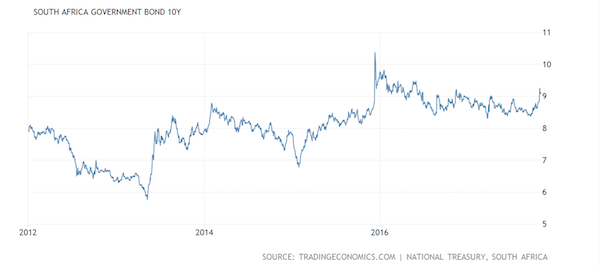
Market Scorecard. As expected the Fed left the US interest rate unchanged, and basically said if things stay on track, they should raise rates in December. The Dow was up 0.25%, the S&P 500 was up 0.16%, the Nasdaq was down 0.17% and the All-share was up 0.91%. Have a look at the interest rate on our 10Y Government bond; you can clearly see when 'Nenegate' happened. As it stands, we are still at better levels than we were for most of 2016. I found the graph at Trading Economics; in my opinion the best place to find any economic data that you may need.

Found at South Africa Government Bond 10Y


Company corner

Michael's Musings

On Monday Famous Brands released their 6-month results, which we already knew weren't going to be pretty reading. Year to date the stock is down 34%, reflecting lower consumer spend locally and the struggles they have had with their GBK acquisition in the UK.

The purchase of GBK has made a significant change to the companies profile. The first impact has been on their gearing, the balance sheet went from having no gearing and debt, to having R2.9 billion in debt. Having some gearing is arguably a good thing, when management doesn't have debt on the books, analysts start to criticise saying the company has a 'lazy balance sheet'. Famous Brands still has a strong balance sheet but to get debt down to a level that management feel more comfortable with, they have suspended the dividend until at least next year. In years gone by, one of the reasons for buying Famous Brands was for their yield.

Over the last few years, their operating margins have steadily been falling from around 20% to the last period's 11.9%. The reason for their falling margins is mostly due to top line growth coming from low margin divisions. Over the last few years they have been growing the supply chain part of the business, where logistics has minute margins and high volume. The purchase of GBK put further pressure on margins due to margins in the developed world being lower than South Africa in general.

The biggest problem currently facing the group is foot traffic, over the last 6-months there was a 16% drop in foot traffic to their Casual Dining and Quick service offerings. The rise of UberEats and similar delivery services is a game changer for the industry. Customers are increasingly opting for the easier option of having food come to them instead of having to go to the outlet, how management handle this change will either make or break the company.

Their UK division has had a rough time, in September they closed the last Steers store and GBK made a GBP 872 000 loss. Management expects GBK to swing into profit during the next financial year.

An exciting launch next year is their Word of Mouth division, which will be launching 'Frozen for you' in early 2018; it will be home meal replacements, sold in store and online. Think Woolies food blended with UberEats. If they can get the value for money and quality/ healthy mix right, this division could be huge in the future.

In the short term, the share price will probably be volatile as management tries to turn around GBK and as the RSA consumer braces for the potential of a credit rating downgrade. There is no doubting the quality of their brands and the excellent job management have done in building a vertically integrated company. As a shareholder though you will have to ride through these bumps.


Linkfest, lap it up

One thing, from Paul

The most expensive commercial real estate transaction in history just closed in Hong Kong.

The seller was Li Ka-shing, Hong Kong's wealthiest man. The building is The Center tower, Hong Kong's fifth-tallest building with 73 storeys. The price was HK$40.2 billion (US$5.15 billion).

Interestingly, the controlling shareholder of the buying consortium is Beijing-based China Energy Reserve & Chemicals Group.

The slow assimilation of Hong Kong by mainland China continues - Li Ka-shing sells The Center in US$5.15 billion record deal to trim his flagship's Hong Kong assets


Home again, home again, jiggety-jog. Asian markets are mixed this morning, and the All-share has opened in the red; still above the 59 000 mark though. The Rand strengthened over night with a '13' in front of it when compared to the USD. Later today we should hear who the next Fed chair will be and a more detailed look at the Trump Tax plan. Facebook's numbers last night showed huge growth again! Tonight we have full year figures from Apple and 2Q numbers from Alibaba, exciting times.


Sent to you by Team Vestact.

Email us

Follow Michael, Byron, Bright and Paul on Twitter

078 533 1063
Wednesday, 1 November 2017

The Bees Kneez


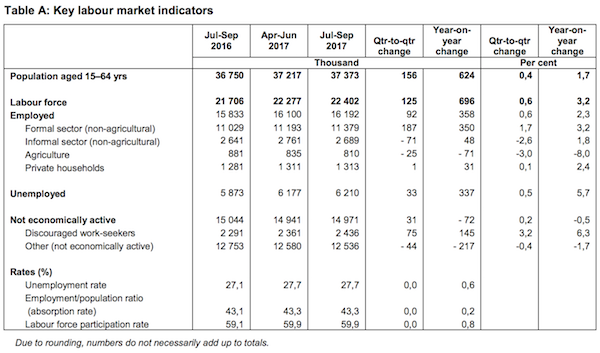
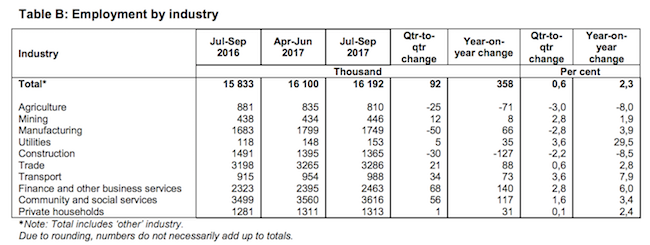
To market to market to buy a fat pig. Yesterday Stats SA released the Quarterly Labour Force Survey (QLFS), showing that our unemployment rate stayed constant at 27.7%. The good news is that over the last year, 358 000 more South African's have a job; there are still 6.4 million people looking for a job and that number jumps to 8.6 million if you include 'Discouraged work-seekers'. To be considered unemployed, you need to have actively looked for a job in the last month. When you add the people who have given up looking for a job to the official number of unemployed people, our unemployment rate sits at 38%! That means out of every five people who want to work, only three are able to find a job.


As we have seen coming through in our GDP data, the area of most growth is 'Finance and Business Services', where over the last year 140 000 jobs were added. It is no surprise to see that employment in the construction sector dropped over the last year, down by 127 000 people. Construction attracts long-term capital investment, with business confidence at multi-decade lows there are fewer people deploying long-term capital at the moment.


Market Scorecard. US markets have continued their recent trend of not following a down day with another down day, I can't remember the last time the US had two down days in a row. The Dow was up 0.12%, the S&P 500 was up 0.09%, the Nasdaq was up 0.43% and the All-share was up 0.17%.


Company corner

Bright's Banter

Stryker 3Q numbers

- Completed the purchase of NOVADAQ Technologies on the 1st of September 2017
- Acquired French company Vexim on the 24th of October 2017 to be completed in Q4
- Sage recalls and hurricane impact expected to result in approximately $45 Million in lost sales in Q4


On Friday the 27th of October Stryker reported better than expected numbers for the third quarter and that sent the share price soaring over 7% on the day. A good day for Vestact clients that hold this counter in our offshore portfolios. They also increased its guidance for the 2017 full year with expected sales between 6.5% to 7% and earnings of $6.45 to $6.50.

How did the company do compared to Wall Street's Expectations?

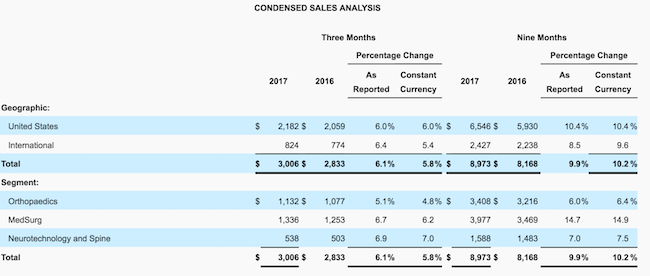
1) Third-Quarter Net Sales grew by 6.1% to $3 Billion (5.8% in constant currency) which beat expectations by $30 Million

- Orthopaedics grew by 5.1%
- MedSurg grew by 6.7%
- Neurotechnology and Spine grew by 6.9%

2) Third-Quarter Net Earnings Per Share grew by 21.3% to $1.14

3) Third-Quarter Adjusted Net Earnings Per Share grew by 9.4% to $1.52, a modest beat of $0.02


All three reporting division of Stryker did well in the third quarter notwithstanding the negative impact of the Sage product recalls in their MedSurg division and the hurricane that halted production in the quarter. Production volumes were also up throughout the company. Mako Robots which are mostly used in knee surgeries are still driving sales in a big way as the company sold 33 Mako Robots of which 23 were installed in the U.S. Total knee procedures increased more than 50%.

On the 1st of September 2017 Stryker acquired NOVADAQ for a purchase price of $678 million. We wrote a comprehensive piece here on what NOVADAQ does and how it complements the Stryker's Endoscopy's portfolio. NOVADAQ is said to have contributed positively to Endoscopy sales as those were up 13.4%.

Stryker also acquired a French company VEXIM for EUR183 Million in exchange for 50.7% of the shares in the company. VEXIM is a specialist in design of minimally invasive spine surgery medical devices. The prominent brand is called SpineJack which the company describes as a mechanical expandable VCF implant for vertebral fracture reduction and stabilisation. This spine technology will complement the Stryker interventional spine business and transform its position in the space.

Stryker is still our preferred company in the medical devices space because the business has the margins of an iPhone, strong brands which drive volumes and better market positioning over competitors like Medtronic, Thermo Fisher, or Zimmer. Their devices are still the favourite across the medical community.


Linkfest, lap it up

One thing, from Paul

Do you subscribe to the Business Day online? If not, you should. Its cheap (R120 a month I think, you put in your credit card details), and allows you access to daily articles, plus the weekly in-depth Financial Mail articles.

Analysis of our news stories of the day by top analysts, that's worth supporting. Like this piece from my UCT contemporary, Nusas comrade, Business Day deputy editor Carol Paton - Structural changes will save SA, not Gigaba's grim vision

She is writing here about the aftermath of the mid-term budget policy speech last week.

    "Last Wednesday was a difficult day for Finance Minister Malusi Gigaba. He knew he had bad news to deliver to the nation; this was not going to be his moment of glory.

    "He struggled through the pre-budget parliamentary briefing, muddling concepts and dropping words and phrases such as "spending cuts" and "fiscal stimulus", apparently without noticing the contradictions.

    "But if Wednesday was bad, Thursday was much worse as the extent of the fallout over the medium-term budget policy statement became known. The market reeled.

    "These are big political decisions that require courage and unity of purpose at the top of government. With the December conference looming there is not a single voice in the Cabinet that would make any decision that might affect the ANC's political base. Apart from this, courage, unity and commitment are in short supply in this Cabinet.

    "The outlook then is not good for Gigaba or SA. Come February, chances are we will be staring at the same set of numbers, possibly made even worse by a November credit ratings downgrade."


Sobering stuff!


Michael's Musings

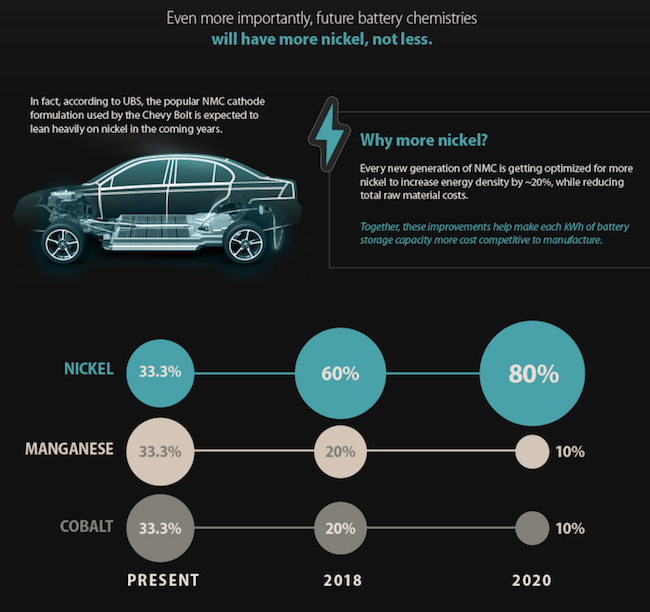
As we move toward more renewable energy, much has been written about lithium and cobalt. This is the first time I have seen someone write about nickel, which is surprising given how much of the battery is made up of nickel - Nickel: The Secret Driver of the Battery Revolution.


Home again, home again, jiggety-jog. It is a lovely green start to our market, up over 1% and with in touching distance of 60 000 points. Naspers have also broken through the R3 500 a share level, go you good thing! Then this evening the US Fed announces if they will raise rates. The market is expecting nothing to change tonight but that a rate rise will happen in the middle of December. Sticking with the Fed, Trump is expected to announce the next chairperson by the end of the week.


Sent to you by Team Vestact.

Email us

Follow Michael, Byron, Bright and Paul on Twitter

078 533 1063