Showing posts with label Aspen Pharma. Show all posts

Thursday, 15 June 2017

Value my Drug

"Whilst I believe that regulators are trying to do their best to protect consumers, sometimes they discount the huge shareholder funds that are spent on looking for the next blockbusters. Statista has the number, total global spend is around 150 odd billion Dollars a year, from the pharma industry. Each business, amongst the majors that is, spends around 12-14 percent of their revenues looking for life saving therapies, that obviously comes at a cost."


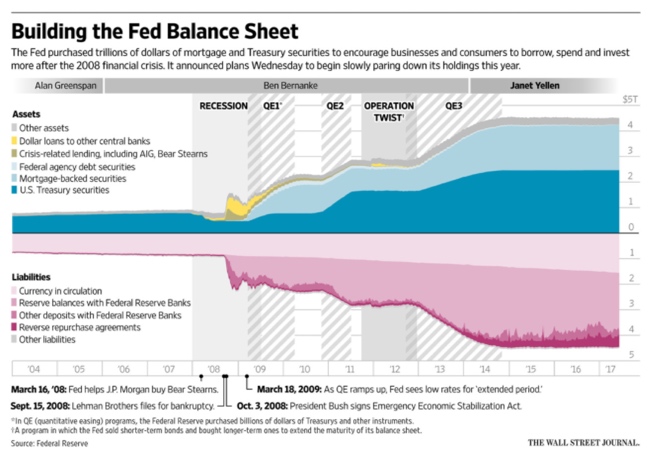
To market to market to buy a fat pig I remember when the Fed moving interest rates was going to be the most telling event of them all. I remember when the Fed were going to stop their asset purchase programs and how that was going to be the most telling of all. I recall when the Fed were going to unwind their balance sheet and how that was going to be the most telling of all, it was going to finish us all, you remember?

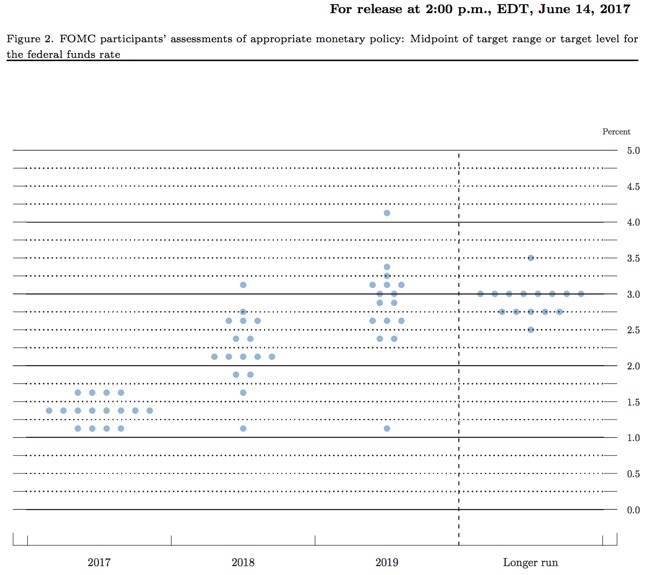
Well, the Fed raised rates over half a decade later than most people anticipated (in 2010 it was the topic du jour), and the trajectory has been lower than anticipated. And the end point, where interest rates in the US finally level off (the so called dot-plot, we will get to that in a second), is at a lower level than historically. That said, so is inflation, as a result of productivity gains and efficiencies. And the manufacturing at the global level, globalisation is where everyone wins with cheaper goods and cheaper skills to transfer. If only all and sundry would see that!

So the Fed raised interest rates last evening, and it was widely anticipated this would happen. So there was a blink and a slight stare, and then "as you were". Some saw this as a slightly "easier" rate hike, possibly the Fed would not stick to their more aggressive approach, and perhaps skip a hike later. The Fed release, here is the FOMC statement. All members except Kashkari voted in favour of hiking rates at this point. There was also the announcement of Fed balance sheet shrinking, winding their necks in - Normalization Principles and Plans.

The WSJ has an amazing graph, from a story titled Fed Raises Rates, Sets Out Plan to Shrink Asset Holdings Beginning This Year. Courtesy of the WSJ and the Fed.


And then the dot-plot, where the voting members see their long term projections end up, at around three percent:


According to the St. Louis Fed website, this is their Effective Federal Funds Rate from 1954. As you can see, even a three percent projection "long term" is very far away from the long term averages:
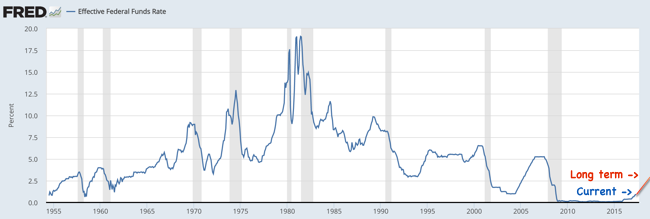


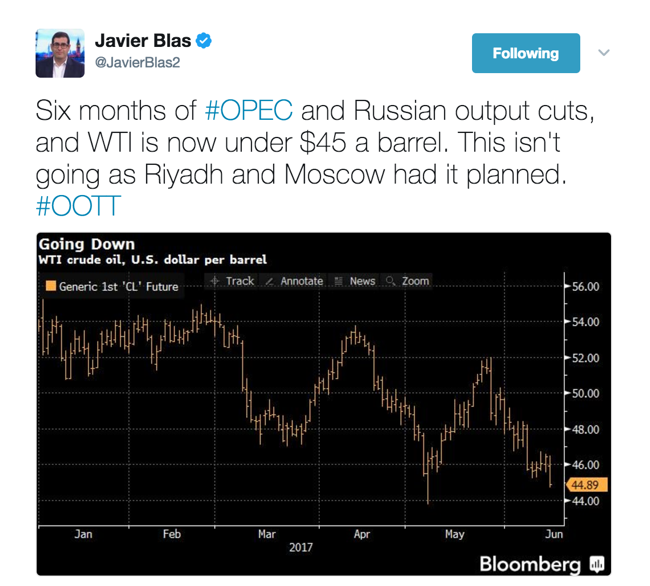
So there it is. The long term projections are three percent, at least for now. The most important question, should you change your investments or your investments style to accommodate or try and pre-empt the Fed's next move? No. Don't do it. Stay the course and own real businesses through when rates go up and down. There is of course, nothing you can do about interest rates. Session end in the US trading session, the Dow Industrials added nearly one-quarter of a percent to end at an all time high. Energy and materials had a horrible no good day, the oil price barrelled to a "near" six month low. My go to person on all of this is Javier Blas, who suggested that this wasn't going as planned for Moscow and Riyadh:


The broader market S&P 500 fell off the worst levels and into the red, down one-tenth of a percent. The nerds of NASDAQ also gave up some ground, comfortably off the worst levels for the session though.


Locally here in Jozi, stocks fell around one-quarter of a percent as a collective, industrials sank one-fifth, it was resources that were the biggest losers though, down around a percent and one-third. Financials were the stocks that were holding the market from further losses, at the top of the leaderboard were SA inc. and financials. In the down column were the commodity stocks, sensitive to the ebbs and flows of commodity prices and the currency. Anglo, BHP Billiton and MTN, as well as Richemont were the losers.

There was a trading statement from Naspers pretty late, there are three metrics for Naspers, the one that they think counts the most is "core" headline earnings per share. On that metric, Naspers expect to be 33 to 39 percent higher, at the top end of the range, somewhere around 414 US cents, or 52 Rand a share at current levels. The stock is marginally lower this morning, along with the rest of the market. Results expected on the 23rd of June.


Company corner

The competitions authority are investigating Aspen and their peers with specific reference to their oncology drugs here in South Africa. It made headline news on the various wireless stations that I listen to. Price gouging and the like, another head-shake from the pundits. How can this be? Paul initially when he heard the news suggested that prices were regulated in South Africa, how could this possibly be?

    "To provide context to shareholders it is confirmed that, while Aspen fully acknowledges the vital nature of the four oncology products listed in the Commission's announcement, these products have a collective turnover of about R3 million in the South African private market"


Oh? I am against unethical behaviour of all sorts, pharma companies have a "history". Yet, they are well regulated. In fact, over regulated, another announcement from Aspen is that they have been fined 5.2 million Euros by an Italian court. Listen to this though, the generic drug (of the one that Aspen sells) was approved in Italy for double the price that Aspen sold their drug. Yes. How can that be possible? Italian bureaucracy my friends, it is a sight to behold! Some of the prices in Italy for the drugs that Aspen raised, had not been raised for between 40 to 60 years. Ughhhh. No wonder the company will try and avoid some of the regulatory minefields. Aspen may, or may not appeal this ruling.

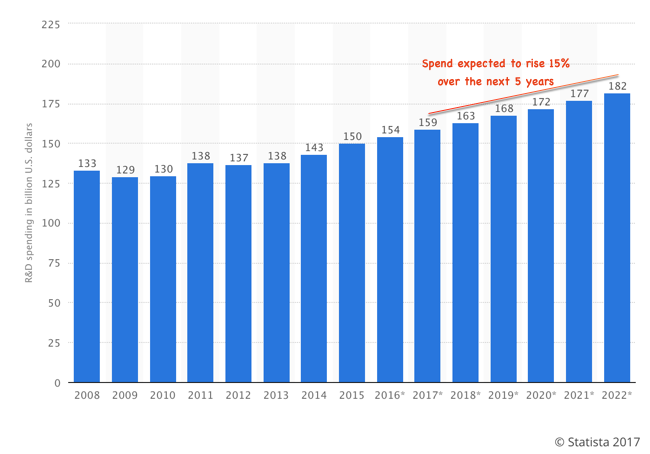
Whilst I believe that regulators are trying to do their best to protect consumers, sometimes they discount the huge shareholder funds that are spent on looking for the next blockbusters. Statista has the number, total global spend is around 150 odd billion Dollars a year, from the pharma industry. Each business, amongst the majors that is, spends around 12-14 percent of their revenues looking for life saving therapies, that obviously comes at a cost. And unfortunately that needs to be paid for by someone, the drugs cannot be free. See here below, courtesy Statista - Total global pharmaceutical research and development (R&D) spending from 2008 to 2022 (in billion U.S. dollars):


Last week we had 6 month numbers out of Steinhoff, who are the world's third-largest integrated household goods retailer by turnover (Half year numbers). Given how active management are, it is difficult to get comparative numbers, but based on managements calculations normalized revenues are up 7% and normalized EPS is up 4%. Here is a look at breakdown of the group sales:
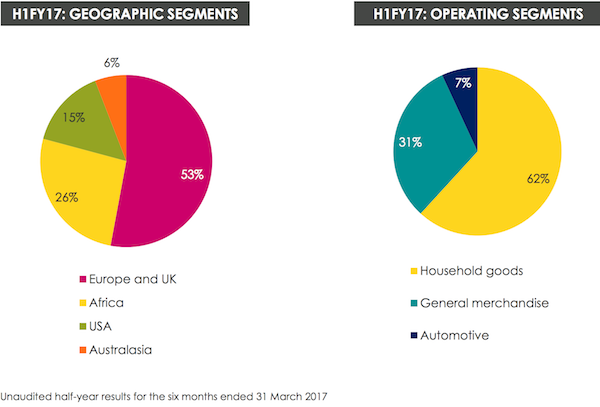


The big change up there is the new US segment, thanks to their purchase of Mattress Firm in September last year. At the time the "analysts" view was that on the surface it looked like they overpaid for the asset, time will tell who are right, management or the analysts. Since then management have been very busy! One of their major suppliers was Tempur Sealy, who resisted attempts by Steinhoff to renegotiate their partnership with the end result being Sealy pulling out of the partnership (and the Sealy share price dropping by 23%).

To fill in the Sealy gap Mattress firm increased their partnership with the other major mattress maker Simmons, where they have agreed to spend over $100 million on marketing and then collaborate to come up with new products over the next 5 years. Have a look at their new advertising campaign - Mattress Firm Launches New Campaign And Announces Strategic Partnership In Pursuit Of Sleep Innovation

Next up management have also bought a majority stake in bedding maker Sherwood bedding, to roll out more in-house merchandise, improving profit margins. Then lastly they have a trial partnership with an online bed retailer, Purple beds, who started in 2016. The idea is to sell Purple beds in the Mattress Firm stores, hoping to increase foot traffic to the stores and then sell the extra customers bed 'add-ons' like bedding and pillows. Then lastly Mattress Firm applied for a trade mark in the UK last year, does that mean Steinhoff are thinking of rolling out that brand in the UK too?

The next phase for Steinhoff is getting the African assets listed which is expected to happen towards the end of this year. I think listing the African assets is in part a play to try court Shoprite again in a few years. Remember last time the sticking point in the deal was "what is the value of the Steinhoff African assets".

My one concern about Steinhoff is that tax dispute that has been ongoing with Germany. The company says that talks are still in progress and they should reach a settlement agreement soon. Remember that the dispute is around where the company records their profits and by extension pay the taxes on those profits. This fine could be expensive.

Steinhoff management have shown their skill in taking tired businesses, shaking them up by improving their backend and logistics, resulting in better margins and happy shareholders. Given how active management are both in terms new businesses and financial restructuring there is always the increased risk that they make a misstep. The risk reward matrix looks worth it though.


Linkfest, lap it up

Exciting times as a Jo'burger and Facebook shareholder - Inside Facebook's new Jo'burg office. It looks like a great space to spend your "9 to 5" in.

As retail moves online shopping malls are increasingly under pressure, the result adapt or die - The Mall of the Future Will Have No Stores. The Mall of the future will have more experience offerings, still food outlets and then have companies base offices in them. Good news for our Starbucks investment.


Home again, home again, jiggety-jog. Stocks are lower across the globe, this special investigation into the relationship between the Trump campaign, people close to him and the Russians is just starting to "get real", or more real. The US futures market has taken a bit of a swoon.


Sent to you by Sasha, Byron and Michael on behalf of team Vestact.

Email us

Follow Sasha, Michael, Byron, Bright and Paul on Twitter

078 533 1063

Tuesday, 26 May 2015

iNCREDIBLE Apple


"The products are still incredible, I am seeing more and more Macs on the "streets", people getting deeper into the Apple ecosystem. I remember once upon a time when a certain smartphone maker Blackberry ruled the world, just the other day on the Vestact closed WhatsApp group I found a WSJ quote from the related story: How the iPhone Crippled BlackBerry, in which Larry Conlee, then CEO and Mr. Lazaridis's right hand man, say the following about the iPhone: 'It wasn't secure. It had rapid battery drain and a lousy [digital] keyboard.' "


To market, to market to buy a penny bun. Days off for all and sundry, we traded a measly half of normal volumes, as both the US and UK enjoyed holidays, along with a vast amount of folks in Asia. Have you ever seen that map of the world, with the circle, more people live inside of this circle than outside of it? Apparently it is credited to Conrad Hackett, who is a must follow on Twitter, he found the chart via the World Bank -> you can find the related status here: World bank circle, population.

All it is, the map, is a representation of the very populous areas of Asia collectively. More people live between the areas of Pakistan to Indonesia, Japan to Mongolia and Malaysia to the Koreas than outside of this area. Outside of the area (if you include all continents) are basically the other six continents. I guess if Adam Smith were alive today he would have a perfectly reasonable explanation for that. Adam Smith of course is seen as the "father" of modern economics, a fellow that advocated free markets. He would have had his theories around food production, human spirt and free trade (good weather generally) leading to larger populations than in other territories. Any modern day explanations on why there are such large populations in modern day Asia, better long term diets, better medicine relative to the rest of the world and/or religious reasons? Yes, no?

MTN dominated trade locally and was at the forefront of the losers columns, all to do with their largest market where power constraints could see widespread outages on their network. We are talking Nigeria. If you think that we have power problems (I mean challenges) here, forget it, Nigeria has monster issues. So much so that MTN has to power a large part of their network with diesel generators, and diesel seems to be running really short. Michael told me yesterday that his mate was up there, and the queues for fuel are three hours long. Why? The government has set price controls on fuel. The irony is palpable. For a country that produces vast quantities of oil and then imports the finished product. A shortage of diesel could see the base stations power down, there is one thing worse than running out of fuel and being forced to walk, and that is running out of battery power. MTN closed down 2.3 percent on the day.

At the opposite end of the spectrum was Mediclinic, bouncing after their market disappointing results late last week, Woolworths also at the top of the leaderboards as the investment community continues to appreciate their recent plans on David Jones and the Country Road group. Recent announcements and plans to continue to push the local brands and get busy, has been met favourably by Mr. Market. Another good trading day and Woolworths might well raise their bat, 100 (Rand) up. Perhaps a Hashim Amla head wobble and a business as usual look would be in order. And whilst we are on that score, the Mumbai Indians made one of the greatest revitalisations in any tournament, the first two weeks they were nearly dead and buried. Spare a thought for JP's Delhi Daredevils, the only major team to never have made the final of the competition. Spare a thought for Michael and my team, the Royal Challengers Bangalore, they have never won a title, and twice been the bridesmaid, or should I say groomsman.

Markets resume today across the rest of the globe, Greece and their potential default will continue to dominate the conversation short term, not everybody seems to be as worried as I thought. Obviously there has been significant weakness in the Euro, that is lending a hand to relative weakness in the Rand, i.e. Dollar strength. Currencies? Your guess is as good as mine, I am afraid.


Company corner

I could not find the official news on the Apple Inc. website, I had however noticed that Sir Jony Ive had been promoted to Chief Design Officer at the company. If you have been watching the company over the years, you will know exactly who Jony is. According to Wikipedia, Steve Jobs said that Jony was his spiritual partner at the company. They designed many of the products together. Ive has been at the company since 1992, 23 years of being involved with all of the products at the business, having an intimate knowledge of all of them, all of their launches and the inner workings. There are apparently only 22 folks at Apple and the core (no pun intended) have been there for the better part of two decades, they must know each other pretty well. Cult of Mac (yes, really) says that this team rarely gets together for photos of the public kind, here they did recently for the announcement of the watch: Here's the first group picture of Apple's new Industrial Design team.

If you read further down the article, it refers to the secretive design studio: "a steel-and-concrete enclave locked behind a very big door and frosted windows on Apple's campus." I managed to find an incredible article by the New Yorker on Jony, it is really long, it is worth the read in your spare time. Or the next seven minutes, do it now and read it: How an industrial designer became Apple's greatest product. As we well know, in 1997 Apple was on its knees. Now it has a market capitalisation of 763 billion Dollars, they basically are kings and queens of the world. Great interactions there between the individuals (we forget that companies are made up of exceptional people), when the going was tough.

The products are still incredible, I am seeing more and more Macs on the "streets", people getting deeper into the Apple ecosystem. I remember once upon a time when a certain smartphone maker Blackberry ruled the world, just the other day on the Vestact closed WhatsApp group I found a WSJ quote from the related story: How the iPhone Crippled BlackBerry, in which Larry Conlee, then CEO and Mr. Lazaridis's right hand man, say the following about the iPhone: "It wasn't secure. It had rapid battery drain and a lousy [digital] keyboard." The WSJ article is actually a part of the book titled "The Untold Story Behind the Extraordinary Rise and Spectacular Fall of BlackBerry."

Perhaps Conlee was right about all of those things, the one thing that you can never doubt is that the consumer is always right. Does this Apple appointment suggest Jony Ive will be less involved, I think not, it is just the company rewarding an exceptional engineer and one of the most important folks at the company. Of course the risks are new products, individuals leaving, the truth however is that the legacy of people like Steve Jobs, incredible individuals (if not prickly characters) attract young up and coming engineers, designers, coders to a company. It is worth noting that in a world of brutal hardware and software evolution that you ALWAYS pay attention.


Why did Aspen seemingly sell a sizeable portion of their Australian business? It took me a little while to figure it out, first and foremost the Price Disclosure Reductions for 2015 April Cycle from the Australian government Department of Health might reveal that margins for manufacturers Down Under are going to become harder to maintain. If the government, anywhere in the world, wants to get your business to sell your manufactured goods at a lower and lower rate (and not let the market decide ultimately) then I guess it may be a good idea to sell that business. I think if the Australian government covers all and sundry for their healthcare needs, then I guess they can set or stipulate the prices, all I know in the long run, setting prices promotes less and less competition. If you do it in an orderly manner, then I suspect you still attract business.

It seems from what I could ascertain, Aspen had indicated that they were moving some of the Australian production to their Port Elizabeth manufacturing facilities and more importantly had committed to shutting down two facilities in Australia. From what I could gather, from the details of the sales of businesses in Australia and Singapore (refresher, download the document: Aspen Strides Product Divestment Agreement), it is effectively one eighth of the business. And it is noncore, see from the release: "These transactions form part of Aspen's communicated strategic intent to focus attention in areas where most value can be added and to lessen complexity." Simpler and making sure that the focus is on the growth areas of the business, using the cash from these transactions to either pay down debt or to continue to expand in the region.


Things that we are reading

Via Abnormal Returns daily email came a piece from Justin Paterno, the StockTwits "President", if there is such a thing, here are some observations: My takeaways from a week in China. Two things interested me, one, the Apple observations, two, the Chinese are patient and invested for the long term.

More on Apple, this time through the eyes of Stephen Fry - When Stephen Fry met Jony Ive: the self-confessed tech geek talks to Apple's newly promoted chief design officer.

The internet is causing a consolidation in the entertainment industry - The charts and maps you need to understand why Charter is buying Time Warner Cable and Bright House

With the ice melting, the arctic circle becomes more important to countries as a trade route and the possible resources. - How a 19th Century Shipwreck Could Give Canada Control of the Arctic. To make the story more interesting, Jim Balsillie the co-founder and former CEO of RIM (blackberry) is involved.

The private sector is doing its bit to help - Rupert, Nhleko's African infrastructure fund raises R4,1bn.


Home again, home again, jiggety-jig. What happened? The market opened in the green this morning and now has turned red. Gold is leading the way, down 2%. After solid looking results and a pop to R120, Famous brands has slipped back to R114 a share, I suppose the market was looking for a higher growth number. The Rand is back at R/$12.00 after a brief visit to the R/$11.75 levels, with so many moving parts when it comes to currencies it is hard to know which factor is responsible for the moves. Keep focused on the long term and don't let the short term noise give you heartburn.


Sent to you by the Vestacters, Sasha, Michael, Byron and Paul.

Email us

Follow Sasha, Byron and Michael on Twitter

087 985 0939

Thursday, 21 May 2015

Mediclinic International


"This then translated through to basic normalised earnings per share of 408.2 cents, this is an increase of only 9 percent. I say only, the market is looking for more here, the stock is primed for higher earnings. The dividend increased 11 percent, 75.5 cents for the second half (31 in the first), not exactly a kings ransom, with a yield of less than one percent. Switzerland represents 53 percent of revenues, the Untied Arab Emirates 12, and the balance South Africa. From a profitability point of view, of group EBITDA, exactly half is Switzerland, 13 percent the UAE and the balance (37 percent) South Africa. You get a fair idea that this is pretty much a private hospitals group with roots here in South Africa, certainly the lions share comes from outside of South Africa."


To market, to market to buy a penny bun. The big news (not unexpected though) is that it seems unlikely that the FED will raise interest rates at their June meeting. The market is anticipating pricing September as the most likely time for the first interest rate increase since 2007. The expectation is for interest rates to stay below the 40 year average of 6%, for the foreseeable future. As long as inflation stays under control, in the case of the US and Europe the spectre of deflation hovers around, interest rates will stay low by historical standards. If your pension or income is linked to interest rates, that is not great news, if you are a business owner low interest rates makes it easier to expand and take advantage of new opportunities. The danger that low interest rates presents is that 'cheap money' does not get the respect that it deserves and flows into assets/projects that should not be funded.

Moving to the home front we have the MPC giving their interest rate decision this afternoon, the expectation is for rates to stay the same. Why? CPI data yesterday says that our inflation rate is sitting at 4.5% which is in the middle of the 3-6% target band, add to that our very dismal GDP growth rate. The only reason I can think of left in favour of a rate increase is that policy makers are uncomfortable with low interest rates, which isn't a good reason to be raising.

An interesting number that I stumbled upon is "Inflation Rate in South Africa averaged 9.37 percent from 1968 until 2015, reaching an all time high of 20.90 percent in January of 1986 and a record low of 0.20 percent in January of 2004." (Thank you Trading Economics). With such a high average inflation rate, you can see why there is a steady weakening of the Rand. If our inflation is on average higher than our trading partners, the Rand needs to depreciate to balance the prices. There is nothing wrong with having a higher inflation rate, the key point is having a stable inflation rate. If you are an investor, having a stable inflation rate allows you to plan your strategy. If you are a saver, remember that Fiat currencies are units of account and not storers of value, so don't keep your cash under the mattress.


I am not too sure that I understand the outrage around the pay per use, the etolls debate that rages on in Gauteng. The highways are pretty darn awesome, multiple lanes, they certainly ease the congestion. I cannot imagine a world without the highways, getting to and from work for me in a timeous manner is critical. Equally I am lucky enough to be able to afford paying for these luxuries, or are they luxuries? Is the maintenance of the roads and highways supposed to be collected via fuel levies? Surely that would be the very best collection methodology. Whilst you may, or may not use the highway, your goods and services certainly do. How does that fresh produce get to your grocery store? Using the backroads? No. That would snarl up traffic and create more pressure on the byways.

Public transport is exempt from paying, which is good. And public transport would then be further subsidised by the rate and tax payers. That is how it works in most places around the world, the city wants more people off the roads. Whether or not public transport is effective or not, whether or not it is perfect or not, that is another argument altogether. The infrastructure needs to be funded from somewhere.

The way I view it, it is simple. Citizens vote for the powers that be, the powers that be set the laws, citizens obey as they have entrusted the powers that be to set the laws. It can of course change, citizens can vote the powers that be out of office. Either at a city, provincial or national level, or a combination thereof. As a collective we voted in the incumbents, it is our duty to pay for the projects that the powers that be have embarked on. Simple, that is the way that I see it.

If we cannot pay back our bills, or struggle to pay back our bills, two things will happen. One, when there is another infrastructural project, bond investors will demand a higher yield in return for lending us the money, in other words the cost of money will become more expensive. Two, the demand from investors will be muted, it will become harder to raise money at a higher rate. Harder and costlier. Unless of course the citizens bear the brunt of the cost, that has a negative impact on the broader economy.

Here is what I think will happen, however. If there has been push back from civil society on the whole idea of having to pay for the roads, we will continue to see the same push back. Of course there will be some people scared of not being able to renew their licence, they will pay their etoll bill. The delivery method is crucial here. If your bill is connected to your physical address or PO Box, just remind me how the Post Office has been performing lately? We have no abundance of court space nor the resources to deal with all the potential court dates. I suspect that if someone shows up to pay their licence renewal and gets told that you must get your etolls in place, they will just leave and not renew. If they are fined by a traffic cop, they will file the fine in the same place, file 13 (the dustbin).

The best way to collect the money is at the pumps. There is no doubt about it. You cannot ask for a few litres less when the tank is filled up as you object to the payment methodology. The system is too expensive and would work in a society where all people were compliant. Unfortunately we are NOT compliant. Less than one-fifth of all traffic fines are paid. Why would people suddenly start complying at this late stage? This is, I think, a collective stand. People are saying, enough is enough. It does not solve the issue of where the money is going to come from however and how much more it is going to cost in the future.


Company corner

Aspen is selling more non-core assets, this time to Stride Entities in Australia: Divestment Of Portfolio Of Branded And Generic Products To Strides Entities. They are doing two transactions the first is a deal to sell 130 products for A$265 million, which contributed A$26 million in pre-tax profit. The second is the selling of 6 branded products for $92 million, which contributed $10 million in pre-tax profits. Given that these are non-core assets and they are being sold for what would appear good prices, I think it is a good move. These funds can be used to pay down debt or used to purchase other assets that Aspen feel they can get better growth and value out of. Remember that they are still trading under a cautionary because there is a possible baby formula deal in the pipe line, which could be huge and require the funds that they are freeing up. The management team have proved that they are solid and shrewd deal makers, we back them to know where the best returns can be made for shareholders.

Another one of our core holdings that had numbers this morning is Mediclinic, Summarised Audited Group Results For The Year Ended 31 March 2014. First things first, it is always necessary to interrogate why we would want to hold this business. In other words, what are the prospects for the business and by extension, you, the shareholder. Ultimately all we care about are the relative returns of the overall portfolio which is made up of different companies. What times frames do you give to a normal investment? I would think a minimum of five years. That is more than enough time for management to execute.

So what happened during the year for Mediclinic? The company managed a few things, they managed to raise 3.1 billion Rand, they bought 2 Swiss hospitals and one site in Dubai and one here in South Africa was commissioned, Mediclinic Midstream in Centurion. They managed to refinance their Swiss debt at more favourable terms. Total number of beds at the end of the current financial year will be 8 044, at the beginning of the prior year it was 7 614. Over 400 beds added during the course of 24 months, I guess that is pretty breakneck speed when talking about hospital beds. Revenues, up ten percent, were driven by an increase in bed days sold and the average income cost per bed. Patients admitted grew 2.3 percent whilst the average stay actually increased 2.1 percent.

This then translated through to basic normalised earnings per share of 408.2 cents, this is an increase of only 9 percent. I say only, the market is looking for more here, the stock is primed for higher earnings. The dividend increased 11 percent, 75.5 cents for the second half (31 in the first), not exactly a kings ransom, with a yield of less than one percent. Switzerland represents 53 percent of revenues, the Untied Arab Emirates 12, and the balance South Africa. From a profitability point of view, of group EBITDA, exactly half is Switzerland, 13 percent the UAE and the balance (37 percent) South Africa. You get a fair idea that this is pretty much a private hospitals group with roots here in South Africa, certainly the lions share comes from outside of South Africa.

The company is keeping pace with medical innovations, a da Vinci surgical robot. Huh? Check it out, absolutely fascinating and less invasive than before: Surgery Enabled by da Vinci. See how the robot can peel a grape. Any surgeons out there want to let me know how robotics improves your lives, please let us know. It is NOT cheap, costing around 2 million Dollars each. Any Cape Town folks visiting the Durbanville Mediclinic, let me know if you can ask to see it. For the time being, in terms of the reading that I am doing, the service cost each year is around 15 percent of the purchase price. Yowsers. And the average cost per procedure is more expensive, at least in the US. Of course if the industry does not start somewhere, we will never know whether or not this MUST be the direction that medical science moves.

Medical care is a very emotive issue, most particularly when it impacts on your life, or that of a relative close to you. I believe that capitalism can do a better job than governments any time, in any territory. I believe that many public health systems could be managed, even on a localised basis, by people with profit motives. At the end of the day the ship will be tighter. One thing that you do not skimp on is medical, your health. World class facilities operating in their respective environments backed by a strong shareholder (Remgro owns over 43 percent of the shares) will see the acquisitive nature remain at the forefront. The stock is certainly not cheap, the earnings are below what the market expected. Mediclinc's share price is down 5.5 percent, we view this as an opportunity to buy some more shares!


Things that we are reading

Uber are trying to stay ahead; I think self driving taxis will be the first place where most of us get exposed to self driving cars - Uber gutted Carnegie Mellon's top robotics lab to build self-driving cars

Where is the best place in the world to be earning minimum wage? - What is the minimum wage around the world?.

Buffett is no doubt very clever, this is how he puts the intellect to use. Reading, then a great deal more reading - Warren Buffett on How he Keeps up with Information


Home again, home again, jiggety-jig. Forex market and banks have been big news lately, triggered by the international investigation (Global banks admit guilt in forex probe, fined nearly $6 billion). I don't fully understand how a couple banks can manipulate a market as big and liquid as the currency market? The way I understand it is they colluded to not under-cut each other when it came to giving big clients the rates at which the banks would buy/sell currency. In any case the Rand is below 11.80 to the dollar at the moment; use the strength to add to offshore investments? The market is very slightly in the green with Aspen being up 1.5% on their news, Mediclinic down 6% and Tiger Brands down 2.7% on their respective numbers.


Sent to you by the Vestacters, Sasha, Michael, Byron and Paul.

Email us

Follow Sasha, Byron and Michael on Twitter

087 985 0939

Wednesday, 13 May 2015

Aspen off the painkillers


"Just for background knowledge, the overall South African business last year at June generated 7.4 billion Rand worth of revenue, an increase of only one percent on the prior year. The margins decreased. It is a good thing that they are selling businesses and paying down debt where needs be. Good work. We continue to recommend Aspen as a buy, this hardly moves the needle and of course strengthens their cash position."


To market, to market to buy a fat pig. Same old. Except different. AOL is being acquired. Again, as Bill Murray's character would say in Groundhog Day, one of my all time favourites. You can apparently say America Online, which sounded way cooler in 1999 or Aol, which was hipster back then. Netscape was the true defining moment in Aol's history, they bought it back in 1999 for 4.2 billion Dollars of stock. I remember using that browser, Netscape, in many ways it was superior to Internet Explorer. Since then it has been Firefox, Safari, Chrome, Opera. For me at least.

Three and a half years after buying Netscape, Aol disbanded the workforce associated with the browser. In-between the rise and fall of Netscape however, something far bigger happened. Something enormous. Aol and Time Warner merged, Aol effectively in a scrip deal (Aol owned 55 percent of the entity) worth 164 billion Dollars. Some call it the worst deal in corporate history. Why? The combined entity reported an accounting loss of 99 billion Dollars, a massive goodwill write off mere two years later. Oops, we got it wrong.

Time Warner spun Aol off at the end of 2009, the stock price was 23 Dollars, 78 million shares in issue, you do the math. Aol and Time Warner having merged was everything that was wrong with the go-go days of the late 90's and early 2000's. Yesterday Verizon decided that Aol was worth 4.4 billion Dollars, they would pay a massive premium on the prior day closing price. Of course the business would be so much smaller than before, Aol had lost an enormous amount of customers over time, they were supposed to be world beaters. After the Aol Time Warner deal, the number of subscribers at Aol went from 27 odd million in the middle of 2002 to around 5 million in the middle of 2009. Wow. A fall from grace.

Next question, why is somebody (Verizon) buying Aol? Apparently Verizon are going to utilise the small screens that we carry with ourselves all day long to push content. Paid for, adverts and free content on your smartphone screen, you would be paying a data charge too I guess to the network. And of course Aol owns the Huffington Post and TechCrunch, I know you like that content! Shorter inserts on your mobile phone, something to watch whilst you are in downtime mode, waiting somewhere. Entertainment, streaming content and video, that is why they are buying Aol. We are seemingly all in agreement, we are going to watch more videos on our computers, tablets and smartphones, via platforms that we know well already, YouTube and Facebook, as well as those that we are still discovering, like Periscope in my case. That could be a massive disruptor, it is tailor-made for individuals.


There are two things that I think are worth explaining over and over. Trading is not investing and investing is not trading. When trading, the only aim is that the P&L column heads in the right direction. How you get there, what strategy you apply is either tried and tested or unique. It is hard. There are very few people that can consistently do this and have a knack for it. Yet I see people with a few bob attend Forex training classes and away they go, trying to be George Soros after three or four hour long classes.

It is exactly the same as trying to be Tiger Woods Rory McIlroy after four golf lessons. Really. You can do your ten thousand "Malcolm Gladwell" hours and master something, in the world of finance there are some of the smartest brains on the planet all with a single goal. That is not to say that you should not try if you think that you have some sort of knack for it. Some people do, some people do not have an aptitude for trading, they posses a skill of feel and know, in the same way that any other professional, be that politician, upper management or sportsperson has.

It is however far easier to be a longer term investor in businesses that you think are going to be around for a long time, in their current and future formats. Easier said than done. Not having to worry about the share price of X or Y, and knowing that it is going against you for reasons beyond your control, comes with a level of comfort. When you buy the shares of a specific company you should treat it as such. Ownership is the most powerful thing. That company that you now own has management that is accountable to you, obviously in your share. Your vote may feel small, that does not mean it is unimportant. When you get comfortable and save for the future it is harder than the gratifying short term returns that you may derive from trading. After all, we all need to be told that we are doing a good job, nothing like a green or red number to tell us exactly that! That is the one thing explained.

Next, the secret sauce. Nobody possesses the secret sauce. Least the finance industry, it is not a bottle of ketchup shared around the industry to squirt on returns at the expense of labour or the little investor. No. For each and every seller there must be a buyer, otherwise the trade would not match and "happen". At that exact point right there, there are two conflicting ideas. One party decides the stock is worth buying, the other worth selling. Sometimes for completely different reasons.

Trying to predict the future further than half a decade out is hard, yet businesses need to plan and adapt according to their market, their product, their service. Needing to keep it relevant, more people using it, higher margins, rewarding their shareholders. If you can pick those specific trends in humanity and spend, that is not exactly an art, it does however require paying attention and attention to detail. We continue to think that technology, consumer spend and healthcare present many opportunities in the coming years. The parting shot on the secret sauce is that if you ever feel like you may be missing out, read the annual report of any business, study their website. There is more information there that you could ever process properly. Check this FP piece on how hard it is to predict the future, based on past events: What Will 2050 Look Like?

That is where the real secret sauce is, and it ain't even secret, it only requires a certain amount of time and effort. And in this age of 140 characters and 7 second Vie clips, it turns out in the words of Kimberly "Sweet Brown" Wilkins "Ain't nobody got time for that". If you forgot, then here is your refresher -> Sweet Brown - Original Report. Sweet got great airtime and became an estate agent, fame and hopefully some fortune. She even had a movie part. There is no secret sauce.


Company corner

What happened with Aspen and Litha? You may have seen in the news that there was a deal of some sort, for 1.6 billion Rand. This was Aspen selling their injectables and established brands business unit to Endo, who own Litha. It looks like a decent price, this business that Apsen are selling for that 1.6 billion Rand price had revenues of 362 million Rand and pre-tax profits of 136 million Rand, as of June 30, 2014. At the same stage, group revenue was 29.5 billion Rand. As you can see, this was a little over one percent of group revenue, and an even smaller part of profits.

Byron sent an article through yesterday, Endo Pharmaceuticals Shells Out $130 Million for Nearly 70 Pipeline Programs From Aspen Pharmacare Holdings. I guess this is a chance now for Aspen to continue to focus on their newer therapies. The ones that Aspen are getting out of are pain and cardiovascular therapies, I am thinking the Mybulen and Pharmapress, perhaps Stilpane too.

Just for background knowledge, the overall South African business last year at June generated 7.4 billion Rand worth of revenue, an increase of only one percent on the prior year. The margins decreased. It is a good thing that they are selling businesses and paying down debt where needs be. Good work. We continue to recommend Aspen as a buy, this hardly moves the needle and of course strengthens their cash position.


Things that we are reading

It's great to see guys using the money they don't "need" to give it to areas of society that can benefit from it - Bill Gross: The Amount of Money I'll Give Away 'Is Staggering, Even to Me'. Arguably a more efficient distribution of capital than governments through taxes?

Here is another reason why it may be hard for active 'Investors' to beat the market - The Shrinkage Effect in the Stock Market. The bigger take away for me was how the number of IPO's and public companies has been dropping. Over the longer run as the premium grows for being a public company (high P/E ratios), it will entice more private companies to go public.

Have a look at a small 3D printed jet engine from GE - Aviation Engineers 3D Printed a Model Jet Engine, Then Took it to 33,000 RPM. The long term goal for GE is to have the majority of their engines 3D printed, which will allow them to be made out of ceramics (which you use water to lubricate and instead of oil).

People are mostly happy to work part time (36 hours a week) and their country is still considered rich, this might be a work model for the future as technology makes us more productive - Why so many Dutch people work part time.

We do not often get a chance to see these ships. They move stuff around cheaply. The Maersk Triple-E can carry 1.44 million washing machines or 18 thousand containers, or 35,870 elephants. The vessel has the same horsepower as 88 formula 1 motor cars. Astonishing.


Home again, home again, jiggety-jog. Mediclinic has released a trading update that has seen the stock take a knock, we will deal with that in detail tomorrow. It smells like a buying opportunity to me, same business, better prospects, cheaper price! European data flooding in, the German GDP number was a miss, everything else looks better or a meet. Chinese data sloppy again, that is a recurring theme I am afraid, fixed asset investment increasing "only" 12 percent, expectation was for 13.5 percent. European GDP number imminent. So far, our market is trading half a percent higher.


Sent to you by the Vestacters, Sasha, Michael, Byron and Paul.

Email us

Follow Sasha, Byron and Michael on Twitter

087 985 0939

Wednesday, 15 August 2012

Aspen. Still going to some place warm.

"The company has reached another agreement with GlaxoSmithKline to acquire 25 established pharma products which are distributed throughout Australia. It is a fairly big acquisition by South African standards, GBP 172 million or R2.2bn which will be raised through new offshore debt facilities. According to the latest financial statements the company is sitting on about R 3bn in cash with borrowings of about R6bn."

Jozi, Jozi 26o 12' 16" S, 28o 2' 44" E. Another day for the equities market here in Joburg and almost another all time closing high, we ended 11 points off the closing best level reached on Friday. We did however reach an intraday high during the course of trade, it is becoming tough to keep up changing the scoreboard. All I know is that KP is not around, but that is another sad story of egos and talent. And perhaps winning too. Banks were winners yesterday, adding over a percent, the resource giants ended the session ever so marginally in the red. Perhaps this was as a direct result of a combination of currency strength AND Chinese authorities reluctance to do anything with the triple R, the reserve ratio requirements for banks, as there is an inflationary monkey lurking around. In the form of higher food prices, that is going to be coming through soon for all of us, the US droughts of 2012 have been well documented, and will have an impact on all of the staples that we love so much. Eating. An essential part of life. Byron and I are having another competition as to who is going to lose the most by the beginning of October. I have to keep hitting the streets and ignoring the pantry.

Just this morning we have some news on one of our preferred stocks, which Byron's beats will cover. It is about Aspen Pharma, where the share price has been falling in recent days. But this is good news.

    This morning we had an interesting announcement from our recommended healthcare stock Aspen. The company has reached another agreement with GlaxoSmithKline to acquire 25 established pharma products which are distributed throughout Australia. It is a fairly big acquisition by South African standards, GBP 172 million or R2.2bn which will be raised through new offshore debt facilities. According to the latest financial statements the company is sitting on about R 3bn in cash with borrowings of about R6bn. Remember the Sigma acquisition was worth R5.8bn.

    This looks very similar to the GSK agreement they have here in South Africa. Except that was done when Aspen were smaller and had to swap equity for the products. Now they can raise capital at much better rates and without diluting shareholders. It is a good relationship, GSK are looking to become more focused and Aspen can ride on their already established brands. It has worked very well here so you would expect, with Aspens experience, that they should be able to roll it out successfully in Australia. Here is the rationale from the announcement.

    "The Products acquired through the Transaction represent an excellent fit with Aspen's existing portfolio and the added revenue will strengthen Aspen's position as one of the leading pharma companies in Australia. Whilst the Products received little promotional focus from GSK, Aspen is confident that it will be able to leverage its proven ability to reinvigorate older brands and the products' considerable brand equity in order to enhance the value of the portfolio."

    You see, these brands which includes analgesic, antibiotics and anti-virals seem somewhat neglected by GSK and Aspen plan to reinvigorate the portfolio. It also enhances Aspens global reach which has been its strength over the last year following a weak South African market. We expect the SA sector to improve along with another strong performance from the international businesses in the next reporting season. This should result in a strong growth in earnings yet again. We are not the only ones, the share price is up 40% this year. We continue to add to the stock especially on the back of this announcement as the company seeks further growth off of our shores.

I do not know what to make of this news, but I am guessing that it is not the best news for tobacco manufacturers. The Australian High Court ruled today that British American Tobacco (BATS) and others do not have a case to make against the plain packaging act of 2011. Check out the short and sharp release from the court: JT INTERNATIONAL SA v COMMONWEALTH OF AUSTRALIA; BRITISH AMERICAN TOBACCO AUSTRALASIA LIMITED & ORS v COMMONWEALTH OF AUSTRALIA. Short and sharp folks. BATS has replied to the judgement and are clearly unhappy: Response to decision of the Australian High Court in plain packaging case.

I hear BATS, but you are dealing with one of the most emotive issues of them all, healthcare. Do not mess with folks health or their kids. They will vote against you. Call Aussie what you like, nanny state or some such other name, the ruling is being watched really closely by the rest of the world. The FT reports this morning (and has been watching the story for a while now) that the UK and others have been watching this more closely for a number of reasons. Firstly, if the Aussie high courts can shove this through, then the same might apply across the globe in other countries. BATS in their release talk about unintended consequences. I presume they mean a) lost revenue for government as a result of lower sales and b) the rise of the illicit tobacco trade.

The release says as much: "In fact, plain packaging would only exacerbate an already significant illicit tobacco trafficking problem, and would have other significant adverse unintended consequences including driving down prices which would lead to increased smoking while reducing government tax revenue."

BATS think that the issues of plain packaging is worth taking to a higher court, the international court of arbitration. BATS grounds are that the Aussie government are infringing on their right to prominently display their product in the proper packaging. And replacing it with this, from the Bloomberg piece this morning: Australia Wins Court Approval for World-First Plain-Pack Law. But check out this video piece, BATS are on their way to fight the Aussie government in a trickier environment: High Court clears way for plain packaged cigarettes to be sold in Australia.

At the heart of this issue is public healthcare. Australia pay nearly ten percent of GDP to their national healthcare program. They have some of the best healthcare systems anywhere in the world. According to Wiki in the segment titled Health care in Australia: "Cigarette smoking is the largest preventable cause of death and disease in Australia." In a country where the state pays for all your healthcare, they then should be able to tell you what to consume. I am presuming that soon there will be a "fat-tax" implemented, Australia has a high obesity rate and a growing diabetes problem, associated with bad individual habits. So whether the brown and unappealing packaging starts in December or not (it seems so), and consequences it has for the company operating in other geographies, this is not a victory for the industry. Government entitlement programs should mean that they have more flexibility to intervene, either by continuing to tax the product at a higher and higher rate, or look to find a way of seeing that consumers use less, like this. We continue to think that all companies operating in this space do not have long enduring investment properties.

Even though the European GDP reads were a meet at some level, the angst about the peripheral versus the core started to dissipate and the faith is somewhat being restored. As you know, confidence is a strange old thing, once you have it, it is infectious. It breeds more confidence. And I am just guessing here, or making an observation based on what I have seen before, but we seemingly are starting to see market participants getting the faith. Because of course the unemployment numbers do not look as bad as they have been in the recent past. Put that down to either recency bias (see this NY Times piece: Tomorrow's Market Probably Won't Look Anything Like Today) or the actual global economy is not as bad as some folks might have initially thought. Don't get me wrong, earnings expectations have been ratcheted down over the last four to six months, but equally the rowdy gorilla (European Sovereign debt) in the room has been appeased.

There was a weird interview with Olli Rehn, who is the vice-president for the European Commission, on CNBC yesterday morning, US time. Strange not because of what he said, but perhaps because his English mannerisms might not make us completely comfortable. You can only see what I mean if you watch it: Olli Rehn: Building EU Monetary Union 2.0 See what I mean there?

But Olli Rehn told it like it is, forget his manner. The European monetary union plan 2.0 is what Ross-Sorkin called it, and is what the video is titled. Kernan and his tie, pfff.... that guy is a bit ignorant, I remember that he didn't even get within 300 million people of the overall Chinese population. His world and what he cares about ends close to his home. I do not blame him, America is a great place. Rehn is clear, the Greek people decide what they want, the folks inside of the zone get the fix that they need. If it is too hard for the Greeks, then basically they decide. Wilbur Ross, a guest on the show asked the question: "Why is it so essential to keep Greece in the monetary union?"

His answer was clear: "The Euro is irreversible and it is essential that we will maintain the unity of the Euro. Of course, it will depend on the Greek people and the Greek leaders now to meet the conditions and they have to start with further actions in line with the memorandum that has been agreed between Greece and the European union and the imf. sure, but with the economy there shrinking and 6.2% in the recent report and now being in their fifth year of recession, is it realistic that they can, in fact, reduce the primary deficit? Greece has already been able to take quite substantial action in fiscal policy and structural reforms, and for instance, both labor costs and inflation have come down recently, quite substantially, so the rebalancing is going on in Greece. I know it is very hard and often painful for Greek citizens, but it is a necessary rebalancing, as Greece want to stay in the Euro."

Europe is working hard. And will get the job done. And that realisation is starting to sink in. Conditions have to be met by member states, or they will not get shown the money. And for the Greek people, being out is worse than being in. Even though the being in is feeling very bad at the moment, and confidence is not actually quite there yet. The Greeks are seeking an extension for implementing their austerity measures, the FT reports: Greece seeks two-year austerity extension. And just yesterday the Greeks breached a very important milestone. The Greek treasury managed to get away a short term, 13 week, government debt yesterday. Most of it, I read, was lapped up by the Greek banks. Borrowing from one to pay to the other I guess, but it exists.

New York, New York. 40o 43' 0" N, 74o 0' 0" W. It is not often that people look forward to the closing bell on the floor of the New York Stock Exchange, but the reason was simple. The so called Fab Five of the US ladies gymnastics team rang the closing bell. And they were greeted with camera flashes and much excitement. BUT, before the bell Robert Pattinson, of Twilight fame (and recently girlfriend-less, naughty her) had his chance to open trade, by pressing an electronic bell. From there to the end of trade for stocks however, it was disappointing if you were in the bulls camp. Consolidating gains I think is the term used when stocks go sideways after a recent rally. We had initially opened higher after some pleasing enough US retail sales. Home depot has some very pleasing numbers, that share price rocked, up over three and a half percent. There is of course a CPI number later today, that might give Mr. Market something to watch. The PPI number yesterday was slightly hotter than consensus.

Currencies and commodities corner. Dr. Copper is last at 334 US cents per pound, lower on the day. The platinum price is flat, last at 1393 Dollars per fine ounce, notwithstanding the national disaster that is the strike at Marikana. The police chief was there the other day, the mines minister is on her way there. There is more information on basically every business website out there, you should read as much as possible and make up your own mind. It is so complicated and there are too many angles. Try and think with each and every cap on, from all points of view. The gold price is last at 1595 Dollars per fine ounce. The oil price is last at 93.25 Dollars per barrel, for Nymex WTI. Paul was telling us yesterday that the word Brent in North Sea Brent Crude oil was because Shell gave their oil fields birds name. The flying creatures with hollow bones and feathers type. And Brent just happened to be a goose, the Brant or Brent Goose. The Rand is weaker, 8.19 to the US Dollar, 10.09 to the Euro and 12.86 to the Pound Sterling. The markets are weaker to start with.

Parting shot. Fracking. Close enough to a swear word for some. But wait, how many people actually understand the process? I would not be surprised if almost everyone has a vague idea, but not a clear one. This Marathon Oil YouTube clip makes it clear: the process of fracking, start to finish. Watch it and then make up your own mind. It seems that water and sand are 99.5 percent of what is pumped down there and it is below the drinking water source. But of course you need water. So how would it work in the Karoo? Would miles of pipelines have to pump water from the sea? Perhaps. But it might have to be desalinated first, you can't have steel pipes carrying corrosive materials, not so? Sasol have decided that the hot potato is not worth the mash. The people of the Karoo are happy for now, but wait until one has to pay 15 Rands a litre for gasoline. I have heard how ordinary folks react, the government should do something they say. Quite.

Sasha Naryshkine and Byron Lotter

Email us

Follow Sasha and Byron on Twitter

011 022 5440