Showing posts with label SABMiller. Show all posts

Tuesday, 2 August 2016

What the Heck is Tech?

"Apple is part consumer, part a manufacturer of fine products, part healthcare in the future, part utility. Music, media and the way we consume could turn those more into utilities (like electricity and water). Amazon and Alibaba, are they tech stocks or simply new age retailers?"


To market to market to buy a fat pig I got a message on my phone saying that the oil market was now a bear one. Meaning that from the recent highs, the oil price, or at least NYMEX had fallen by more than twenty percent. And then I had to shake my head at the most ridiculous levels and patterns that humans assimilate with, in order to give them meaning and direction. The truth is that there is not a single human being who can tell you what is going to happen tomorrow, let alone next week or month. The longer it goes, the more likely they are to be wrong when making these predictions.

Prices today are set as a result of the supply and demand fundamentals and the outlook in the foreseeable future, be that the next 18 months or so. The participants (machines too, coded by people) who trade the stock, the bond, the derivative or future or the commodity all take their different views right now. Some may have owned the stock for two minutes, two days, two weeks or two decades, yet may call it quits today, all at the same time. Everyone has their own time horizon and everyone would like to think that they are right. And what I learn every single day is that seemingly every participant in capital markets has their own unique theory on how things are going to pan out. Facebook is this and that as far as earnings are concerned, heck, the valuations may be one thing, the business itself may be completely different by the turn of the next decade.

Ultimately all participants in capital markets have exactly the same goal, not to lose any of their starting capital and to make more money than the last person, so that they can enjoy the spoils. I was talking to my dad the other day about hunters and gatherers in society, the deal makers and the risk takers can be the hunters. The high profile of the mammoth slayers captures the headlines in modern society. CEO x or y or z makes so much, whoa! What you don't see are the late nights, the huge personal sacrifices. The gatherers are more cautious, less leveraged and beaver away, not always winning. There is a lot to be said for both styles, equally investing can be measured against these two styles. In the end, it is all about balance. Not losing any of your starting capital and beating inflation plus your goal consistently.

Technical terms mean little, they take history and tell you what happened. There isn't even a level of recall. Technical analysis sticks lines on a graph and draws other lines. Pattern recognition is great for knowing that you must not eat those berries, they are poisonous, or don't stand directly in front of a charging wooly mammoth (you will lose), it tells you nothing about tomorrow or next week. If you are using a historical graph to tell you what is going to happen next, you might as well go to the mom and pop soothsayer or card reader down the road. They don't know either. Again, there is nothing that I can do about it, people will always look to those that have knowledge. Those who are negative always grab the headlines. I remember someone once said, those that "predicted" the financial crisis were not very good at predicting the subsequent recovery, now were they?

All I can say is that oil prices might have had this very close correlation to market moves around half a year ago, the 20 percent plus fall in oil prices has coincided with stronger equity markets. Normally the comments at the bottom of any news piece are very low on impartiality and very high on the bigot scale. There is one at the bottom of the WSJ article titled U.S. Oil Prices Enter Bear Market that nails it in that style:

    "Lets' see... Low oil prices are good for consumers, particularly poor people. Bad for communist dictatorships, socialist dictatorships and devil worshiping barbarian dictatorships. Whoopee!"


Ha ha, thanks for that Harlin Smith. It does reveal the biases that Harlin has, it was definitely worth the share.

Market temperature time. Stocks across the seas and far away in New York, New York ended mixed again, another losing session for the Dow Jones Industrial Average, both the S&P and Blue Chips were off a smidgen. The nerds of NASDAQ continued to climb higher, Alphabet, Apple, Amazon and even Alibaba all contributed to tech stocks gaining on the day. Although, the lines drawn on what is a tech stock and what is not still escapes me. Search may need hardware and software, it is about information. Information has always existed, it is now just more accessible to humanity day in and day out than at any other point in history. And it will be better tomorrow.

Apple is part consumer, part a manufacturer of fine products, part healthcare in the future, part utility. Music, media and the way we consume could turn those more into utilities (like electricity and water). Amazon and Alibaba, are they tech stocks or simply new age retailers? Very different from one another, these two. Tech is too broad and index boxing requires a big re-think in my book. It is for those who like to call the macro outlook, and then decide which sectors are best. We prefer heading directly for businesses.

There was news related to Elon Musk and two businesses that he is very instrumental in. Two becomes one it seems - the WSJ reports Tesla and SolarCity Agree to $2.6 Billion Deal. I read some of the gumpf in the SEC filing yesterday - Merger Agreement. This is below the original price, that is why the Solarcity share price came under pressure. Tesla probably feels like they need to do this, lowball the offer for shareholders to accept. I get the sense that Solarcity shareholders will accept, regardless.

On the local front stocks rallied nearly two-thirds of a percent, off the highs for the day. The rally was pretty broad based, Nedbank delivered results that crushed it. Of course crushed it if you exclude their Nigerian business, across both retail and business banking, as well as Corporate and Investment banking it looked amazing. Well done to Mike Brown and team. He seems like a regular nice guy, I had the opportunity in passing him in-between interviews at CNBC Africa yesterday. Nedbank was up nearly 7 percent, Sanlam added over five percent, Bidcorp was up nearly 4 and a half percent. At the opposite end of the spectrum were companies like Brait and Mediclinic, Brexit after smells still linger.

This morning there is the announcement from AB InBev and SABMiller, they are looking to complete the transaction by October the tenth. It was actually released last evening - Expected timetable envisages completion of recommended combination. What needs to happen is that both sets of shareholders need to vote on the deal, first things first. That meeting for both sets of shareholders is taking place on the 28th of September. The expectations are for cash and the new combined entity to be available to the sellers (SABMiller) and new buyers of Beer-mega-corp on 10 and 11 October.

Linkfest, lap it up

As populations grow and as the urbanisation trend continues property becomes more scarce, meaning prices in major cities have sky rocketed. A bigger part of peoples living expenses is now going to rent - If they're lucky, British millennials will barely earn more than Generation X in their lifetimes. How long will it be until going into an office daily is a thing of the past? Meaning we don't all need to live close to CBD's

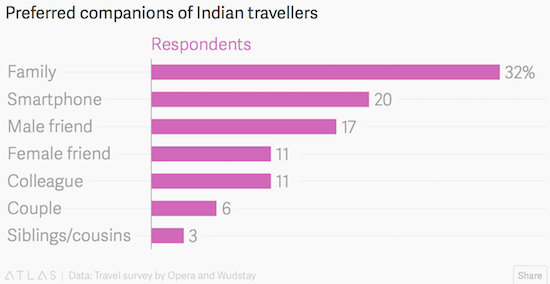
You haven't gone on holiday unless you can put pictures up on social media that you were on holiday - Indian travellers "like" internet access more than a bottle of wine or a hot shower.


Talking of tourism, being a space tourist will soon be something that is possible - Virgin Galactic gets FAA license to start flight-testing its spaceplane

Just wow. Nothing else one can say of this very long read about "The Brazillionaires" - Brazil's Billionaire Problem.

And then on other related matters, Brazil and otherwise, the Olympics are around the corner. There may be multiple concerns, the games will be a success, a roaring success methinks. The satire publication, The Onion has a light hearted look at a map of Rio - Guide to the Rio Olympics. My personal favourite: "125-foot-tall statue of Jesus Christ that can be viewed from every tourist's Facebook album."


Home again, home again, jiggety-jog. I saw some fellow write that he had been blogging for five years, his main reason to start was to clarify his own thoughts and enforce commitment, he says. I thought back to the reasons why I started this daily ritual and why we do it. The same thing, it does a few things, forces commitment to you, your colleagues and most importantly to your clients, without whom you never have a business. We will always remind ourselves that at the core of our business is the client and your ability to deliver long term returns with the correct service levels. It ain't easy, it is why it requires doing the same thing day in and day out.

Many youngsters have this idea that businesses are glamorous places to work. Whilst there can be the pomp and ceremony associated with many client facing businesses, ours aims to deliver superior long term returns with the best possible service levels. You have to do the hard stuff right, and repeat them. We have been at this blog for over 13 years now, since the middle of 2003. The journey continues day in and day out, we enjoy what we do and always appreciate the feedback from the community and our clients. Here is to the next 13 years!

Company news still owed to you. We will get to that, they are not going places (the companies are not moving). You should go places, you should vote tomorrow. Don't forget to do that. Ever.


Sent to you by Sasha, Byron and Michael on behalf of team Vestact.

Email us

Follow Sasha, Michael, Byron, Bright and Paul on Twitter

078 533 1063

Wednesday, 1 June 2016

Competitive Streak


"All people looking to do mega deals in almost any territory would be well advised of steering clear from rules that are too onerous in territories. If the competitions authorities were serious about employment and the cost to the consumer, they would ironically encourage all deal making activities. By encouraging competition, there are more jobs created and more pricing wars"


To market to market to buy a fat pig We saw an accelerated sell off locally in the last half an hour of trade, those anxious about a pending downgrade from the two ratings agencies about to release their report may do well to look over at the US markets which were also selling off, round about the same time. Still, we ended the day down just over a percent after having been higher during the course of the morning. There was one piece of notable news, Naspers, the company which owns over one-third of Tencent, rallied over 1.85 percent to breach the 1 trillion Rand market capitalisation.

They (Naspers) are effectively the fourth company on the exchange of that size and scale, the first homegrown one in SABMiller will be gobbled up soon by AB InBev, some strange conditions being attached by local authorities. Like zero job losses, like ever. Strange. Read this - conclusion of AB Inbev and SABMiller merger. SAB has to sell Distell, that is OK I guess, they have to do this inside of three years of the completion date.

This one is strange: "The Commission received concerns regarding the potential impact of the proposed merger on employment. These concerns relate to job security and post-merger restructuring which may result in the loss of employment. In this regard, AB InBev has undertaken that it will not retrench any employee in South Africa as a result of the merger. This condition will endure in perpetuity." AB InBev are never, ever allowed to retrench an employee. What happens if everyone stops drinking beer? Then what? Equally, who is going to watch this and make sure it doesn't happen? What is to also stop AB InBev from unbundling the local business and listing it separately here as "Castle" or whatever they want, so that they can have the highly prized assets in central and South America, as well as the rest of the continent. It is pretty vague though, the job loss issue could only apply to the actual merger and not external conditions which impact a company's decision to cut jobs.

Are we just being overcritical and thinking internally again? What about the European Commission and their competitions findings? A week ago that was announced, herewith the findings: Commission approves AB InBev's acquisition of SABMiller, subject to conditions. At the beginning, the company agreed to effectively sell the SABMiller brands Grolsch and Peroni, it has almost completed that deal with Japanese rival Asahi. They have also agreed to sell Pilsner Urquell, making sure that they do not have a dominant position in the Czech Republic, Hungary, Poland, Romania and Slovakia. Some of those countries drink beer like water, I suspect if you look at the bigger picture, there may be little scope to grow those businesses against that backdrop. The collective business, SABMiller and AB InBev combined will continue to hold onto the Corona, Stella Artois, Budweiser, Beck's and Miller brands in Europe.

The commission in Europe concluded that the take-over would, after these conditions met, not harm the consumer in the marketplace that is around 125 billion Euros. Now forgive me for being a cynic on these matters, if the consumer does not like the pricing of some process that is not that scientific (you can buy a beer making kit on Amazon for 40 bucks), you could drink almost any other beer, right? Sometimes the over-reach of the anxious competitions types stifle the very thing that they are supposed to be guardians of, competition.

If the pricing of the product got too outrageously high, then small mom and pop types would make beer in their backyards. It is not as if artisan beers are cheap, right? A case of Jack Black Craft Beer costs 315 Rand. At Makro, right now, you can buy CASTLE Lager Can (24 x 330ml) for 169.95 Rand. The competition, the craft beer people are charging a massive premium. And the people with beards who listen to LP's pay that. So what is the problem if jobs are lost in mainstream brewing and other jobs are created in "craft" brewing?

All people looking to do mega deals in almost any territory would be well advised of steering clear from rules that are too onerous in territories. If the competitions authorities were serious about employment and the cost to the consumer, they would ironically encourage all deal making activities. By encouraging competition, there are more jobs created and more pricing wars. If your country is not big enough to have multiple brewers, then that is unfortunate and the reality that exists. Anyone who wants to give it a go, can in fact do that. In the end the competition authorities are imposing overreaching sanction on businesses and in fact putting in place protectionist policies, which are the exact opposite of encouraging competition. Just my view, what does that count for?

Quickly, let us look at the market. Naspers was up, Mediclinic was too, as were another handful of stocks, the rest were down, and in some cases heavily. Woolies, Sanlam, Discovery, RMIH, financials, retailers and anything with a South African flavour getting heavily smoked. All this was in anticipation of the ratings agencies. Standard and Poor's and Fitch will let us know in the coming days of their decisions. Friday I think is the date. Until then, and there may be no downgrade for now, we would see "caution" being the better part of valour.


Over the seas and far away on Wall Street, stocks in New York, New York had another strange session. Up and down, the broader market S&P 500 closed down 0.1 percent, the nerds of NASDAQ closed higher by nearly one-third of a percent and lastly the Dow Jones Industrial Average was dragged lower by Boeing, Du Pont and Nike. Alphabet (Google) and Microsoft leading the market higher there. It is ADP day today, the day that Mr. Market starts to adjust their Friday numbers. it is all just noise, I can't remember if people remember all of the numbers at any one given time, yet I can remember when big companies listed and at what prices, Google, Facebook and the like. Alibaba, Twitter and co. Even when GM came back. That sort of thing.


Company Corner

Ahhhh .... OK, the folks from Bidvest have given us the right base price calculator for the purposes of capital gains. They are as follows must be apportioned in the ratio of 28.05585% to a Bidvest ordinary share held after the Unbundling and 71.94415% to an unbundled BidCorp ordinary share. So, let us presume that you had 100 shares of Bidvest last Friday at the close and you were lucky enough to have paid 250 Rand a share for those shares, somewhere around the second half of 2013.

You will now, as per the ratio and to the closest cent apportion the paid price of each entity as follows: 1) For your 100 Bidvest shares (the South African and Namibian business) will now have a base cost of 70.14 Rand, and your 100 Bidcorp shares will now have a base cost of 179.86 Rand. Our back of the matchbox calculation was pretty close, our ratio applied on Monday morning 70.1298701 percent for Bidcorp and 29.8701299 percent for Bidvest. We will correct our prices accordingly!


Linkfest, lap it up

Last week was the Dow Jones Industrial average's 120th birthday. Of the original 12 companies only one company is still in the index today - Where are they now!? The 12 members of the 1896 Dow Jones Industrial Average. Makes you realise that staying relevant is very difficult.

Once users start using one app for a certain task they normally continue to use it. WeChat has found the going very tough outside of China due to people already using WhatsApp and Facebook messenger, this stickiness of people highlights the value of the Facebook ecosystem and their "moat" around their products - Twice the Time - Same Number of Apps. As people spend more time on apps, so does the advertising revenue increase.

Infographic: Twice the Time - Same Number of Apps | Statista
You will find more statistics at Statista

This seems like bureaucracy at its finest - This 61-year-old hotel has never had a single guest.


Home again, home again, jiggety-jog. Markets today locally have started lower. All eyes on the ratings agencies here locally.


Sent to you by Sasha, Byron and Michael on behalf of team Vestact.

Email us

Follow Sasha, Michael, Byron, Bright and Paul on Twitter

078 533 1063

Wednesday, 25 May 2016

Ascending Market Cap


"There was a huge announcement from Ascendis Health, I had to rub my eyes at the size of the two separate deals, so big that it was (and is) bigger than their current market capitalisation. One in Cyprus and another in Poland, two operate businesses in deals worth over 500 million Euros"


To market to market to buy a fat pig If you were in everything else you were fine, if you were holding precious metals yesterday, you were not. That of course was the scene in the city that was founded on gold, the busiest province in the country, which is also named after gold. Place of. Results on the local front continue to pour in, there was an NAV update from Brait, it looks spectacular at face value, of course we were well advised a short while back of the moves, the market had pretty much baked that all into the cake. More on that company in the coming days. Tiger Brands, another Vestact investment, reported results that are increasingly seeing the Nigerian escapade being nothing more than a bad dream. Initially the stock was down heavily, it subsequently recovered through the afternoon and into the close of trade.

By the late afternoon we were catching the wave of a strong global market mix, financials roaring ahead, with Old Mutual rumoured to have found a seller for their US business, that stock was at the top of the majors leaderboard, up over five percent after all was said and done, above 40 Dollars again. See the NYT story - Old Mutual Says Buyers Are Interested in Asset Management Arm. The plans of the split coming to fruition, it is going to be another day of wondering what could have been when the group is a smaller and more nimble beast. The good news is that there are apparently several buyers, which may well mean that the company finds itself in the enviable position of being able to watch a bidding process unfold in front of their eyes.

Not winning and at the other end of the majors column were Amplats and AngloGold Ashanti, there seems to be a shift in sentiment towards the recent commodity run, I did see much earlier that the iron ore price was down around five percent on the day. Again, after a phenomenal run, defying expectations and more importantly the supply and demand dynamics that currently exist. There was a huge announcement from Ascendis Health, I had to rub my eyes at the size of the two separate deals, so big that it was (and is) bigger than their current market capitalisation. One in Cyprus and another in Poland, two operate businesses in deals worth over 500 million Euros, see the BD Live story - Ascendis Health acquires two companies in Europe. You have to hand it to this energetic team.

Over the seas and far away, stocks ramped up sharply, a session that saw good news finally interpreted as good news. Some good US home sales numbers for the month of April made Mr. Market think as a collective that it seems OK for the time being if the Fed does raise rates. In other words, whilst there were some people worried about the facility of the US economy, most recently PMI numbers have not been that great, there is a sense that perhaps a rate hike is warranted. The economy is strong enough. Who would have thought? By the end of the session stocks were up across the board, other than basic materials which ended the day flat. Technology was amongst the biggest gainers, Microsoft up over three percent, Google/Alphabet comfortably up over two percent, the nerds of NASDAQ as a collective up two percent exactly. The Dow jones Industrial Average added nearly one and one-quarter of a percent, whilst the broader market S&P 500 closed up 1.37 percent.


Company Corner

The merger of AB InBev and SABMiller is one step closer, Sabmiller Plc - Anheuser-busch Inbev Receives Clearance In Eu For Proposed Combination With Sabmiller. The approval is based on the condition that SABMiller selling most of their European assets. The more Wester European assets have already been sold to Asahi, the Japanese brewer, they now need to find a buyer for their central and Eastern European businesses, which can seen as bitter-sweet for the company. The purchase of Dreher brewery in Hungary was the start of the company's push to become a global player. The European assets "only" make up around 18% of SABMillers' revenues and even less of their profits, so AB Inbev won't to to sad to see the assets go. The main reason that AB INbev wants the SABMiller assets is for their African assets and South American assets, those markets are expected to grow around 40% over the coming decade.

The merger is still waiting for the US, China and South Africa to approve the deal, on the local front the Competition Commotion has asked for 5 extensions on their decision deadline. The date that AB Inbev management will be looking at is the 12 August, the SABMiller dividend payment date, if the deal can be completed before then the cash set aside for the dividend (around $1.5 billion) gets to go AB Inbev instead of SABMiller shareholders. The deal is not expected to be closed before then according to SABMiller.


Linkfest, lap it up

Given that the US is the globes largest economy and that the economy is driven by the consumer, the state of the consumer and their pay cheques have global ramifications - Everywhere you look there is good news for Americans' paychecks. As the country nears full employment, labour becomes more valuable which is coming through in the rise of wages - Good news is coming for America's low-wage workers.

Another look at how bad things have got in Venezuela, a terrible situation for the man on the street - Venezuela is on the brink of a 'political and economic meltdown'. This will no doubt affect Aspens operations there.

Computers may be able to beat humans in the game Go where some form of intuition is required but when it come to the creative side of things humans still have the upper hand - This is what a movie written by an AI looks like. The movie is really bad to the degree that it starts to be comical.

Here is one proposed solution to traffic congestion and air pollution. The new transport bus would take the place of around 40 busses, cutting down emissions and also run on electricity - Can China's Futuristic 'Straddling Bus' Finally Become a Reality?


Home again, home again, jiggety-jog. Our market should open in the green this morning following the wave of green from around the globe. Tencent in Hong Kong is up over 2%, Naspers should be over the R2200 mark again today with it's all-time high of R2270 with in range. We are also getting numbers from Mediclinic International today, the first look at the combined entity.


Sent to you by Sasha, Byron and Michael on behalf of team Vestact.

Email us

Follow Sasha, Michael, Byron, Bright and Paul on Twitter

078 533 1063
Tuesday, 13 October 2015

SABMiller, 44 quid init mate?


"There is an option to take shares, they would however be subject to a five year lockup and they would not be listed on any stock exchange. At the end of the five year period, they would be convertible on a one for one basis to an AB InBev share. If you elect for the part cash and part shares, the ratio is as follows: "SABMiller shareholders who elect for the partial share alternative will receive 0.483969 Restricted Shares and GBP 3.7788 in cash for each SABMiller share." The current share price of AB InBev is 111.49 Dollars. Apply that ratio, and you get to 53.95 Dollars plus 3.7788 Pounds in cash. Or in Rand terms, 720.11 Rand of shares and 77.36 Rand of cash, equalling an amount a fraction short of 800 Rand. Reminder, the share price closed last evening at 732 Rand. If you take the cash offer of 44 pounds, that equals 901.82 Rands a share."


To market to market to buy a fat pig. We often talk about "the market" as if it is a beast of some sort, or if it exists with a mind of its own. We make that mistake from time to time in which we use the S&P 500 as a benchmark for global equities, as we learn from several posts over and over, it is not. This post from Mark J. Perry, which is self explanatory: Fortune 500 firms in 1955 v. 2015; Only 12% remain, thanks to the creative destruction that fuels economic prosperity.

The explanation that Prof Perry gives in the middle of the article is perhaps not what you were expecting, I was however, seeing as I know his work pretty well: "The constant turnover in the Fortune 500 is a positive sign of the dynamism and innovation that characterises a vibrant consumer-oriented market economy, and that dynamic turnover is speeding up in today's hyper-competitive global economy." Do you get what he is trying to say here? He reckons the fact that the company turnover is so high, means that in his mind, innovation and dynamic deal making activity means that the composition of the index is always going to be changing, you would not however expect this much change over a 60 year period. Deals happen, company's merge and change course, go out of business for whatever reason, get smaller as a result of divesting, go private, a whole host of reasons. The market today is definitely not the market of tomorrow.


Company corner

{This was written before the known news!} What is really going on in the minds of the SABMiller board, many pointing out that the kingpin in all of this is the chairman Jan du Plessis. He has only been chairman of the business since 1 September 2014. He is also the chairman of Rio Tinto, and has been so since 2008, thwarting BHP Billiton in the merger of equals, suggesting that the company was undervalued. Or wait, probably it was actually the financial crisis that led BHP Billiton to withdraw their bid nearly a whole year after they announced it initially in November 2007. Back to SABMiller, the shareholders appoint the board to act on their behalf, they voted them in and now I guess would be engaging with this board during this whole process. From what we have heard both the main shareholders, Altria (with nearly 27 percent) and BevCo (the Santo Domingo family, with nearly 14 percent of the shares) have apparently been leaning towards this deal.

Yesterday there was a another offer on the table by AB InBev, still not at the 44 pound Sterling mark that would crack this deal. So why does and why is the SABMiller share price trading at 36.67 Pounds? It is still a long way away from any price put on the table, or rumoured price. If the SABMiller board are really on the same page as the PIC and think that this deal significantly undervalues the company, then why isn't the share price trading closer to that? Before AB InBev came along, the share price was trading below 30 pounds a share, admittedly in a depressed market. Let us presume that the stock had recovered in the August wash out, it is fair to suggest that it would be trading around 32-33 pounds, and could be around 10-15 percent lower than it is currently. What would it take then to move the share price higher, to the 43-44 Pounds where AB InBev is hovering currently?

Even if the company garnered a, let us say 23 multiple, as a "growth stock" in emerging markets, along with their developed market exposure, what earnings would they need in order to get there? Working backwards, around 1.91 pounds worth of earnings, which is a full 58 cents higher than the last financial year. Or another 43 percent higher in earnings from here. Given that this (as per the last annual report) has been the growth rates in EBITA:


It may take another four to five years to reach that 1.91 Pound earnings mark, and as such at a 23 odd multiple, that would be the next time that the share price got to that level on a "normalised" basis. Now there are so many moving parts in here that it makes charging the flux capacitor easy. My drift is that if AB InBev is thwarted by Jan du Plessis and the rest of the board, are shareholders happy to wait until 2019, 2020 to see the share price get back to that sort of level? What has Alan Clark got to gain if this deal happens? A lot it seems.

If you look at page 96 of the last annual report, you can see that he had outstanding options of 1,249,168, having seen 715,401 options vested and exercisable as at the same date. Equally, he owned at the end of the period 298,764 shares in total. Doing simple math, a deal at 44 pounds a share would net Alan Clark 13 million pounds on his shares free and clear, not to mention the gains on the options that have vested.

Big numbers we are talking, even more eye popping when you consider the number in Rand terms. We are talking nearly 270 million Rand, just on the shares free and clear, holy smokes. I have not done the math on the share options, are we talking somewhere in the region of 700 odd million Rand. Surely not, for a corporate job of leading a company that sells beer, with ten years of options? Does that sound egregious, or is it just par for the course?

So at the same time you must consider that the board, and el chiefo himself has loads to gain if a deal of this nature does happen. And I am pretty sure that he can happily spend more time with his money, as can the rest of the board. As we have said over and over again however, it surely must matter more what the top shareholders say, here they are, we already know that the PIC have said no, possibly for exchange control issues alone:


There is nothing really to do at this juncture, the share price tells you that Mr. Market is sceptical of a deal at this point. If that was and is the case by the close of business tomorrow London time, then there are two things to watch, firstly, what recourse will the shareholders have, most especially if the largest ones wanted a deal and secondly and more importantly, to what level will the share price fall if a bid falls away. Most especially against the backdrop of average volume growth numbers recently and measured (in quarts if you want) growth in emerging markets, the strength of the company. Let us watch it!

Wait. As this is a fluid situation we get to update it in the middle of writing. It seems like, as per the website: SABMiller and AB InBev agreement in principle and extension of PUSU deadline. Ha-ha, all the writing that I have just done above was speculation. I guess that a deal is not a deal until the money is in the till, as they say in the classics. As you can see, there is a partial share alternative, which should please the PIC. There is a whopping 3 billion Dollar break fee.

There is an option to take shares, they would however be subject to a five year lockup and they would not be listed on any stock exchange. At the end of the five year period, they would be convertible on a one for one basis to an AB InBev share. If you elect for the part cash and part shares, the ratio is as follows: "SABMiller shareholders who elect for the partial share alternative will receive 0.483969 Restricted Shares and GBP 3.7788 in cash for each SABMiller share." The current share price of AB InBev is 111.49 Dollars. Apply that ratio, and you get to 53.95 Dollars plus 3.7788 Pounds in cash. Or in Rand terms, 720.11 Rand of shares and 77.36 Rand of cash, equalling an amount a fraction short of 800 Rand. Reminder, the share price closed last evening at 732 Rand. If you take the cash offer of 44 pounds, that equals 901.82 Rands a share. It is in the short term more advisable to take the cash, what the share price trades at today however, would reflect reality in-between of the blended option.

Not a done deal, closer to the end of the road and now presenting a titan that would sell around one third of all the beer in the world. AB InBev are that confident to present a large break fee, equally the shareholders of SABMiller are taking the lock up shares and partial cash, slicing some of their investment off (mind you, that is probably more than they got the shares for in the first place, when those respective deals happened). As Warren Buffett always said, you should be willing to own something on the basis that the market closed tomorrow for five years, for Altria and BevCo this is about to become a reality if all the conditions are met.


Linkfest, lap it up

Welcome to the future. The technology is still wildly expensive but will come down with time as production numbers increase and as technology gets better - A Prosthetic Arm That Gives Amputees the Sense of Touch

What are your returns likely to be going forward?Probably anything except the average return in the market - Annual Stock Market Returns. Here is why a long term buy and hold strategy has worked, assuming that you hold quality - "Of the forty years when the Dow was negative, the average return was -15.3%. What's important to understand is that a 15.3% gain does not negate a 15.3% loss. A decline of 15.3% requires a 18.1% gain to break even. The good news is that the average positive return is 19.4%."

Take this quick quiz and see if reality meets perception - A quick puzzle to tell whether you know what people are thinking. The scenario illustrates what is called the "majority illusion", where people who are in the majority on certain views think they are the minority. The reason? The people in the minority make more noise and connect with more people, thus creating the illusion that their view is in the majority. A good example is the news that we read everyday, only picking the outrageous things to write/read about means that your "reality" becomes the idea that the world around you is falling apart and outrageous.

The Nobel prize in economics was announced yesterday, here are some interesting facts about the Scotsman who now lives in the US - Nobel Prize Winner Angus Deaton Wrote the Book on Inequality Before Piketty.


Home again, home again, jiggety-jog. SABMiller has opened nearly 11 percent higher. Nowhere near the cash price, closer to the shares and cash price, perhaps telling us that this is by no means a done deal, nor is it all totally cash. That second part we know. As a result of that monster move from one of the biggest listed companies on the exchange, the resources complex quite a bit lower is making sure that the balance of the market is not significantly higher.


Sent to you by Sasha and Michael on behalf of team Vestact.

Email us

Follow Sasha, Byron and Michael on Twitter

087 985 0939

Thursday, 8 October 2015

All foam and no beer


"Phew, I don't know, the board might be putting on a brave face here, the main shareholder, Altria, have told the board they support the take over. Perhaps this is just grandstanding, trying to eke out a little more. It could end badly however."


To market to market to buy a fat pig. Another day of gains for the local exchange, this time it was led largely by the resources, those company share prices were flying. Admittedly off a lower base. Anglo American was up over 11 percent, Glencore up over nine and a half percent, BHP Billiton up nearly five percent, it was all happening for the mining houses. Year to date however, the picture is still looking pretty bleak, Anglo down 36 percent, Glencore has had their fair share of problems, down 51 percent year to date and lastly of those stocks, BHP Billiton the best of the bad bunch, down only 7.6 percent. If only really were only.

Lonmin shares were up an astonishing 27 percent, yet amazing (and true) they are still down 78 percent. Why were these stocks up so much yesterday? Particularly in light of worse than anticipated German numbers? Is it really as simple as the US Fed keeping interest rates on hold? If that is the case, that hardly seems like something has fundamentally changed overnight and someone has flicked a switch. Supply is plentiful, demand remains, it is however not growing at the same rates as in the past. I saw Glencore urging the competition to close uncompetitive mines. I wish it was that easy, for the sake of price stability and price discovery. Nobody wants to turn off the taps, it is only when "things" get desperate that this is likely to happen. And until such a time, we will remain in a lower-for-longer price environment.

Impala Platinum referred to this yesterday, as they revealed that their placement of 102 million shares had raised 4 billion Rand, at a low price of 39 Rand. I guess when they first announced it, the lowest price was somewhere in the region of the mid twenties. I wonder who participated in the 16.2 percent new shares? The money will be used to complete shafts 16 and 20 at the Impala Lease Area. These shafts are part of the future of the business, known as the "triple build-up" and include shaft 17, these are not too far north of Rustenburg. Headwinds from all directions have forced the company to raise money at depressed prices, something all of their competitors have had to deal with. They have to press on regardless, even if the future of the diesel motor is being questioned.

The main news of the day however was the announcement of the Rejection of proposal from Anheuser-Busch InBev SA/NV by the SABMiller board. Quite simply the board said "it still very substantially undervalues SABMiller, its unique and unmatched footprint, and its standalone prospects." You know what happens when the bid falls away? Remember Syngenta and Monsanto? Since the bid fell away, the stock is down about 18 percent. And Syngenta trades on a 21 multiple, at the higher bid price, SABMiller would be trading on a nearly 30 multiple with volume growth of 2 percent. Phew, I don't know, the board might be putting on a brave face here, the main shareholder, Altria, have told the board they support the take over. Perhaps this is just grandstanding, trying to eke out a little more. It could end badly however.

Over the seas and far away in New York, New York, stocks enjoyed a surge from energy and materials, that sent the broader indices all comfortably higher. General Electric had another great session, the bluest of blue chips, lean in a little here, is up 11.32 percent over the last five sessions. At the opposite end of the spectrum, deep in loser territory (on the day, for stocks) Yum! Brands were absolutely crushed, the main problem was that their KFC brand in China showed only 2 percent growth, Pizza Hut was marginally lower in terms of sales. Ouch, the stock down 18.88 percent. This does raise concerns about the broader concerns around Chinese growth, consumption was supposed to lead us higher. Although, Nike were amazing in their recent sales update from China, could it be part of some of the issues that the brand has had with their chicken? Not sure, we will just have to wait and see.


Company corner

A pretty innocuous announcement from Bidvest yesterday that possibly has longer lasting implications for the future of the business is definitely worth dissecting. I for one, at a separate level, am so glad that the succession arguments have gone away. For one, Buffett and Munger have a collective 175 years between them, Brian Joffe is only 68. And whilst Berkshire is 50 years old, Bidvest is "only" 27 this year, having started with food businesses Chipkins and Sea World. Yet the team, led by Joffe has managed to build an empire that is now worth 115 billion Rand, something that is really sizeable, with annual revenues in excess of 200 billion Rand.

As long as the board want Brian Joffe, as long as he wants the job, we should expect him around for a few more years at least. You could argue that any of the lieutenants could do a good job, David Cleasby, the financial director has been there for nearly a decade and a half, he is in his early 50's. Bernard Berson has been at Bidvest for nearly 2 decades, he is just 50. There is also Anthony Dawe, his is nearly 50 and will have run the Bidvest Freight division for 10 years next year. Plenty of talent around.

That also includes Mpumi Madisa, a rising star at Bidvest, she is in her mid thirties, she has only been at the group for a couple of years. Another lifer at the business Lindsay Ralphs is possibly around 60 (he runs the South African business) too old, with all due respect. What do I know, the release suggests that Lindsay and Bernard can express their "entrepreneurial flair and take direct responsibility and accountability for the performance and growth of their companies" Perhaps Lindsay gives it horns day in and day out.

The announcement I am referring to is titled The Bidvest Group Limited formalises internal restructuring. It is simply splitting the business into three segments, Bidvest Industrial Holdings (BIH), which houses the current Bidvest South Africa and the Namibia interests. At the full year stage this business as a collective would have revenues of 91.3 billion Rand and trading profits of 5.546 billion Rand.

Then there is the more sizeable Bidvest Foodservice International Limited (BFI), which has all the foodservice businesses, local, Europe, UK and Asia Pacific, as well as recent South American forays. Total revenue at the full year stage for the Food Services business was 116.5 billion Rand, with trading profits of 3.986 billion Rand. Lastly, there is a business called Bidvest Capital Proprietary Limited (BC) which are the South African properties and all the companies that Bidvest does not have a majority stake in. Adcock, Comair, Cullinan and Mumbai Airport.

What is all this for? For the past few years the company has been reporting almost in this manner. Is this part of a bigger push and a chance to be more aggressive in defined areas? Some changes are just cosmetic, I suspect that this is the complete opposite, a re-energised Bidvest board, more focused strategies and more responsibilities for what has been one of the greatest entrepreneurial South African company stories of our time. We continue to accumulate Bidvest.


Linkfest, lap it up

Having a look at photos from days gone by helps us put things into perspective - Yale just released 170,000 government photos of the Great Depression.

This is why regulators and tax authorities will always be one step behind - The inaugural Luxembourg tax-avoidance power rankings. There is currently a big push from the international community to standardise tax codes around the world, which will make many of these tax structures ineffective. Loopholes exist because tax codes for each country were developed in isolation of other countries. This has resulted in mismatches of clarification and treatment of many things.

As an Apple shareholder, headlines like this naturally catch my eye. The analyst has gone into some detail about the watch and what its future may look like. I have no doubt that wearable tech will start to play an ever increasing role in our lives, especially when it comes to health data being collected by the device. The big test for the Apple watch going forward will be its longevity, spending $350 on a watch that can last 5 years seems a bit more reasonable than spending $350 on a watch that only lasts 2 - Apple Watch Is Being Severely Underestimated

One of the reasons that dividend yields have kept up with share prices is because of the increase in profits. Having a look at profit margins for the US economy in aggregate they have been on the rise - Why Are Corporate Profit Margins So High?


Home again, home again, jiggety-jog. Chinese stocks are up like crazy, Japanese stocks are down a percent, as are the stocks in Hong Kong. There is a small matter of the Federal Reserve minutes release a little later this evening, for the markets that is far more important than the Springboks advancing to the next round of RWC. Well done to KES' finest, Bryan Habana, who equalled Jonah Lomu's record of WC tries. The purists will argue that Habana has had an extra World Cup, they can also go and see how many world cups Lomu has won, whilst they are at it, ok?


Sent to you by Sasha and Michael on behalf of team Vestact.

Email us

Follow Sasha, Byron and Michael on Twitter

087 985 0939

Wednesday, 7 October 2015

October is good/bad


"October itself holds a special place in the hearts of traders, perhaps for the wrong reasons. In the down section, the worst 20 sessions for the Dow Jones, 9 are in October and 3 in September. In the best of the moves, 6 are in October, only 2 in September. No wonder the market pundits approach the period after the Northern Hemisphere summer with some trepidation."


To market to market to buy a fat pig. It was one of those rare days for the overall equity market in Jozi, Jozi, stocks as a collective closed down a single point. And as such we ended up where we started. So if you own the index then it was a snore. We don't own the index, we own companies. I saw that Richemont has had a few decent days after their half of Yoox (slash) Net-a-Porter now has a price, closing at an all time high Rand value. The stock in Switzerland is about 13.5 Swiss Francs off the all time highs reached in May of last year. Year to date in Swiss Francs the stock is down nearly 9 percent, that includes the Swiss Franc to the Euro peg unwind.

I am afraid that another one of the big industrials did not enjoy as much of a good day, or indeed two good session like Richemont, SABMiller is said to have rejected the AB InBev advances. It all amazes me, that people familiar with the situation just cannot help themselves and have to let everyone know, including media houses. And surely if they know, then that constitutes some sort of insider information, I suppose that as long as you do not act on it, i.e. if the talks have fallen apart or broken down, if you know ahead of the market, you cannot short the stock. So if this is the case, SABMiller wanted closer to 45 Pounds a share (the stock trades right now at 37.28) and AB InBev are at "40 is as high as we can go", then perhaps the deal will fall apart. SABMiller reckon that they can paddle their own boat in all of this. (Just before sending this to you AB InBev have raised their offer to 42.15 pounds a share, making it a 44% premium on the closing price before the takeover news surfaced)

Another 10 percent from here would see the world's largest brewer buying the second largest, SABMiller for a 30 multiple. I presume in deals like this, they reckon that they could get their money back far quicker than just 30 years, either way you look at it, it is expensive. Anyhow, there is little gained from speculating, other than gossip is deeply grained in our psyche, perhaps Mrs. Ples didn't fetch enough firewood, or was useless at skinning animals and the others spoke. Either way, someone is going to be disappointed, nothing ventured, nothing gained. The question then remains, if SABMiller is essentially a target, it could only really be a target for one.

Altria are the key here for me, at 26.99 percent, they must be thrilled that AB InBev are hunting their stake in SABMiller. Is it noncore? Who knows, they (Altria) own cigarette manufacturers, smokeless tobacco manufacturers, cigar producers and they own premium wines, the Ste. Michelle wines, which include 20 wine farms and 18 partnerships, ever tried any of these? -> Ste. Michelle estates. Let us wait for this time next week, OK?

Over the seas and far away, by session end in New York, New York, blue chips (the Dow Industrials) eked out a narrow gain, the broader market S&P 500 dropped 0.36 percent, whilst the nerds of NASDAQ lost over two-thirds of a percent by the time the session closed out. Holding stocks aloft was the energy sector, oil prices have rallied off their low base recently, healthcare stocks are still taking heat after that one little tweet from Hillary Clinton. Really? Perhaps the stocks as a collective, those in the biotech, biopharma space were looking a little stretched. General Electric jumped another 1.75 percent to end at 27.29. I read the Trian presentation yesterday, they do make some compelling points about the business. Whether or not Trian have the muscle with one percent of the shares to make a real go of it, convince the company to do more and work harder for their shareholders, that remains to be seen.


I stumbled across the biggest percentage moves for the Dow Jones Industrial yesterday, those are both up and down. The list requires some analysis, if only for fun and not for trying to predict anything. Looking at a graph of past data is never going to tell you anything about the future, OK? The table, for reference point is available here: Largest percentage changes. Of the top 20 up or down days, all bar for one are over 7 percent, this is for the Dow Jones Industrial. The period of the Great Depression started in 1929 and ended in the late 1930's, sadly closing out the decade with another world war. Let us stick a finishing date on it of 1935, for the purposes of this exercise.

23 out of the 40 moves of 7 percent or more occurred in that period, including the biggest ever single day gain for the Dow Industrials, the ides of March 1933, the 15.34 percent move up (in a single day), where the Dow closed out at 62.10 points is still the biggest move ever. Those dark days of September 2008 through December 2008 has 6 dates of those moves larger than 7 percent, 4 down days and 2 up days. Days in which the Dow Jones moved up more than 10 percent, 10.88 percent on the 28th of October 2008 and 11.08 percent on the 13th of October 2008. October itself holds a special place in the hearts of traders, perhaps for the wrong reasons. In the down section, the worst 20 sessions for the Dow Jones, 9 are in October and 3 in September. In the best of the moves, 6 are in October, only 2 in September. No wonder the market pundits approach the period after the Northern Hemisphere summer with some trepidation.

The other thing that struck me about the table was that there were lengthy periods of none of these major moves. Not one move of that nature in the 1900's, only one in the 1910's, the only ones in the 1920's started with stocks melting down at the end of the decade. And then from 1939 to 1987, nothing features on this list. World War II, Cuban missile crisis, Vietnam War, oil embargo crisis, the Cold War, nothing triggered a worthy enough move to make this list of 7 percent plus or minus. There was a week (perhaps weak) period from October 19 1987 to 26 October 1987 in which three such events occurred, two down heavily (including the greatest one day loss, Black Monday, 22.68 percent down) and one up sharply. Causes include the early intervention of machines in trading "decisions". Wikipedia has an amazing piece that you might have to read twice and then LOL (that is laugh out loud to the folks who forgot to learn text language and can't spot emoticons):

    Following the stock market crash, a group of 33 eminent economists from various nations met in Washington, D.C. in December 1987, and collectively predicted that "the next few years could be the most troubled since the 1930s". However, the economy was barely affected and growth actually increased throughout 1987 and 1988, with the DJIA regaining its pre-crash closing high of 2,722 points in early 1989.


Excuse me here for a second whilst I ROFL. Thanks for that group of 33 eminent economists. What that event did do was insert the circuit breakers, which halts trading for a bit in cases of extreme moves. And whilst everyone talks about that event, that single black Monday as their reference point for the 1980's stock market, they forget to note that the equities market went up a whopping 400 percent in the 80's. Yes, the era that forced us to accept mediocre clothing styles, bubblegum music (and some good ones), corny TV shows, at least brought us amazing returns on the equities market.

The last "thing" that I noticed about this list is that the tech bubble implosion had only one date attached to it, only one negative move of more than 7 percent. That is it. If you however isolate the dates from September 1998 to October 2002 for the NASDAQ specifically, you get a cross section of a mountain. From 1500 points to 5000 and then back to 1200 points. It was horrible, there were many victims and greed was good, mostly bad for many people.

Whilst this is all fun to look at and analyse, it does tell us very little or nothing about the future or about what your returns are likely to be. If you had a DeLorean DMC-12, a crazy old scientist who had access to plutonium and a willing and younger Michael J. Fox, perhaps you can go and find some stock prices, remembering that Marty McFly travelled forward in time to the 21st of October 2015, two weeks from now. Believe it or not, Pepsi is releasing 6500 special edition drinks, costing 20.15 Dollars each. And Nike plans to release the Nike Mag, with Power Laces, if you remember the movie you will know what I am talking about.

Perhaps for the sake of trying to predict what is going to happen in the future, what is likely to transpire, perhaps this research from the people at CNN is somewhat of a pointer. In keeping with new acronyms, FOMO and YOLO are real. Why some 13-year-olds check social media 100 times a day. Send me your views on how you see the world in 10 years time, and even harder, as the script writers for Back to the Future no doubt found out, in 30 years time. Driverless cars, speedier transport methods that are cheaper, more alternative energy, foldaway or implantable communication devices, all of that, let me know what you think.


Linkfest, lap it up

Our phones are becoming more and more a gadget that our lives revolve around, here is an example of how our phones have moved to customising our cars around us - Apple CarPlay review. The long term trend that I think will happen is that your phone will be at the centre of your personal ecosystem. Where you will control your house with your phone, all the health information gathered by your smart watch will be sent to your phone, you will use your phone for more e-commerce (having credit card details, home address and shopping list preloaded) and maybe as far as only having a screen and docking station at work.

I think sometimes we discount what our ancestors knew and did, too much. What medicines and R&D could you possibly come up with before the computer was around? - How traditional Chinese medicine finally won its Nobel Prize. The part of the article that struck me the most was not that the traditional medicine worked but that the ancient scrolls had a method of extracting the required compound that worked better than we could come up with today.

This is a good problem to have, students using Amazon entrenches them as future customers but more importantly Amazon generally works out cheaper for them in terms of buying textbooks - Amazon Prime is wreaking havoc on college mailrooms


Home again, home again, jiggety-jog. Something new to worry about, German factory production numbers two days in a row looking pretty weak, and I guess confirming the IMF and the World Bank fears of a slowing global economy. Earnings season kicked off yesterday, the good being a solid beat by Pepsico, the stock was up one and a third, more globally however Samsung Electronics (which includes the phone of course) closed this morning in Seoul up 8.9 percent, the biggest gain for the stock since 2009. Year to date however the stock is down 5.88 percent in Korean Won. A good day move, a little more heavy lifting to do in order to break even for the year.


Sent to you by Sasha and Michael on behalf of team Vestact.

Email us

Follow Sasha, Byron and Michael on Twitter

087 985 0939

Tuesday, 6 October 2015

Emirati tie up drives Mediclinic


"Quite simply it means that a listing in London gives the combined larger group access to cheaper funding for any future deals, it gives them a main board presence, which in turn means shareholders with deeper pockets. Although you can argue that Remgro are "just fine" thank you very much as Remgro own nearly 42 percent of the group, the Government Employees Pension Fund own 8.72 percent, that is more than 50 percent right there."


To market to market to buy a fat pig. Sit down and stop Yellen. Wait, that isn't right, Yellen sits down. Who knows? Was the jobs report Friday that bad that the Fed do not have to move ahead with raising rates? Was it the revisions lower, flat wages growth and a shorter work weak, pointing to workers generally stuck in a rut? Perhaps. Mr. Market is suggesting that rates will not go up this year, even if Fed Chair Janet Yellen said that they would. Ben Bernanke was on CNBC yesterday, promoting his new book, he really is amazing.

All the armchair critics of the Fed are no different to the sports critics, who sit in their living room and tell their mates that highly paid hand selected officials and even higher paid individuals who have sacrificed much (born with talent too) are useless, rubbish, pathetic. All of the Federal Reserve members are highly decorated public officials who are the best people for the particular job at that time. The end. Equally, your favourite sporting team is filled with the best and most talented people for the job. Except Brendan Rodgers. Kidding. That is Paul's team, Liverpool, my wife too. Careful now ....

Our market in Jozi, Jozi added over 1000 points yesterday, to close up 2.19 percent and above 52 thousand points, it was certainly an amazing turn of events with rallies across the board. Glencore racked up an amazing 16 percent on the day, the price in London is now at 115 pence, or 10 pence light of where the group did their capital raise that management participated in (to the tune of 22 percent of the 2.5 billion Dollars).

There were only three stocks in the top 40 which were down, one of them, SABMiller released a trading update this morning. It hardly looks mind blowing to me, what do I know however? Volumes for Q2 grew by 2 percent. The two regions for the company that saw volumes decline were North America and Asia Pacific, Africa and Latin America were strong. In total "net producer revenue" was up 6 percent, again, Africa and Latin America leading the charge. North America sliding, down 2 percent. More wine drinking? Just generally less beer drinking? SABMiller is down two percent at the start in London. More important, with just a week to go, what are the 3G Capital guys thinking, having read this?

Over the seas and far away in New York, New York, stocks also rallied hard, up over 1.8 percent on both the Dow Jones and the S&P 500. The nerds of NASDAQ added just over one and a half percent. GE popped 5.34 percent after it was revealed that activist investor Nelson Peltz (through the Trian fund) had taken a 2.5 billion Dollar stake. So what, that is only 1 percent or so, and whilst it puts him in the category of largest 10 shareholders, hardly moves the needle. Peltz wrote a long document, 88 pages in total, suggesting why the group should buy back more shares, engage in more mergers and acquisitions, you read it for yourself and let me know: Transformation Underway...But Nobody Cares

GE has still underperformed the S&P 500 over the last 5 years, even over a period of 10 and 20 years the stock has underperformed the index. Sigh. Trian thinks the stock should be around 40 to 45 Rand, they believe at 14 times earnings the stock is cheap. The stock is trading comfortably below the 2007 stock market highs and is half of what the stock traded at in 2000, the returns have not been good for the longer term money. Mind you, they have nearly quadrupled from the market low in 2009, as ever, it depends where you bought the stock.


Company corner

A simple SENS announcement from Mediclinic yesterday that they were trading under cautionary has led to an announcement this morning. Well, the news was known yesterday in London, the share price of Al Noor Hospitals group (listed on the London Stock Exchange) rose 7.6 percent, the release came at 4 pm London time (just as our market closed). The company (Al Noor) has per their website overview segment was founded in 1985 and operates in Abu Dhabi and Dubai. Al Noor operates three hospitals and seventeen medical centres in the Emirates, the main focus is Abu Dhabi. As of the end of last year the company had 218 operational beds, and had nearly two million outpatient visits. There was a couple of graphs that stood out for me, in the annual report (2014) of Al Noor:


There are some obvious countries in there, Mexico, the USA and New Zealand, I didn't realise that the Middle East had such a problem with obesity and by extension diabetes. Almost one in four people in Kuwait (and nearly the same in Saudi) have diabetes. Overeating, junk food and not enough exercise. Changed diets and changed habits. Increased wealth certainly has its benefits for society at large, the trappings of an indoor lifestyle (in very hot climates) and faster and easier calories has meant that the region is now sitting on a medical time bomb. It makes sense how it happened, if you think about it. To change habits, to break the cycle is far harder and requires the collective.

Back to the relative scale. The current market capitalisation of Al Noor is 1.07 billion Pounds, or at the current exchange rate 22.03 billion Rand, Mediclinic at the close last evening (the stock was up 3.26 percent) had a market capitalisation of 114.55 billion Rand. That is roughly 19.2 percent, Al Noor is to Mediclinic, more than just bite size. Bearing in mind that the group just raised 10 billion Rand in order to pay for a 30 percent stake in Spire Healthcare.

So what would this be? How would they (Mediclinic) go about this? It would be a combination of the two groups, let me do a copy and paste (something that had led to the death of many writers not giving credit) of the SENS announcement from this morning: "The Possible Combination, if completed, would be implemented through the issue of new Al Noor shares to the shareholders of Mediclinic and may be classified as a reverse takeover of Al Noor by Mediclinic under the applicable UK listing requirements. Accordingly, the combined business would benefit from a premium listing on the LSE together with a listing on the Johannesburg Stock Exchange. The Board believes that this will provide incremental benefits to Mediclinic through increased liquidity and a reduction in cost of capital. The Possible Combination provides Mediclinic with further diversification of its geographic profile internationally, as well as exposure to additional US Dollar-based, high-growth earnings."

Quite simply it means that a listing in London gives the combined larger group access to cheaper funding for any future deals, it gives them a main board presence, which in turn means shareholders with deeper pockets. Although you can argue that Remgro are "just fine" thank you very much as Remgro own nearly 42 percent of the group, the Government Employees Pension Fund own 8.72 percent, that is more than 50 percent right there. So who are the Al Noor shareholders? Here goes, as per their annual report:


28 percent is held by Sheikh Mohammed Bin Butti Al Hamed (the Sheikh serves as chairman of the Abu Dhabi National Hotels Company and is also an investor in Abu Dhabi motors, a busy man) and 20 percent is held by Ithmar Capital, a private equity crowd in the Middle east. Ithmar is run by Faisal bin Juma Belhoul and Khaldoun Haj Hasan (they are both non-execs at Al Noor), these two both went to Boston and both have engineering qualifications. Lastly, just over 6 percent of the business is owned by a vehicle called Maksar, which is owned by Dr. Kassem Alom, the founder and deputy chairman.

In terms of both company's relative valuations, it is about the same. Al Noor trades at just above 20 times, Mediclinic commands a slightly higher premium at 23 times historic earnings. That is not cheap, neither of them are cheap, they operate in a great space however. The 2014 Al Noor annual report suggested that revenue was growing at 23 percent, earnings per share grew at 23.4 percent. Of course remember that nothing may come out of this, it would seemingly make sense for both parties to be drawn to one another, geographically it makes sense for both. Now, about the price, that is always the trickiest part of the conversation. We wait and see, this is a positive for the hard chargers at Mediclinic, and explains the recent price movement, someone somewhere knew something. That always irritates me.


Linkfest, lap it up

Here is how the functionality of your iPhone has changed with the new operating system - Your phone's home screen is dead. I think as we move more to smart wearables, Siri and your operating system becoming more intuitive will be important.

Due to competition and the consumer wanting to go green, solar panels are getting cheaper and more efficient - SolarCity Creates A 22% Module-Level Efficient Solar Panel. This new solar panel will be the worlds most efficient but I suspect competitors will come up with a more efficient panel in the near future.

Moving away from cash makes things far more efficient and safer for all people involved - Card payments boom across the world, led by Finland. Given this strong trend towards a non-cash society is the reason to be a Visa shareholder and to a lesser extent an Apple shareholder (apple pay). I'm shocked that 5 billion cheques are still written each year.


Home again, home again, jiggety-jog. Mr. Market is giving up some of the fabulous gains from the previous sessions, not altogether surprising. Some German Factory orders that were, how do you say this, not good. Mediclinic is up nearly three percent, that is good news for shareholders, it's been a bumpy ride, with the Spire deal and the rights issue. Having said that, the stock is up nearly 20 percent year to date.


Sent to you by Sasha and Michael on behalf of team Vestact.

Email us

Follow Sasha, Byron and Michael on Twitter  

087 985 0939