Monday, 11 September 2017

Storms Brewing


To market to market to buy a fat pig. The good news is that North Korea didn't fire any more missiles this weekend, as South Korea had feared. As a result, Asian markets are well in the green this morning. More good news for a Monday morning, Hurricane Irma, which is currently moving over the Florida coast is losing steam. The hurricane has been down graded to a category two storm and is expected to weaken as it moves over land.

Another storm that is just gaining traction though, is who will be the next leader of the ANC and most likely the country. There are rumours of another cabinet reshuffle on the cards, with Cyril Ramaphosa's Deputy President post in the firing line for a change up (Cele drops bombshell of plan to remove Ramaphosa). As we have spoken about many times, owning large multi-national companies are an easy and effective way to diversify your risk. Owning something like Naspers, which is currently just the Rand price of Tencent, is a way of holding international companies without needing to externalise funds.

We live in a global village, as such you have options further than investing in Rands. For most South Africans the amount you are allowed to transfer offshore without running into exchange control issues, is much higher than they will ever need. Which means owning companies like Apple, Facebook, Johnson and Johnson, Tesla and Visa, is much easier than many expect. Exchange controls are not usual, there are many more countries who don't have restrictions on capital flows than those who do. Our exchange controls were introduced in 1961, the same year that our currency changed from the South African Pound to the South African Rand and South Africa became a republic.

Friday was unfortunately another red day locally and a mixed day in the US. Here is the scorecard, the Dow was up 0.06%, the S&P 500 was down 0.13%, the Nasdaq was down 0.59% and the All-share was down 0.27%. The concern for US markets on Friday was around Hurricane Irma and North Korean missiles.


Linkfest, lap it up

One thing, from Paul

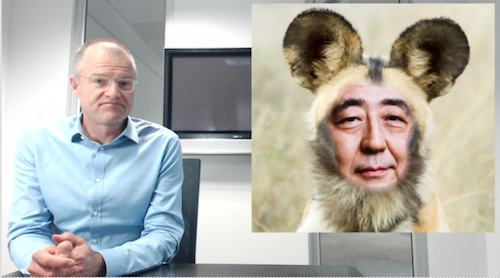
This week's Bluners: Wild Dogs vote by sneezing, Fascism on the rise, toy industry doing badly and a dumb product (denim jacket) - Blunders - Episode 72


Michael's Musings

According to this article, Disney World in Orlando, Florida has only closed its doors twice in the last decade. So closing it now for hurricane Irma, shows how severe the hurricane is - Hurricane Irma has shut down Disney World and will cost the company millions. Another fascinating number is how much money the park makes a day. The park generates $30 million a day in revenue, around R390 million! Having a look at how big Walt Disney World is, you will be astounded to hear it covers 110km squared. That is huge! There are 36 hotels, four golf courses and four theme parks.

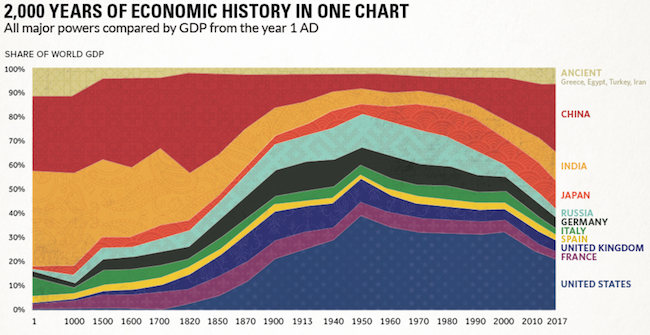
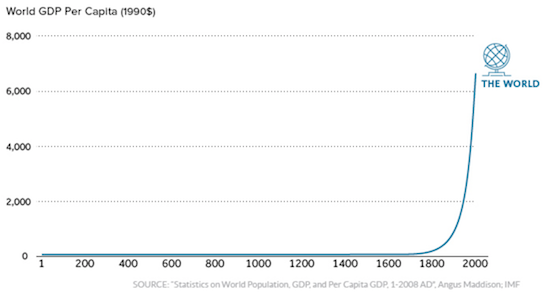
Here are two great charts from Visual Capitalist - 2,000 Years of Economic History in One Chart. The second graph is very significant. Note how the wealth has increased for the average person on the globe. Even though populations have grown exponentially, the wealth created has grown even faster. There are many debates about what our population size should be, how wealth should be distributed and what our relationship with the earth should be. What is not debatable is that the average person today is streets ahead of the average person 200 years ago.


This is truly amazing - Meet the 29-year old who was just named CFO of $100 billion giant Kraft Heinz. Appointing someone so young, shows 3G Capital's approach to shake up old companies who have become stuck in their ways, usually inefficient ways.


Home again, home again, jiggety-jog. We have a big week ahead, tomorrow evening is the Apple vent where we will see the new iPhone and a host of new products. Then on Thursday morning Aspen release their full-year numbers and we get to see how the integration of their fairy recent acquisitions of their anesthetics division is going. Some more good news, Hurricane Irma has now been downgraded to a category one storm. Lastly, congrats to Kevin Anderson on making it to the US Open final.


Sent to you by Team Vestact.

Email us

Follow Michael, Byron, Bright and Paul on Twitter

078 533 1063

Friday, 8 September 2017

Pricey Dow


To market to market to buy a fat pig. Yesterday stocks were all over the place. Locally the All Share sat in the red for most of the day and then around two o'clock started to tick up. The move up the page was supported by a weaker than expected jobs number in the US, which meant money flowed out of the Dollar and into other markets. US markets opened in the green, then fell in earning trading, recovered, fell again and finally finished mixed. Here is the scorecard, the Dow was down 0.1%, the S&P 500 was down 0.02% (flat?), the Nasdaq was up 0.07% and the All-Share was up 0.72%.

We talk about the above indexes daily but how many people know how they are compiled? Did you know that the S&P 500, is composed of 505 companies at last count and not 500? The Dow Jones Industrial Average, or just 'the Dow' consists of only 30 stocks. Something I didn't know until this morning, the JSE All-Share index has 165 shares, which covers 99% of the full market cap of all the stocks listed on the main board of the JSE.

A bigger difference between the Dow and the S&P 500 is how the index is compiled. In the S&P 500, as with the All-Share, the size of the company determines the weighting/influence a company's share price has on the index. The Dow, on the other hand, is weighted based on the share price of the company. So the higher the company's share price, the more influence it has on the index. For example, Apple is the biggest company listed, so it has the biggest impact on the S&P 500, a weighting around 3.2%, which is significant bearing in mind 505 companies are influencing the index. In the Dow though, the biggest influence comes from Boeing with a 7.47% weighting, Apple is 5th on the list with a weighting of 5.1%. A monster like Walmart has a weighting of 2.5% and GE, the first company that comes to my mind when people say 'blue chip', only has a weighting of 0.76%.

The low company count and price weighting system is thanks to the age of the index. It was first created in 1896, compared to the S&P 500 which was created in 1957, way before the days of computers which could do complicated computations to come up with an accurate index. For the first three decades of its existence, the Dow only had 12 stocks, and in 1928 it was increased to 30 stocks. Having only 12 or 30 stocks in the index, made it easy to update the index as prices were fed through by the ticker. Not having to worry about market caps for weightings allowed for simpler computation.

Through legacy, the one index most people have probably heard about is the Dow. Even though the Dow is very focused and has a weird weighting system, its performance, surprisingly is almost the same as the S&P 500. Over 10-years the Dow is up 66% and the S&P 500 is up 69%.


Linkfest, lap it up

One thing, from Paul

According to this Bloomberg article, Apple's corporate bonds are acting more and more like government debt. I'm not surprised. - Apple's Bonds Are Acting More andMore Like Government Debt

Which issuer do you feel is more reliable? A long-term bond issued by a global technology giant selling the world's most popular product at a premium price, and run by a whip-smart humanist (Tim Cook). Or sovereign paper issued by an over-indebted government becoming more unpopular by the day, and run by a weapons-grade narcissist (Donald Trump)? I'm not a bond investor, but I think that I'd take the former, thanks.


Why are we still holding Wells Fargo, didn't they have a have major PR and governance disaster?

We started buying Wells Fargo for New York clients in 2012 because we believed (as we do now) that US banks would improve margins as they went digital, and as they adjusted to tighter compliance levels. Wells Fargo was the best retail and corporate bank, in our view, as it had fallen least during the 2008/09 crisis. They don't really do any proprietary trading, derivative structuring or fancy investment banking deals.

We were certainly taken by surprise by the customer account ghosting debacle! Although few clients suffered any losses, and all have been repaid, there has been some loss of confidence. The CEO, head of retail banking and chair of the board have all been fired. Big executive bonuses were clawed back. Any staff member guilty of gaming the internal incentive programme has been fired. The cross-selling scheme has been dropped.

Our view now is that the worst is past them, and the upside from here is even more substantial. In time this unhappy chapter will be forgotten.


Michael's Musings

It was Buffett's birthday a few weeks ago, with birthdays comes some reflection and generally a longer term outlook - An amazing lesson from Buffett on his cake day. Josh Brown has a look at how Buffett's long term thinking has saved him from panicking when markets drop 30% - 40%.

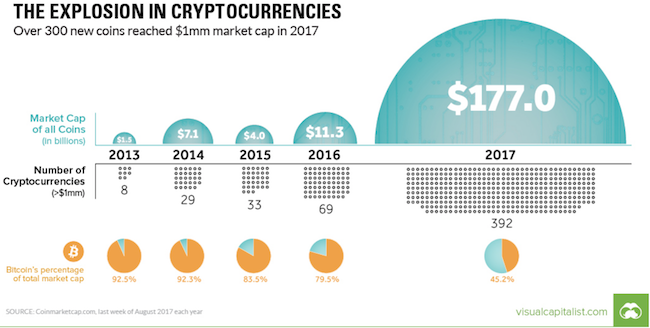
Thanks to the explosion in the price of bitcoin, everywhere you look people are talking about crypto currencies. I drove past a 'bakkie' the other day that had a sticker on it saying, "Ask me about Bitcoin" and gave a link to his new web page - The Unparalleled Explosion in Cryptocurrencies. I think there is only one certainty with crypto currencies at the moment, they are either wildly under-valued or wildly over-valued but not fairly valued.


If Elon Musk was not busy enough running two companies. He now has another project on the cards, underground tunnels - Elon Musk has ambitious plans for his tunneling company - here's what we know


Home again, home again, jiggety-jog. Our market is in the red again this morning but the good news is that Dollar weakness has pushed our currency to now trade around the $/R 12.70 to $/R12.80 range. It is rather quiet on economic news today, the most important thing to watch though, is Kevin Anderson's semi-final at 22:00. He is the underdog according to the bookies but he is only one step away from a Grand-slam final.


Sent to you by Team Vestact.

Email us

Follow Michael, Byron, Bright and Paul on Twitter

078 533 1063
Thursday, 7 September 2017

It is Settled


To market to market to buy a fat pig. At the start of the US trading this week, their markets shifted from what is known as T+3 to T+2. Some may be familiar with the term because the JSE moved from T+5 to T+3 last year, to bring our exchange in line with global standards. Now that the US, along with Europe, Hong Kong, Australia and New Zealand are all at T+2, I hope the JSE is also working to toward that mile stone. I visited the Egyptian Stock Exchange in 2010, where they had recently introduced T+0 (same day) settlement for a handful of securities, which they were very proud of and rightfully so. I see on their web page that they settle all the other securities on a T+1 basis, a very impressive feat.

The reason for long settlement periods was due to the need to create physical share certificates every time share holdings changed and then the need to get the money from one bank account to another, before the days of electronic banking. Just the thought of all the admin required to keep a system like that going, makes my mind boggle. Imagine all the paper needed. Paul tells stories of the muddle ups when it came to dividends; it wasn't always clear who owned what on the date of payment. Now when you make a trade, electronic share records are updated and money changes hands, without a human needing to do anything.

The last point to make is that a settlement of even five days, is blitz compared to the settlement on many other asset classes. How long does it take for you to get your money when you sell a property, three months? Even selling a private business, there are mounds of paperwork to sign, lawyers to pay and then money comes free. Thanks to public exchanges, settlement is guaranteed, it happens in days and the cost of the transaction is negligible. It is due to these reasons that publicly listed companies have premium valuations. The ease of making a trade, lowers the risks involved, so investors are willing to pay more for that asset.


Yesterday there were very few local stocks in the green. The All Share started the day weak and just weakened as the day went on, lead by Vodacom who finished off down 8%. The good news though, is that US markets were in the green yesterday thanks to the US debt ceiling worries having been moved from the end of September to the end of December. Trump and the Democrats hammered out a deal to postpone the debt ceiling and the arrange emergency relief for hurricane affected areas. Here is the scorecard, the Dow was up 0.26%, the S&P 500 was up 0.31%, the Nasdaq was up 0.28% and the All Share was down 1.18%.


Linkfest, lap it up

One thing, from Paul

The chief executive of Deutsche Bank, which employs 100,000 staff around the world, says that a "big number" will lose their jobs as robots take over. That sounds rather significant, but he went on to clarify that the jobs were mostly clerical, involving paper shuffling and adding up numbers - Deutsche Bank boss says 'big number' of staff will lose jobs to automation

Perhaps more significantly, the use of smartphone apps by retail clients will reduce the need for bank branches. Remember that as investors in banking stocks (we hold lots of Wells Fargo for US clients, and Discovery for SA clients), we benefit from these measures to lower costs and improve profit margins.


Michael's Musings

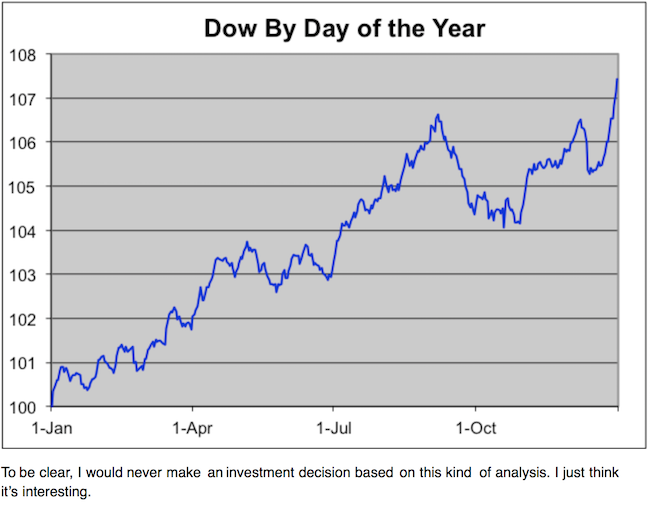
Eddy has crunched the numbers of the average return for the Dow, on each individual day, using data since the Dow was created - The Worst Time of the Year for Stocks.


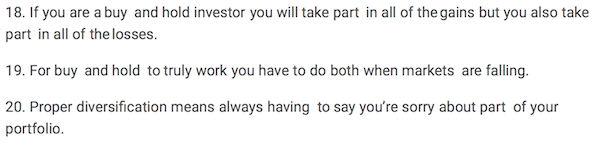
Sometimes we forget the basic truths about investing in the stock market. When prices are soaring or they are plummeting, our emotions get the better for us and the mind gets clouded - 36 Obvious Investment Truths. See some of the truths below.


This is a huge step in brining self-driving cars to a retail market. Have a legal framework to work within, provides certainty which leads to more development - The House just passed a bill to put thousands of self-driving cars on the road each year.


Bright's Banter

These are some of the best insights from different personal finance experts about saving and creating wealth - Top 5 Investment Mantras On Creating Wealth


Home again, home again, jiggety-jog. Asian markets are mixed this morning, some are up and some are down. Our markets unfortunately has following the down path, currently 0.1% lower. A weaker Dollar over night means that gold has reached a new high for the year and our exchange rate is sitting at $/R 12.80. Later today, the news flow focus is on the EU. A GDP read from the area is expecting 2.2% growth and the ECB is expected to keep interest rates the same.


Sent to you by Team Vestact.

Email us

Follow Michael, Byron, Bright and Paul on Twitter

078 533 1063
Wednesday, 6 September 2017

Reading GDP


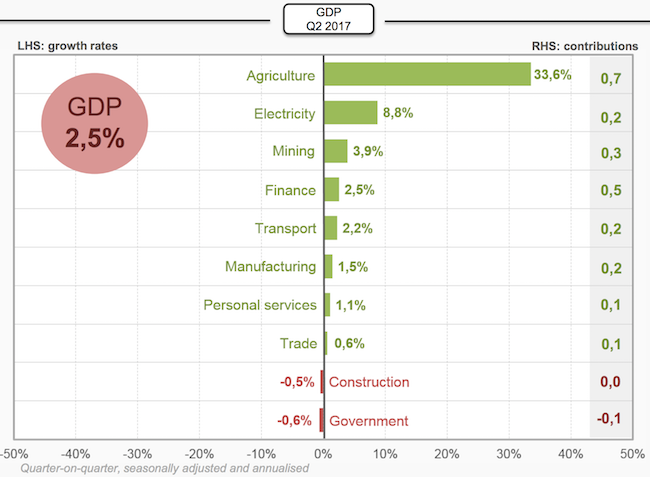
To market to market to buy a fat pig. To go with the new warmer season, the season of new life, our GDP read yesterday showed the economy has green shoots again. Hello growth. Goodbye recession. The headline read which is a quarter on quarter, seasonally adjusted and then annualized number (phew take a breath after that mouth full) came it at 2.5%. I personally prefer just to look at where we are today compared to where we were last year, there are less moving parts and you can very quickly see if we are better or worse 12-months on. The year on year number showed growth of 1.1%, below the 5% we need to make a dent in unemployment but much better than being in a recession.

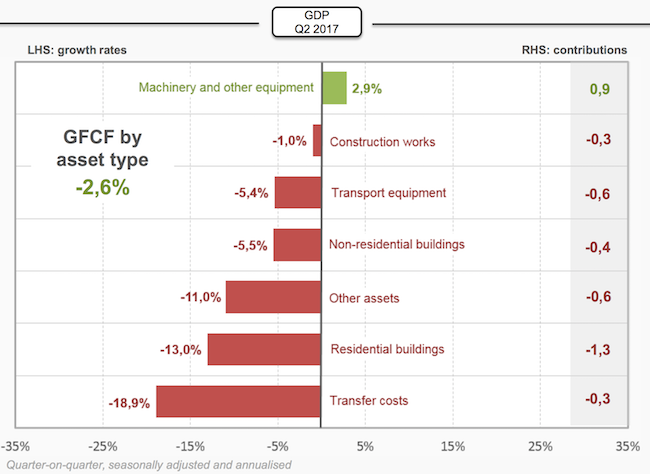
Have a look below at which sectors did well over the last quarter, Stats SA does a great job making the data easy to read. Agriculture has had a strong bounce back after last years drought, the extra you are paying for electricity is also making a positive impact on GDP growth and mining is enjoying the rising commodity prices.


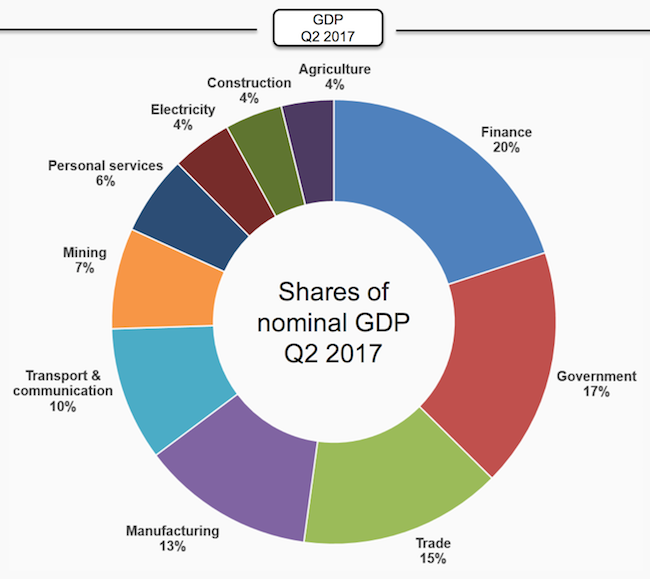
Part of the presentation from Stats SA is a breakdown of our economy. Long gone are the days when we were mining and little else, the economy has diversified into the territory and services sector, which is a good thing.


Then lastly, Gross Fixed Capital Formation (GFCF) which is a measure to some degree of the current confidence level in the economy. If you are low on confidence around the long term prospects of South Africa, your money is not going to be committed to costly long term projects. From the graph you can see that the residential housing market is under pressure, I suspect there has been an oversupply of properties built coupled with the slow upward movement of the family unit wealth. A Seeff report recently said they had 18-months worth of properties currently on the market.


After their break on Monday morning, US markets were playing catch up with the rest of global markets who had already sold off on Monday. Here is the scorecard, the Dow was down 1.23%, the S&P 500 was down 1.15% and the Nasdaq was down 0.93%. Our market was mixed yesterday but ended the day down 0.3%.


Linkfest, lap it up

One thing, from Paul

Conventional wisdom has it that change is accelerating, but economists studying productivity dispute this view. Robert Gordon, in his book the "The Rise and Fall of American Growth: The U.S. Standard of Living Since the Civil War" notes that electricity and the internal combustion engine were two key general purpose technologies which fundamentally changed humanity, and lead to a surge in productivity between the 1870s and the 1950s. This was aided by military innovation in the period of WW2.

Computers were another general purpose technology which accelerated workplace productivity in the 1990s, through the introduction of work tools like email, computer-aided design tools, relational databases, spreadsheets, word processors and the Internet.

Since then, productivity has slowed, paradoxically. Robots have only made marginal improvements to manufacturing output. Our households utilise much the same machines. Personal computers have become more powerful and smaller, but not allowed us to produce significantly more. This is counterintuitive. Perhaps the next surge lies around the corner? I think so. What a time to be alive!


Michael's Musings

Imagine having a highly sought after, high paying job and then only having the ability to rent a room of 30 square meters - Sky-High Rents Force Hong Kong Bankers Into Dorm Life. Space is something that I think South Africans sometimes take for granted.

Share incentive schemes don't always have the result of making management rich. I agree that if realistic targets are not met, bonuses should not be paid - No incentive payments for Woolworths executives. What is normally forgotten when top executive pay packages are analyzed is how much wealth has been created for shareholders in the process.

As a cricket fan, I am sad that Facebook didn't win their bid to stream the IPL. It does show that Facebook are going after the live sport market, we will have to wait to see which sport they will win the rights for - Facebook bid $610 million for the rights to streamIndian cricket matches.


Bright's Banter

Scott Galloway is one of the best human beings to follow on social media and to listen to on Barry Ritholtz's Masters in Business (a Bloomberg Radio Podcast available on iTunes). Watch his video on career advice, and tell me I'm wrong - Career Advice From Professor Galloway


Home again, home again, jiggety-jog. Our markets have opened deep in the red. Vodacom announced that Vodafone sold 90 million shares as part of the Safaricom deal. The sale was to bring Vodacom's free floating shares inline with regulations, the stock is still down 7% this morning. There is US trade data and manufacturing data out later today, which will give us a better idea of how their economy is running. Congrats to Kevin Anderson for winning his quarter-final match this morning, making him the first South African to reach the semi-final of the US Open.


Sent to you by Team Vestact.

Email us

Follow Michael, Byron, Bright and Paul on Twitter

078 533 1063
Tuesday, 5 September 2017

Self-made Wealth


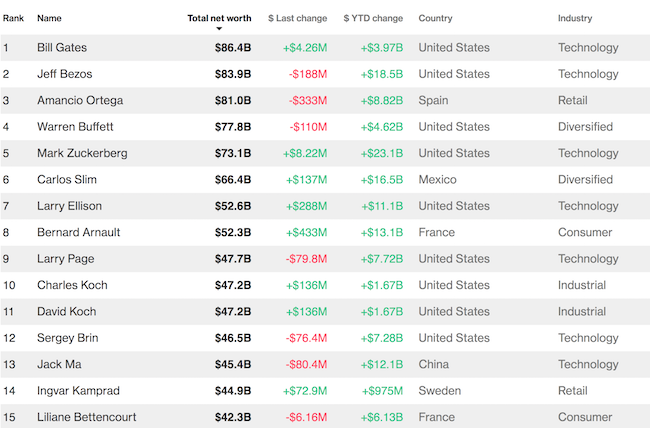
To market to market to buy a fat pig. There has been a tussle at the top of the globe's rich list, the top spot has changed a number of times over the last month. First with Jeff Bezos briefly dethroning Bill Gates and then Amancio Ortega also briefly dethroning Gates.

Having a look at the Bloomberg Billionaires Index this morning, I decided to see who how far down the list you needed to go until you reached the first person who inherited their wealth. In days gone by, you didn't have to go too far down to reach the Walton siblings who inherited the Walmart empire. Today though you need to go all the way down to number 15 in the form of Liliane Bettencourt who inherited the L'Oreal empire.


You could argue that the Koch brothers and Bernard Arnault, inherited a few million so they shouldn't be considered self-made. Turning millions into billions is no small task though. Also, neither of them took the money/ businesses they inherited and did nothing, they set to work expanding operators, making things efficient and most importantly creating value. So I am happy to keep them in the self-made column.

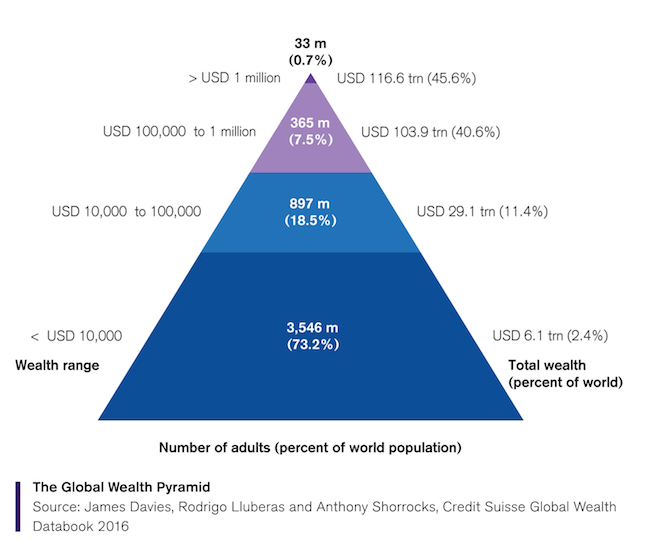
Over the last couple of years, partly due to middle-class stagnation, it is an increasing topic of conversation to bemoan the NAVs of the world's richest people. If you have a look at the below pyramid, you can see why the natural reaction is to be shocked by wealth inequality. If you are reading this, there is a good chance you are in the top 25% globally, do you feel you earn too much and some of your wealth should be distributed to the other 75%? The next question would be, how do you then distribute that wealth to the poor? The how part is a highly emotive subject and in truth society hasn't really found a solution.


How much value has Gates created for society through MS Office and then his efforts to eradicate polio (which is on track to be eradicated by 2020)? How much value has Bezos created by allowing consumers to find products cheaper on Amazon than anywhere else? How much value has Ortega created through Zara's affordable fast fashion? These guys do have a large portion of the globe's wealth but how much poorer would the globe be without their innovations? A paraphrase of Buffett, as a society we know the best way to create wealth but we don't yet know the best way to distribute that wealth.


A quick look at our market yesterday. Thanks to the tensions on the Korean peninsula our market, along with global markets, stayed in the red all day to close down 0.34%. As you can imagine, in the current 'risk-off' environment, gold mining companies have done well. Yesterday the gold mining index was up 4.6% and the platinum mining index was up 1.6%. Having a look at how the gold miners have done over a 12-month period, I was surprised to see how much they are down. AngloGold was up 5.2% yesterday, is down 9.8% since the start of the year and down 43% since last year this time. Looking back a bit further, the stock is down 47% over a 5-year period and over 10-years it is down 51%.

Over the last 10-years, the stock didn't just gradually drift lower to close down 51% for the period, it has been up and down. Let's assume you bought AngloGold shares, 10-years ago today. Looking at the graph, you were up for the start of 2008 and then gold mining stocks crashed with the rest of the market, yes they went down when the 'world was ending', not up. Then after the Fed announced their QE program gold prices shot up and so did the mining shares, so from 2009 till the end of 2012 you were up. Only in the middle of 2016 were your AngloGold shares higher than their September 2007 price again, but since then the share price has gone from R30 and has slumped more than 50% to be around the R14 mark today. Those moves characterize owning commodity companies, they move in cycles, which makes the ride very bumpy and makes your purchase timing very important.

Looking at the graph it may seem easy, with the benefit of hindsight, when to buy and sell. Remember though that when the share price was at its top, the future looked bright for gold and even brighter for the miners. Conversely, when the share price was at its lows, gold miners were going to go out of business and the gold price was going to drop because the Fed was going to raise rates. It is for that reason we avoid commodity companies for clients, too volatile and generally no long term growth.


Linkfest, lap it up

One thing, from Paul

I'm turning 51 in December, so I'm coming to terms with the idea that I won't live forever. Sad!

So I've found myself clicking on more links about keeping ones life in order. This blog post struck me as a good reference. It lists the four estate planning documents you need to get on file, regardless of your age, health, or wealth - Key Estate Planning Documents

Spoiler: the four are a durable power of attorney for when you lose your marbles, a letter setting out your medical directives once you are on your last legs, a will (of course), and a more general letter of instruction.


Bright's Banter

Your favourite song by Luis Fonsi and Daddy Yankee "Despacito" is the most-watched YouTube music video ever (sorry Gangnum Style). The skeptics say it could've made so much money had people listened to it on a different platform. YouTube's rate is $0.0007 cent per play, Fonsi and his team made a pedestrian $3.2million from its 2.7billion YouTube views compared to $38.6million approximately if it were on Spotify alone with a similar hit rate, and thats nothing compared to a potential of $193million in iTunes sales if it were exclusively on iTunes and the track went for $1.29 - Descpacito Could Have Made So Much More Money If It Weren't On YouTube

How can anyone consider cryptocurrencies to be safe haven assets (as an accountant I hate to even use the term asset when describing these alternative currencies) when the price of Bitcoin got pummeled over the last few days? Gold, Yen and other major currencies actually outpaced Bitcoin in the latest bout of global tension - Bitcoin Fails As A Haven Amid Fears Of Nuclear Conflict Between US And North Korea


Home again, home again, jiggety-jog. Despite Asian markets being in the red this morning, our market has opened in the green. As geopolitical tensions subside, gold and platinum prices have also dropped, pulling the precious metal miners down with them. Then later today 2Q GDP number is released by Stas SA, the forecast is for South Africa to be back in growth mode, leaving the short recession behind.


Sent to you by Team Vestact.

Email us

Follow Michael, Byron, Bright and Paul on Twitter

078 533 1063
Monday, 4 September 2017

The Fat Man and His New Toy


To market to market to buy a fat pig. Sigh! Monday morning and we are greeted with red markets in the East thanks to North Korea doing another nuclear test on the weekend. The Supreme leader feels that the best interest of the nation is in developing nuclear bombs instead of feeding the people. According to the UN, 41% of North Korean's are under nourished, a number that has been growing not declining! There are problems and then there are problems. Not having enough food and a leader who is trying to pull the 'ball hair's of sleeping lions', is a big problem. The Korean KOSPI is only down 0.9% on the news, which points toward investors thinking the risk of full blown war is slim but the risk has increased slightly.

Jobs day on Friday. Unfortunately, the data missed estimates. Here are the headlines numbers, the US Economy added 156 000 jobs in August, the June and July numbers were revised lower and unemployment rose to 4.4%. The forecast was for 188 000 new jobs and the unemployment rate to stay the same. There is not much to complain about in those numbers, even though they missed expectations. It is worth pointing out that a separate data release on Friday showed US manufacturing expanding at its fasted pace in six years, which coupled with a strong consumer confidence number points to forward momentum in the US.

What a jobs number miss does mean though, is that the Fed has another reason to keep their interest rate hikes to a minimum. After two rate hikes this year and four since the hiking cycle began in December 2015, the market is forecasting a 36% chance for a December rate hike and an even lower chance for their September meeting. Even though I think it is a bad idea having our MPC make interest rate decisions based on what they forecast the US's Fed doing, the current weak Dollar is good for keeping our inflation low, which makes it easier to lower interest rates. Our MPC will be meeting at the same time as the US, with the only difference being the Fed meet for two days and the MPC meet for three days. So the Fed announces on the 20 September and the MPC announce on the 21 September, hopefully a rate cut to help our struggling economy.

Here is a quick scorecard from Friday, the Dow was up 0.18%, the S&P 500 was up 0.2%, the Nasdaq was up 0.1% and the JSE All Share was down 0.02%. Today the US market is closed for Labor Day and across their border, the Canadian market is closed for Labour day.


Linkfest, lap it up

One thing, from Paul

This week on Blunders: Socialist student blows R800k, Microsoft hits new high, Fukushima cleanup costs adding up, and Princess Diana dead for 20 years - Blunders - Episode 71


Michael's Musings

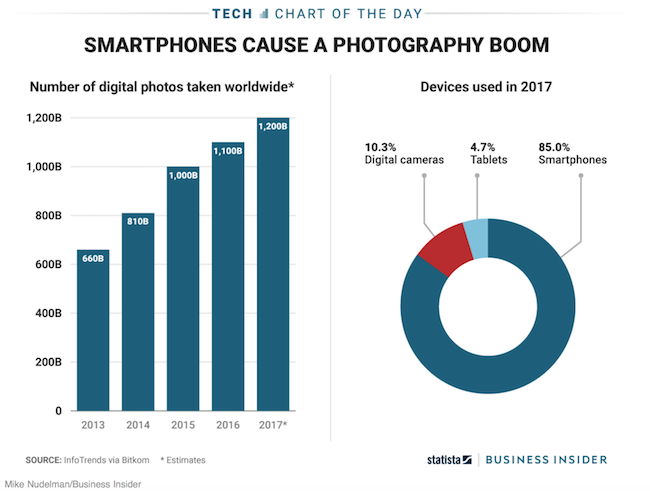
1.2 Trillion is a huge number! The camera industry highlights how technology can change the competition landscape, even though the number of pictures being taking is rising, the number of cameras sold is falling like a stone - People will take 1.2 trillion digital photos this year -thanks to smartphones. Just 15 years ago do you think camera companies were worried about phones eating their lunch?


As Tech companies team up the consumer wins because the product they produce are better, the potential down side is that there is then no competition - Amazon and Microsoft team up to make their AI assistants Alexa and Cortana talk to each other. I think the benefits here out weigh the negatives.

Here is another example of tech companies teaming up - Google and VMware are teaming up with a $2.8 billion startup to get an edge in the cloud wars with Amazon.

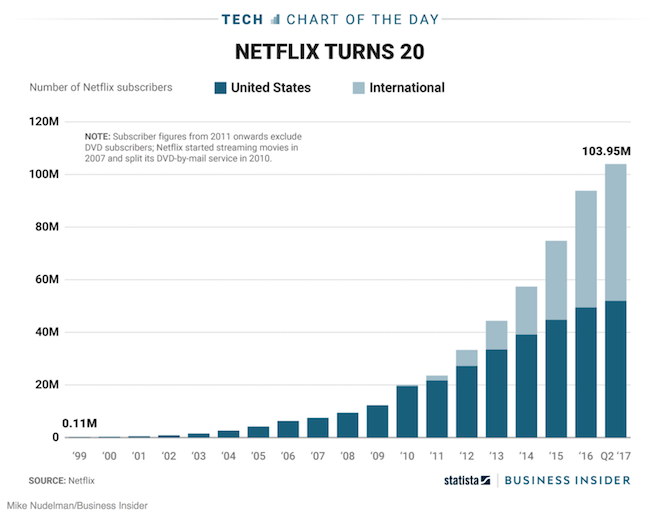
Netflix have done well to time their entry into the streaming space perfectly. There were other companies who tried to push into streaming before but the infrastructure was not in place to support quality, low cost streaming to retail customers - One chart shows Netflix's dramatic 20 year rise. Coupled with Netflix rise, was the early success of shows like House of Cards and Orange is the New Black.


Bright's Banter

Nassim Nicholas Teleb is working on his new book and here's another chapter where he breaks down risk-taking, into simple and easy to follow thought experiments - The Logic Of Risk Taking

Here's an inspiring story by Morgan Housel(he was a guest speaker at the Allan Gray Investment Summit) on how he was inspired by Barry Ritholz's storytelling abilities in public and the challenges he had to overcome in order for him to become a world class public speaker - Overcoming Your Demons


Home again, home again, jiggety-jog. Thanks to the Nuclear tests over the weekend, the Platinum price is over $1 000 an ounce again, currently at $1 012. Gold is also higher this morning, up to $1 334 an ounce and the Rand has held up surprisingly well as money flees to safer assets, currently at $/R 12.94.


Sent to you by Team Vestact.

Email us

Follow Michael, Byron, Bright and Paul on Twitter

078 533 1063
Friday, 1 September 2017

Spring in Steinhoff


To market to market to buy a fat pig. Happy Spring Day! If you google, "when does spring start" though you find that it only starts at the end of September. The 22 September to be exact and it will run until the 21 December. Global seasons are determined by the dates that the equinoxes and solstices occur. Just based on the weather in Jo'burg though, and the blossoms on the tree outside of my window, spring arrived one week ago. Here is an interesting piece written by the South African Weather Service, looking at all the different methods that can be considered when looking at the changing of the seasons: How are the dates of the four seasons worked out? So happy, sort-of Spring.

    "A further failing of the earlier astronomically defined seasons is that they simply did not describe the real seasons as actually experienced. As one of the contributors to this article expressed it, summer does not start four days before Christmas. A climatologically definition of the seasons would obviously be more realistic."


New York, New York has been on a roll this year. With a green close to the month of August, the S&P500 has now had 10 green months in a row. More reason to celebrate is that the Nasdaq closed at a record high last night. It is now up 23% over the last year. Here is the scorecard, the Dow was up 0.25%, the S&P 500 was up 0.57% and the Nasdaq was up 0.95%. Locally our All Share was up 0.63%, with just about every sector in the green. Discovery is now back over R150 a share, it was there in 2015 but fell to R110 shortly after. Stocks go in and out of favour, which is normal for the equity market, the key is to sit tight through the cycles.


Company corner

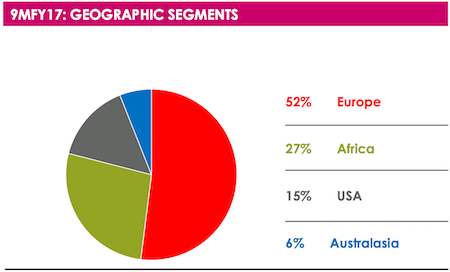
Thanks to their positive nine-month sales update, Steinhoff stock closed 2.6% higher. The company has been very busy in terms of purchases in the UK, US and Australia and many new store openings in all their regions. They have seen a 48% increase in sales to EUR 14.9 billion for the nine months, with 8% organic growth. Here is a breakdown of how that EUR 15 billion in sales is split:


Now that Steinhoff is listed in Germany, they have to report their numbers in Euros. It is not often that you hear the words, "the strong Rand had a significant positive impact on the numbers but the weaker Pound had a negative impact". The Africa division saw sales increase 10% in constant currency terms but a solid 26% increase when measured at current exchange rates.

Probably the division most people were looking at, was how is their recent purchase of Mattress Firm in the US going. They took over Mattress Firm in September last year and immediately set to work overhauling things. You will remember that they booted Tempur Sealy out as a supplier and signed more favourable terms with Serta Simmons. Other major changes are the overhauling stores and the rebranding many of them, currently around 40% of their stores have gone through the makeover. All this change has meant a 10% drop is sale values but a lower 6% drop in actual transaction numbers. Now that the initial shock of all the change has happened, management is reporting a tick up in sales and better margins, things bode well for the future.

Steinhoff looks well positioned for future growth. As Paul shared yesterday, consumer confidence is strong in Europe. Their Eastern European arm of the business had like for like sales growth of 20% over this reporting period. The Africa division is about to get a boost from the listing of STAR and then the effective purchase of Shoprite. Lastly, the US business is on track with its 'Steinhoff overhaul'. Hopefully, their issues with the German tax authorities can be resolved soon, so that they can focus on what they do best, making supply chains efficient so that they can bring the lowest price possible to the consumer.


Linkfest, lap it up

One thing, from Paul

Our friend Deon Gouws (CIO at London-based Credo) investigated what the CEOs of large South African corporates are paid, using data from Bloomberg. As you can imagine, the numbers vary considerably, with those at firms with large offshore operations dragging up the average. The final number: $3.2 million per annum. Nice work, if you can get it! - How well paid are South African CEOs really?


Michael's Musings

Ever wondered what information you are sharing with the web pages that you visit? You can now see - What every Browser knows about you. Sharing what my battery level is, seemed a bit random to me but seeing what printer was connected to our network was a bit more eye opening in terms of how much information we share without realizing it.

With world population on the rise and the urbanization trend continuing, architects and city planners have needed to get creative to keep cities functioning - 11 billion-dollar mega-projects that will transform the world's greatest cities by 2035.

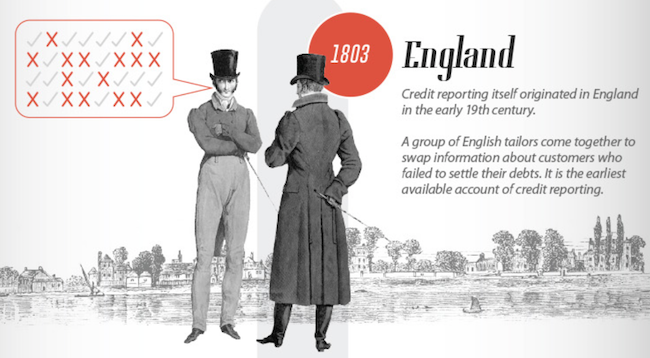
For as long as there has been money, people have been lending it out. Farmers have needed debt to buy seed for this season's plant and emperors have need debt to conquer their neighbors, here is a specific look at the evolution of consumer credit - 1The History of Consumer Credit in One Giant Infographic.


Home again, home again, jiggety-jog. Big data out today are US job numbers and their unemployment rate, which will hit our screens at 14:30. Mr Price had a four month trading statement this morning that showed good growth, the stock is currently up 3%.


Sent to you by Team Vestact.

Email us

Follow Michael, Byron, Bright and Paul on Twitter

078 533 1063