Monday, 22 May 2017

Electric Shake up

"In my view, you needed Musk, whether Tesla is a huge success or not, to shake the industry up. And this he has done, setting consumers up for energy savings that are going to be epic. Whole industries from servicing the combustion engine to the oil industry are going to be under pressure."


To market to market to buy a fat pig We live in interesting times. It is better than the dark ages, where technological advancements were few (from what I can tell), other than formulating new ways to repel those trying to breach the castle walls. Whilst it does not feel like it for many (things were always better in the old days, they tell you), the statistics tell us it is so. We are better fed, we use less units of energy to achieve more, there is more information to be shared at any other point in humanity and on average we are getting less poor, again this is all relative.

It is tough out there though, there is not sunshine and lollipops rolling equally .... new 12 month lows for the likes of Tsogo, Sun International and Pick n Pay on Friday. That tells you something about the state of the consumer at both a discretionary and non-discretionary spend level. Although in the case of Pick n Pay, perhaps the market had got ahead of what the earnings expectations are likely to be. And when those fall flat, then the share price comes under pressure. The stock trades on a high teens multiple forward, and that I guess is a problem for Mr. Market.

At the opposite end of the spectrum though, and perhaps this is an indication of "through the worst" was a twelve month high for CMH (Combined Motor Holdings). If people are not going to casinos, then are they buying new cars? The stock traded at a 12 month high, and has recovered sharply since the monster sell off post the financial crisis of 2008. Perhaps the stock is just too cheap and has been like that for a while. On that subject, we were nattering in the office this morning about the future of transportation.

I made a throwaway comment that I thought that Elon Musk had "won", and by that, I mean the rest of the vehicle manufacturing businesses embracing electric vehicles as a result of consumer needs and wants. The thesis was given a stamp of approval when I read that Ford had just replaced their CEO. With a fellow by the name of Jim Hackett, who had been running Ford Smart Mobility. And what does that division do? As per Hackett's bio, does this sound familiar?: "The company is continuing to focus on and invest in its core business - designing, manufacturing, marketing, financing and servicing cars, SUVs, trucks and electrified vehicles. At the same time, Ford is aggressively pursuing emerging opportunities through Ford Smart Mobility, the company's plan to be a leader in connectivity, mobility, autonomous vehicles, the customer experience and data and analytics."

In my view, you needed Musk, whether Tesla is a huge success or not, to shake the industry up. And this he has done, setting consumers up for energy savings that are going to be epic. Whole industries from servicing the combustion engine to the oil industry are going to be under pressure. The oil majors cheering a crude price going up as a result of production cuts does not sound like a long term solution to me, now does it? I am sure that 125 years ago there were people who delivered hay and serviced stables that thought transportation would not change that much. I get the sense that we are at the same place, right now. It may take a couple of decades, we have definitely set ourselves northwards on that trajectory. See in the links below, the Model T Ford and the Tesla Model 3.

Let us finish off quickly here. Naspers also clocked another lifetime high, still smarting from the Tencent numbers that blew away expectations. Tencent is up at another all time high themselves this morning, up nearly three percent as I write this. I guess this bodes well for the open. Leading the charge Friday was another big day for Steinhoff, clearly both sets of shareholders happy with an announcement to split the business into two, the stock up over six percent on the day, up over ten percent in two sessions, since the announcement. It has still been a pretty dismal 1 year performance, the stock is down 17 percent over that time frame. At the other end of the spectrum was a bad day for Sappi, Remgro, Hammerson and Old Mutual, the Pound sterling certainly is a "moving target" and is impacting the Rand Hedges in that part of the world.

Session end the Jozi all share index closed up four-tenths of a percent, and is approaching a lifetime high. I think that we are about half a percent away from reaching an all time closing high! That point was reached 24 months ago though ...... it has been tough out there, with many stocks exhibiting stress if they are tied to the fortunes of ZA inc., others, like Naspers, have been non-stop gainers. That is why one should be using flat periods like this to continue to add all the time, when stocks are cheap relative to prior valuations. As ever, it all depends on the earnings. I am expecting that we may well breach the all time high today, perhaps closing there.


Stocks rallied again Friday in New York, New York. Session end, with energy, basic materials and industrials all charging ahead (all major sectors ended in the green), the Dow Jones added nearly seven-tenths of a percent. The broader market S&P 500 added about the same, whilst the nerds of NASDAQ trailed a little, up just under half a percent on the day. In a tricky week for stocks with the massive mid-week sell-off, stocks ended less than half a percent from where they started. Not so bad for "this time we are really going to sell off". Anyhows, if there is someone amongst us who is able to call the market consistently well on a very short term basis, please present yourself quickly. There are of course the titans of the industry who are able to turn in record gains and "make it big", we all know who those trading giants are. They do not compare to the corporate builders, Gates and the like, if you know what I mean.

The sneaker sales malaise continues to weigh, Foot Locker stock tanked nearly 17 percent .... there was of course external factors like a strong Dollar and delayed tax refunds. And besides, the miss at an earnings and revenue level was hardly "terrible". It was quite interesting what the CEO had to say, and I certainly agree with him: "our customers have not lost their tremendous appetite for athletic footwear and apparel." Whether or not he is right that their business is stronger than ever, time will tell whether the mainstream channels of yesterday start getting "chowed" by all the online platforms available to us. I mean .... you can order Columbia Sportswear online here in South Africa. The people who sell other peoples stuff, those places are called "the internet".


Linkfest, lap it up

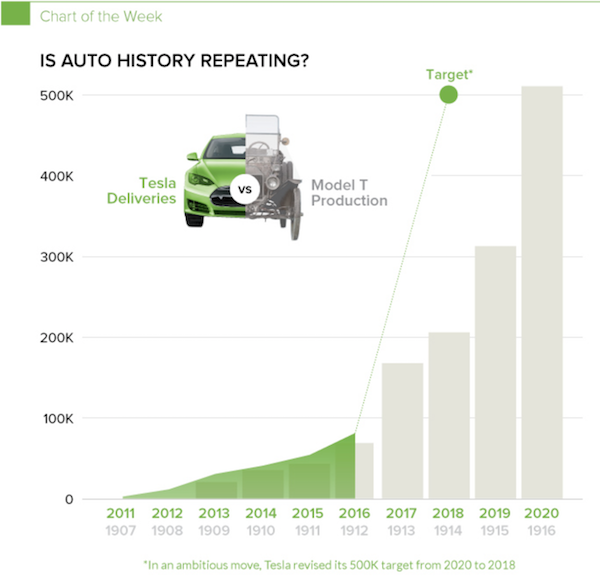
Here is a comparative view of Tesla's targets compared to the Model T. I was amazed to see how quickly Ford managed to ramp up their production - Electric Vehicles are Poised for Their 'Model T' Moment


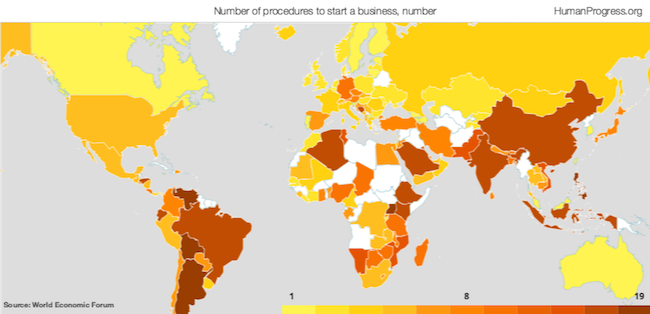
The easier it is to do something the more people will do it. In this case it is starting a business, something that South Africa desperately needs more of - Number of procedures to start a business. Less procedure means less regulation, which I think is a good thing. The counter argument is that less regulation means a bigger chance of fraud and tax evasion.


Take up might have been slow but momentum is building. The one key benefit of building a city from scratch is that you get greater control over the end result, avoiding issues that older cities have like roads being too narrow or a factory being too near residential housing - China's Copy of Manhattan Is No Longer a Ghost Town.


Home again, home again, jiggety-jog. Stocks across Asia are mostly higher. Mainland China stocks are lower, the rest are up my friends. We should have a better start here, watch out for that all time high.


Sent to you by Sasha, Byron and Michael on behalf of team Vestact.

Email us

Follow Sasha, Michael, Byron, Bright and Paul on Twitter

078 533 1063

Friday, 19 May 2017

Outdoor Shopping Online

"As we spoke about in the Under Armour results, Columbia Sportswear also suffered due to the pressure that wholesalers are under, more so in Columbia's case given that their primary distribution channel to the consumer is via wholesalers"


To market to market to buy a fat pig Markets in Jozi ended the session up over one-third of a percent. For all the volatility seen in New York, it has been pretty quiet as far as overall moves have been concerned. The Rand weakened pretty dramatically through the day, perhaps the "risk off" trade, some suggesting that ratings agencies speaking to labour union movements had something to do with it. I even heard on the wireless that GM "quitting" South Africa (and some other countries) had something to do with it. If you are a GM vehicle owner, I suspect that you may want to read this (and block out the hysteria) - What did GM announce?

Isuzu will be the beneficiary of the global GM drive to scale down across not only here, in other places such as India too. One of the "reasons" given is pretty interesting and perhaps Mr. Musk and Tesla, as well as Uber, should get a hat tip here - "The most significant industry change has been the emergence of mobility (autonomous/ride sharing/electrification/connectivity) as a service and as a long-term growth opportunity." See? Companies in far flung regions of the world may recognise that their cheaper offerings will ultimately be unprofitable. Cut and sell, focus on something else.

Stocks that dominated the top end of the leaderboard, buoyed by a weaker Rand, were the likes of Steinhoff (clearly a late stamp of approval on the pending deal), Mediclinic and Richemont. At the opposite end of the spectrum was the likes of Amplats, Bidcorp (giving back after an incredible rally), as well as AB InBev (see the part about Brazil lower down). There were well received results from Investec, the stock rallied over one and three-quarters of a percent here in Jozi, the best levels since June last year, and over twenty percent higher since November last year.

Sibanye announced their deep discounted rights issue at 60 percent lower than the prevailing price (the stock ended over four percent lower on the day), initially the market sold off aggressively and then stabilised again. That is pretty big, they are raising 1 billion Dollars, with a firm commitment from one shareholder that holds nearly one-fifth of the shares. For every 7 shares you hold now, they are issuing 9 new ones. If you do not follow your rights, you are going to be diluted out of sight. I guess if you continue to hold them on the assumption that they will succeed, then best you take advantage of the MUCH lower price.

Oceana had results, and although weak, they were marginally better than most had anticipated. Our biggest interest in this is via Tiger Brands, who own just over 42 percent of the company. With a market cap of 13 billion Rand (Oceana), that equates to nearly five and a half billion Rand. Tiger has a market cap of just over 74 and a half billion Rand, this represents 7.3 percent of their total value. So yes, this is a big deal in the life of Tiger Brands. There is plenty of plastic fish in the sea.


Stocks recovered a little in New York, New York. The heaviest sell off in the session prior (and the worst of its kind this year) was attributed to an investigation into Trump and his political machinations. Or was it? Eddy in his Friday morning letter reckons it may be the Fed hiking rates next month, something Eddy is against. Well, I suspect that the Fed could hike rates at any time to make sure that they cover their dual mandate, growth and keeping inflation in check. The second part is becoming more important than the first part nowadays. In Fact, the same said fellow, Eddy, tweeted that there had been 115 consecutive weeks of jobs claims below the 300 thousand mark. That is right, every Thursday the labour department in the US releases the Unemployment insurance weekly claims.

What is also telling about this claim is the following: "The 4-week moving average was 1,946,000, a decrease of 20,000 from the previous week's revised average. This is the lowest level for this average since January 19, 1974 when it was 1,920,750. The previous week's average was revised up by 500 from 1,965,500 to 1,966,000." That was before I was born! And Paul would have just turned 7, the December prior. Paul and Byron debunk that December/January thing you know, both born in December! And our Howie too, a large percentage of the office is born in the 12th month of the year.

The other "big thing" during the day was the collapse of Brazilian asset prices, their president is embroiled in a big scandal that may see him thrown under the bus, not too long after the previous president was impeached - Brazilian President Michel Temer, accused of bribery, says he will not resign. The Brazilian market fell limit down and triggered the circuit breakers (to begin with), by the time the closing bell rang, the BOVESPA had lost 8.8 percent of the starting value. That is real hair raising stuff!

Session end, a pretty tepid time on Wall Street, stocks were up, the Dow added a little over one-quarter of a percent, the broader market S&P 500 added nearly four-tenths of a percent on the day (that is two-fifths) and the nerds of NASDAQ was where the real action was, up nearly three quarters of a percent. Remembering that those stocks had sold off the heaviest in the session prior. Apple, Facebook, Alphabet (Google) and Amazon were all huge winners on the day, coupled with Walmart, which reported earnings above consensus. Volatility sold off after a nasty spike in the session prior to that!


Company corner

There were numbers out from one of the smaller companies that we follow, Columbia Sportswear Company. It "only" has a market cap of $3.6 billion, annual sales of $2.4 billion and just over 6 000 employees globally. The results were a beat on the low expectations from the market. Sales were up 4% and income was up a more respectable 13%.

As we spoke about in the Under Armour results, Columbia Sportswear also suffered due to the pressure that wholesalers are under, more so in Columbia's case given that their primary distribution channel to the consumer is via wholesalers. Management estimate that there were 800 less stores carrying their stock due to store closures! The result was a 1% drop in sales for the US market, which accounts for 61% of sales. Their global operations faired much better with the LAAP region (Latin America, Asia Pacific) increasing by 17% and the EMEA region increasing by 10%. The SOREL brand which mostly sells leather shoes, increased their sales by 50% but currently is only responsible for 5% of sales.

Going forward the company is focusing on going directly to the consumer by opening up their own retail outlets and improving their online offering. This may be a more capital intensive approach but it means that you control the customer experience and you have a greater control over your own fate. In the last financial year they opened 7 stores in the US and this year they will open another 13. Not massive numbers like Starbucks opening a new store in China every 15 hours but they are gaining momentum as the team gains retail store experience. I think the biggest opportunity is in their online offering, where they have just taken the European e-commerce business in house.

As they build size and scale they will be able to improve their online offering and move digitally into other countries. Having a look from South Africa I am able to buy a limited range off their site but the prices are in Rands which was not always the case. There is a huge amount of growth potential ahead for this company as they move into the rest of the world, at the moment 70% of their sales are between the US and Canada. I like this company's niche position in the adventure side of the market, with almost blue sky ahead for growth thanks to their relatively small size. Given managements cautious approach, don't expect fire works going forward though, think more of a snowball rolling down a hill gaining momentum and size. Slow to start but when you look again it is a force to be reckoned with.


Linkfest, lap it up

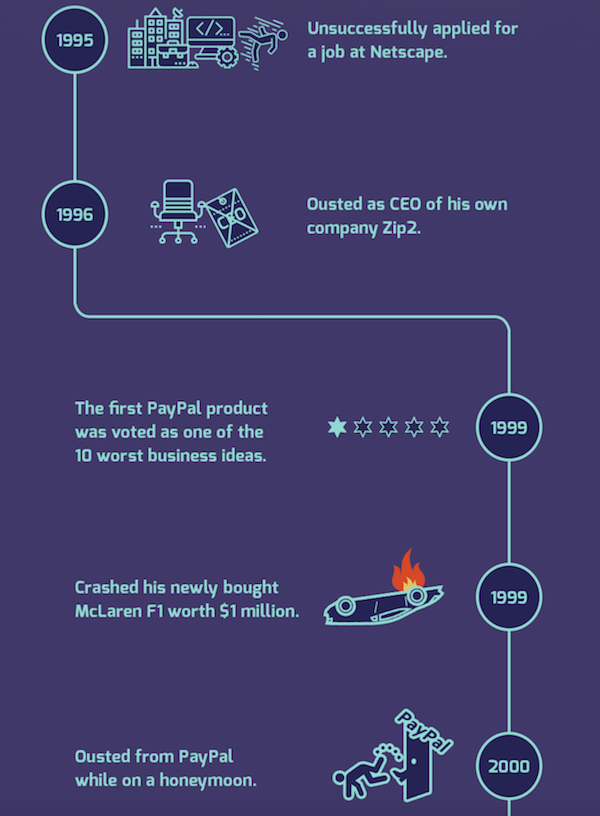
Elon Musk is CEO of two successful companies and has initiated other projects like the Hyperloop and SolarCity (which Tesla now owns). With all of those projects there were bound to be some failures along the way - A Timeline of Elon Musk's Long List of Failures. Having been ousted as CEO twice, I would say that he has very high expectations for himself and the people who work with him.


Another great piece from Ben Carlson. His advice is to start investing early and take the knocks when you have the time to bounce back - A Good Lesson For Millennial Investors.

    "The worst thing that can happen for most inexperienced investors is to see success early on with their investments. Early success in this game can make it seem easy when investing is anything but."


Home again, home again, jiggety-jog. Stocks across Asia are mixed, Hong Kong up, mainland China down, Japan up. Our biggest interest is always Tencent, that stock is up two percent and trading at the all time highs from the session prior. Good results, continued growth trajectory. That should buoy at least one stock, right?


Sent to you by Sasha, Byron and Michael on behalf of team Vestact.

Email us

Follow Sasha, Michael, Byron, Bright and Paul on Twitter

078 533 1063
Thursday, 18 May 2017

Progress will not be Trumped

"We plan to hold these shares long enough to see multiple presidents and multiple strides in human progress. The Boeing 787 and the Airbus 380 and the magic of intercontinental flight, the smartphones dished up by Samsung and Apple, driverless technologies in electric cars, processing speeds, internet speeds, agricultural machinery improvement, robotic factories. All these things have advanced at such a pace that we take them for granted. If that is what one decade can do, then I can say with full confidence that I am excited for the next."


To market to market to buy a fat pig Whoa! Sell first and then ask loads of questions later. There was a whole lot of everything going on yesterday. Trump this, impeach that talk around each decisions he made. The real rash decision was electing him in the first place, did the electorate think that the behaviour would magically change and that the real estate self confessed awesome frog would change into the proverbial presidential prince? So why do markets care so much? Is the average person going to buy fewer coffees, get less stuff delivered on Amazon, do fewer Google searches, use their smart phone less or buy less food? Nope. Does it impact on sentiment? Sure. So there is an impact.

More importantly, if the leader of the free world is facing a vote of no confidence, it may well mean that the pro-business agenda touted would not transpire. And that is the part that matters for equity markets and the recent higher moves. With a pro-business and perhaps lower tax environment supporting business gone, that means that expectations need to be reeled in. In short, Trump wanted Comey to not pursue Flynn. And if that is the case ..... then he has overstepped the mark. The appointment of former FBI Director Robert Mueller to probe allegations that Russia somehow influenced the elections last time around, will no doubt lead to more worries. I am worried, they will say.

What must you do as a shareholder of all these businesses that were sold off sharply? Nothing. Politics does have an impact on business, it should not impact on your investment decisions. We plan to hold these shares long enough to see multiple presidents and multiple strides in human progress. The Boeing 787 and the Airbus 380 and the magic of intercontinental flight, the smartphones dished up by Samsung and Apple, driverless technologies in electric cars, processing speeds, internet speeds, agricultural machinery improvement, robotic factories. All these things have advanced at such a pace that we take them for granted. If that is what one decade can do, then I can say with full confidence that I am excited for the next.

Not excited was the markets in New York last night. A pretty savage sell off and a shake up of the slow ebb that we have experienced for the last few weeks. Volatility crushed it, spiking nearly 47 percent. Hey, why wasn't I long that? Nooooo! Equities were drilled, the Dow Jones Industrial Average sank one and three-quarters of a percent, the broader market S&P 500 fared a little worse than that, whilst the high Beta stocks in the nerds of NASDAQ took a pounding, down over two and a half percent as a collective. Apple, Alphabet, Microsoft, Facebook, the pin ups of tech were sold off sharply. Only utilities (understandably) escaped the selling madness. Our advice as ever, is the same, watch, wring your hand and massage your temples, if you will, do not sell.


It was also extremely busy on the local front yesterday, bits and pieces of important news flying around. The futures market in the US pointing to a lower day did not seem to phase the local market, by the time the bell for closing time had rung, we were just over twenty points lower and an almost identical day from the prior one. Down 0.04 percent on the All share index. Resources were enjoying a revival of sorts, up nearly half a percent as a collective, industrials managed one-third of a percent to the good by the time we shut up shop. Much of that move can be attributed to Naspers, which rallied after a really swell set of numbers from Tencent. In the losers column were all the ZA inc. banks, Nedbank, Standard Bank, Barclays Africa all off around two percent or more on the day. Banks together lost one and three-quarters of a percent.

There was a mouthwatering presentation from Bidcorp, Byron and I commented that the food in the analyst day presentation release looked so darn good that we couldn't help agree that this made us hungry. It really did. It was a positive session for most "Euro centric" stocks, Bidcorp had added three-quarters of a percent. All seems to be going well across all their divisions, in fact they see opportunities with Brexit, as a result of higher tourist numbers (and tourists love to eat), as well as more locals eating out and not travelling as much.

I suspect that there have to be losers in that equation, perhaps the places that the average British holiday maker goes to? British people, from a low grader web search, get two days less holiday than the average European. Another higher grade search (from a business that we own, Kayak is a subsidiary of Priceline - Where will Brits be going for summer 2017?) reveals that Croatia is on the up, Spain is a loser. Eish. The biggest loser is the US though: "We noted that searches to the USA dropped after the new president came to office - but it seems like this is a longer-term trend." Anyhows, Bidcorp is a great business and we are happy to be a shareholder.

A SENS that came after the market close is no doubt going to have a big impact on what transpires next, Steinhoff plan to list their African business on the JSE main board. The release came just after the market closed, and follows hot on the heels of the failed put together of Shoprite and the Steinhoff African assets. They really want to get this done. These assets will be Pepkor South Africa and rest of Africa, JD Group, Unitrans Automotive, Steinbuild, Poco South Africa and Tekkie Town. For the time being they are calling this business Listco, not the most original name, practical for the time being. Steinhoff, the parent company will own a significant and controlling interest in this business.

The rationale is simple, they want to separate the two business, the African footprint and the developed market business, which have different strategies. If this does happen, it will happen in the third quarter of 2017, in other words as little as two months time. Market conditions and regulators will have to be factored in. A capital raise to achieve a wider public shareholder base, in which Steinhoff would still be a significant shareholder and retain control over Listco, would then take place. They really want to get this done. I cannot say how the share price is likely to react, I really can't. I can see the benefits for the European shareholders, and by extension ourselves, and having the entity in a traded vehicle separately. We shall see.


Company Corner

Tencent reported numbers in the late morning yesterday. Tencent is difficult for most investors to understand. I don't talk for all investors, perhaps investors spend more time reading than they do partaking in role-player or single shooter games either on their PC or on their mobile phone. Plus, many investors in Naspers/Tencent do not get to experience the entire experience from the company, as it is in a different language and in many respects a closed off internet society, if that makes sense.

The numbers for revenues and profits sharply exceeded expectations, Tencent has responded in kind this morning with a roaring nearly four percent gain. And that must be received against the backdrop of global markets all selling off sharply. I suspect that with the weaker Rand and with this share price movement, that Naspers may well be comfortably ahead of the rest of the market today, as some selling pressure may transpire from "other quarters".

For such a large company it is pleasing to see them grow comfortably into their earnings, revenues were 55 percent higher than the prior financial year, 7.182 billion Dollars for the quarter. Basic earnings per share were 1.54 Renminbi, which translates to 1.74 Hong Kong Dollars. Expectations this year are for above 7 Hong Kong Dollars worth of earnings, at 270 Hong Kong Dollars, the stock trades almost constantly higher at 35 odd times forward. Expectations are for EPS growth of 30 percent this year and then nearly the same the year after, still, this is a tricky stock to value. Entertainment in China, that is what the long term future of this business is. I reckon that there is great scope for growth and we maintain our buy (indirectly) of Naspers, even at higher and elevated levels.


Linkfest, lap it up

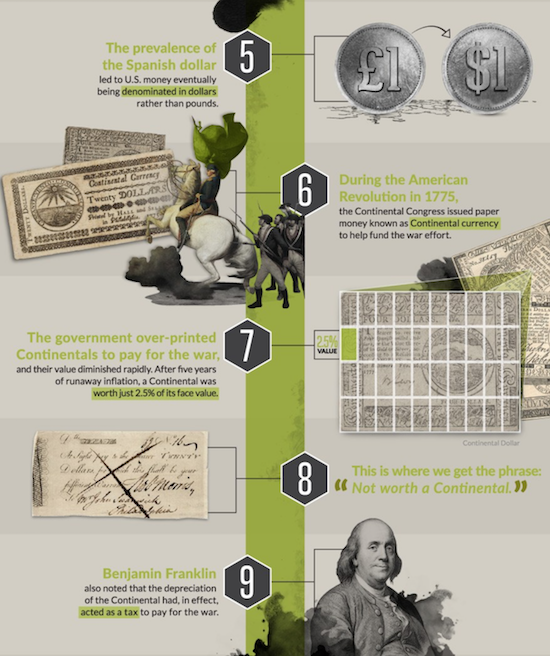
Here is how the US Dollar has evolved into what it is now. Note how wealth was destroyed by governments during war times due to the excessive printing of money to fund guns and bullets - 31 Fascinating Facts on the Early History of the U.S. Dollar


Here is how the Tesla Solar Roof compares to your alternatives - Tesla's Solar Roof Pricing Is Cheap Enough to Catch Fire. Not only is the Tesla option cheaper it looks much, much better than the current panels available!

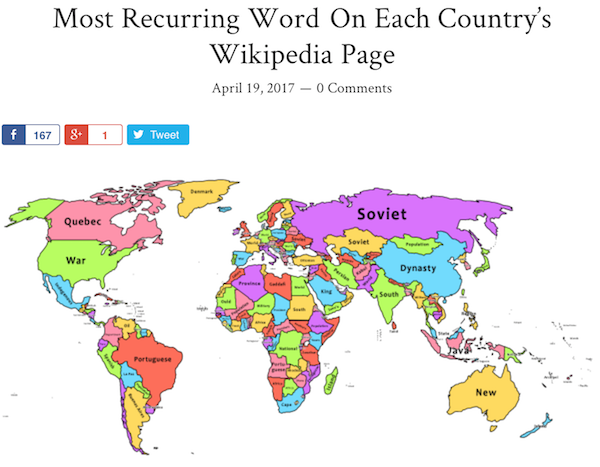
Interesting map. These words point toward each of these countries histories, appropriate that the US has the word 'war' ? - Most Recurring Word On Each Country's Wikipedia Page.


Home again, home again, jiggety-jog. It is going to be an interesting day for the local bourse. Tough in some parts, others with a weaker Rand and higher commodity prices will benefit. We shall see, one thing for sure, the snap of the lull came at quite a pace and perhaps from a quarter anticipated (not expected).


Sent to you by Sasha, Byron and Michael on behalf of team Vestact.

Email us

Follow Sasha, Michael, Byron, Bright and Paul on Twitter

078 533 1063
Wednesday, 17 May 2017

Big but small

"For a little perspective, Adidas has annual sales of 19.3 billion Euros (nearly 21 and a half billion Dollars), Nike 32.5 billion Dollars. Under Armour is a small, yet growing business in a space that we think has lots of room to move."


To market to market to buy a fat pig Another "nowhere day" for the local bourse, I heard an old timer on the floor, a fellow by the name of Art Cashin suggest that a 13 (or is it 14) session in a row of less than half a percent move (in any direction) was a waste of a fresh shirt and cab-fare. If I am not mistaken, Art has been on the floor longer than anyone else, and that is the floor of the NYSE, corner Broad and Wall Streets. I actually met him once, in the security area at the NYSE, I said "I am a big fan Art", he quickly replied, "wait here" and did an about turn retrieving a copy of his daily printed sheet for how he "saw" markets today. He was very proud of it, he should be! I wondered how long he must have been doing this (for he has been there nearly five decades), the printed sheets and handing them out to his fellows on the floor. And I also wondered what sort of innovations he must have seen in his time too.

Anyhow, in the digital era there is an office to go to, or you can be at the end of an internet connection. There need not be any "desk" in the modern era. That said, it is *nice* to sit in the company of fellow investment professionals and interrogate your thesis over and over again. You are never right and you are going to be wrong at times. Many times ... in fact. Investing is hard. Very hard. And if it was easy, there would be more people with the stomach for it.

Volatility is a tricky thing to deal with emotionally, it can gnaw at your investing bones to the core, trying to flush you out or spook you. I saw a Bloomberg story suggest that in the US, many of the retired generation are not spending money and equally are passing on more and more to the next generation, compounding the inequality issues. Rich Retirees Are Hoarding Cash Out of Fear. Part of it, the non spending and hoarding of assets, was the big sell down in the financial crisis and the imprint it left on the just retired or about to retire generation. The fact that it "happens" every now and again, and is an opportunity, is lost on many people. i.e. You have to have the necessary buffer to take advantage of the prices.

Quick look at the local bourse, financials rallied over half a percent and resources added one quarter, most of that was counteracted by a fall in the industrials (stronger Rand = selling of Rand hedges), with the overall market closing down around 30 points (which is one-twentieth of a percent nowadays), just above 54 thousand points. Vodacom continues to rally, this recent announcement seen as very favourable for the company (see the message yesterday - Vodacom goes on Safari).

Naspers saw some steam come out of the incredible rally, the Tencent price is still trading at and near all time highs (as of this morning). The Rand being stronger was partly to "blame". The company recently sunk 387 million Euros into delivery startup called Delivery Hero. See the BusinessInsider story - Takeaway startup Delivery Hero has just raised EUR387 million to help it take on Deliveroo.

European cities are smaller and logistically (on bikes and bicycles), easier to navigate. Taking on Ubereats and the like in a big hurry. Delivery Hero suggests on their website that they are the largest food network in the world. Really. How about the 200 thousand dabbawala deliveries daily in Mumbai? I suppose those are individually cooked, collected and packaged and then delivered. Humans are pretty organised - Watch this Youtube clip - DabbaWalas - Amazing Meal Delivery in India. Error rate, 1 in a million. Or one undelivered meal a week. Earnings equally divided, all delivery people equally "shareholders". Delivery Hero say that they have 150.000 restaurant partners.


Stocks were mixed again in the Wall Street session, the Dow Jones Industrial Average ended the session marginally lower than where they started, down 0.01 percent by the close, the broader market S&P 500 lost 0.07 percent by the end, the nerds of NASDAQ added one-third of a percent, led by the likes of Microsoft, Alibaba, Alphabet and Amazon. All the A's in there. Technology stocks as a collective added seven-tenths of a percent. Political shenanigans post the market have led to sell off (futures) and currently we are off around half a percent. US manufacturing showed positive signs, weak retail sales led to a broad based sell off of all the majors in that index.

Specialist sporting retailer (which started out as a fishing store), Dicks Sporting Goods, fell sharply, down nearly 14 percent. Dicks is down 15 percent over five years. Michael and Paul have been to a Dicks, Michael remembers the "freedom bucket" of bullets in the store. Ha-ha. Freedom indeed ..... I guess one person's idea is different from another.


Company Corner

Under Armour, the sports apparel and shoes company reported results a number of weeks back. Kevin Plank, the CEO and founder is an interesting guy. He is not without his own set of controversy, making a German football team and Steph Curry (the almost legendary current basketball star) more than a little angry about his supportive Trump comments. At the end of the day, Plank is always going to make his fair share of omelettes (by scrambling the eggs, you know).

Plank ruffles feathers. His story is not too dissimilar to that of Phil Knight, the Nike founder. Not shoes, rather sports apparel (in particular American Football t-shirts) that he manufactured in the house of his grandma. The reason being is that he didn't like the existing sweaty cotton shirts. The funds used to create all of this was money derived from a rose selling business on Valentines Day. Often the trajectory and the success of a business is through the founding efforts and persistence of individuals, that permeates through the DNA of the business. And eventually becomes just part of every day life.

Sales have been growing at a rapid rate, for the last five years an average 27 percent compounded growth rate, from 1.834 billion Dollars in 2012 to 4.825 billion Dollars in 2016. That means, on a comparative basis, that Under Armour is around one-eighth of Nike sales. The mix relative to Nike is very different too, the Under Armour mix is 67 percent apparel (as per the 2016 annual report), 21 percent footwear and 8 percent accessories (hats, bags and the like).

For a little perspective, Adidas has annual sales of 19.3 billion Euros (nearly 21 and a half billion Dollars), Nike 32.5 billion Dollars. Under Armour is a small, yet growing business in a space that we think has lots of room to move. Athletic wear is no longer confined to the sport field, it is also fashion, both with apparel and shoes. In fact, Under Armour was at the New York Fashion show last year with their own range. Take from that what you want, the consumer wants to be comfortable and stylish and the sports brands of the world have responded aggressively. The company has some amazing brand ambassadors, see below. On the recent quarterly numbers conference call, CEO Kevin Plank had the following to say:

    "So now, as the third largest athletic brand in the world with more than $15 billion ahead of us to second place and another $15 billion ahead of that to first place, the fact remains that we have significant and scalable opportunities before us."


One of the issues that Under Armour has, is their direct sales to customer channels are not as big as they would like, repressing only 31 percent of total sales. Equally, they are still pretty much confined to North America, which represents 85 percent of all sales. Europe, the Middle East and Africa is around 7 percent, Asia-Pacific is small at 5.6 percent and Latin America is just less than three percent. This represents a huge growth possibility for what is becoming a huge global brand, the likes of Andy Murray, the Welsh Rugby Team, Aston Villa and Southhampton football clubs respectively.

Plus, there are exclusives with the likes of the aforementioned superstar Steph Curry and most recently "The Rock", aka Dwayne Johnson. Who, in case you missed it, was the highest grossing movie star recently. Yes, you heard right. Of course there are the old favourites, Michael Phelps, Jordan Spieth, Tom Brady and Misty Copeland, as well as Lindsay Vonn, crossing over from swimming through skiing, golf, ballet and of course NFL. And in 2020, Under Armour will provide the MLB (Major League Baseball) a 10 year exclusive uniform deal. Yes. That will be big.

The recent quarterly numbers showed a slowdown across the sector that impacted their brand too, revenues increased only 7 percent, homebound revenues declined as a result of a wholesalers going out of business. Expenses increased, margins were crimped a little and the company recorded a marginal loss for the quarter. The stock has halved in the last year, the growth trajectory expectations were just WAY too strong relative to the reality. I think that the share price is now fairly valued, relative to the expectations. Accumulating on weakness, versus the outlook that even for the balance of the year looks decent, sales growth expectations of 12 odd percent increase. The stock is still expensive, it does add something different, a brand that is taking on their two bigger peers, with many opportunities. If you hold them, be patient.


Linkfest, lap it up

I saw this all over the Twitter-thingie yesterday, via a website that you must subscribe to - A Robot Can Print This $32,000 House in as Little as 8 Hours. Now, how about that housing permit, registration fees and associated fees with finding a place to put it? How do you ask the bank for a building mortgage for a house that gets built in one-third of a day? More of a room than a house, you would agree?

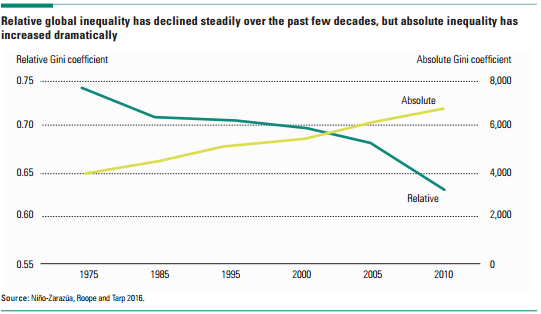
I love this post, via one of my favourite websites - Globalization is slashing inequality - here's how. The original post talks about the "relative global inequality" rather than the absolute number. The post says something different, think about it for a while and let me know if you think it is "right": .... arguably, reducing deprivation and raising living standards are more important than lessening income inequality.


All that said, from above, in the developed world (and you can see it in the anger of people's voting patterns), there is a definite "transition" in wages/skills - Great Divergences: The growing dispersion of wages and productivity in OECD countries. It seems that a number of factors impact on the pay versus productivity reality, including the impact from what company and sector you work for/in. It is tough and hard to tell someone who is 45 with a mortgage and children that they need to re-skill in order to meet the current labour market skillset requirements.


Home again, home again, jiggety-jog. Stocks across Asia are lower collectively. Futures are pointing lower. Markets here have started lower. The words Trump and Impeach in tweets has risen drastically in the last few hours. It won't happen until it happens, OK? Ha ha.


Sent to you by Sasha, Byron and Michael on behalf of team Vestact.

Email us

Follow Sasha, Michael, Byron, Bright and Paul on Twitter

078 533 1063
Tuesday, 16 May 2017

Vodacom goes on Safari

"Come a little closer partner was the message. Why? Vodacom will acquire a 34.94 percent indirect interest in Safaricom, by acquiring a 87.5 percent stake in Vodafone Kenya, from Vodafone Plc. Vodafone Plc. will retain a 12.5 percent stake in Vodafone Kenya, giving them (Plc.) an effective 4.99 percent in Safaricom."


To market to market to buy a fat pig Market levels turned tail from a good start to lose steam as the Rand strengthened through the day, only turning as US markets opened stronger and were heading higher. In the end we closed in Jozi (Jozi), a smidgen lower, a whole 11 points lower from where we started. Resources enjoyed a strong day, up three-quarters of a percent by the time all was said and done. Amplats and Bidvest were the two biggest winners on the day, Aspen and AngloGold Ashanti were the two biggest losers. The day was basically shared amongst winners and losers, an even 1-1 inside of the majors. In other words, for every stock down in the ALSI 40, there was a stock up. And hence, no surprises that we ended the day flat!!

There were tons of results, Aspen sold off heavily initially, and then recovered a bit, on a short note on the European Commissions proceedings announcement. Basically ..... the EU commission is investigating Aspen and their subsidiaries across the continent, the company cannot comment at this time and they support fair and open competition in all markets. They take the law seriously and will work with the authorities. And most importantly, all information, as and when available, will be communicated through SENS.

It is a tough operating environment, Europe, there are many regulatory hurdles and said authorities take their work VERY seriously. Bureaucracy and Europe go hand in hand. Session close Aspen was trading down 3.6 percent at 275 Rand a share. There is very little earnings related news until mid-September, and the trading update before that. We will just have to sit tight for now. I guess if you had to choose between operating in a corrupt basket-case country like Venezuela, over bureaucratic jungles like Italy, you would choose the richer and more stable (relatively speaking) European country. It is about the efficiency of doing business, the easier it is to do business, the better for all the citizens. Somehow ordinary citizens think governments are for their interests and well being, whereas in reality, number one looks after number one the best, if you know what I mean.

Talking number one, Vodacom obviously being first to market here in South Africa always had the numbers and the cream. MTN being unshackled was able to spread wings across the continent and beyond, which allowed them to capture a far greater subscriber base. Vodafone, being the majority shareholder of Vodacom, put territorial shackles on the South African based company, which was not able to operate in directly competing countries. No Vodacom and Vodafone in the same territory, ok? The announcement yesterday may have changed and shifted that approach a bit.

Come a little closer partner was the message. Why? Vodacom will acquire a 34.94 percent indirect interest in Safaricom, by acquiring a 87.5 percent stake in Vodafone Kenya, from Vodafone Plc. Vodafone Plc. will retain a 12.5 percent stake in Vodafone Kenya, giving them (Plc.) an effective 4.99 percent in Safaricom. These two will be shareholders of nearly 40 percent of the Kenyan telecoms powerhouse. Vodacom will issue 226.8 million shares to Vodafone. At the current share price, that is 34.668 billion Rand. Which means that the whole of Safaricom is around 100 billion Rand, is that about right?

There are currently 1.488 billion Vodacom shares in issue, post this transaction, there will be 1.715 billion shares. At the current price (all things being equal), the market capitalisation would be 262 billion Rand. Which would make the company in market capitalisation bigger than Anglo American at the close last evening, nearly the same size as Sasol and breathing down the neck of FirstRand. And definitely bigger than MTN. Vodafone will now own, when the deal is complete, 69.6 percent of Vodacom. For them I can understand why this is a win, one tradable entity in one place and currency, and a small minority stake elsewhere.

I wonder what the Kenyan government (35 percent shareholder in Safaricom) thinks of all this? More importantly, what is happening with Vodafone? This FT article suggests that by cleaning up their fragmented portfolio, this may be a step closer for Vodafone to merge with Liberty Global, who is the owner of Virgin Media in Europe - Vodafone transfers stake in Kenya operator Safaricom to Vodacom. For that .... we will have to wait. First things first, get this deal done. Over the next 24 months, as per JSE regulations, the Vodacom free float will have to be beefed up, and that will mean that Vodafone will have to sell some of their shares. Currently Vodacom have signed a two year exemption with the JSE, expect Vodafone to sell some shares in the coming 12-18 months.


Over the seas and oceans, stocks rose into the close of a record session, at least for the broader market S&P 500 as well as the nerds of NASDAQ. Session end both had printed new closing and intraday highs, the S&P 500 added nearly half a percent to close out the session at 2402, whilst the nerds of NASDAQ tacked on 0.46 percent to end at 6149 points. The Dow Jones Industrial Average added just over four-tenths of a percent. The charge by equities was in part first buoyed by rising oil prices, the Saudis and Russians agreed to further longer dated cuts in output. Johnson & Johnson got a lift from a broker upgrade from JP Morgan, moving their rating from neutral to overweight and raising their price target to 140 Dollars, for what it is worth.

NVIDIA rose another five percent to beyond 134 Dollars, benefitting from a Goldman note that reiterated that the stock was a "conviction buy", see the Barron's story (subscription only) - Nvidia: Take Advantage of Short-Sighted Investor Worries, Says Goldman. All this after meeting the company last week. The analyst upgraded the stock price target (again, for what it is worth) to 165 Dollars a share.

Hey ..... what about those people at Nomura? Check this out from February - Nvidia Shares Plummet as Analysts Downgrade High-Flying Stock. Jeepers, they must be getting totalled! Mind you, they may have changed their minds in the interim, perhaps I wasn't paying attention. Talking of which, this is useful - Market Punished Earnings Misses More Than Average for Q1

Hey, how about that virus, that was thwarted by 22 year old Marcus Hutchins, that thought through this thing practically? The BusinessInsider has a great story about the fellow - The 22-year-old who saved the world from a malware virus has been named. The grand total of 22 odd thousand pounds worth of Bitcoin has been paid. And the price of Bitcoin was down. And then up, and then down.


Company Corner

Richemont, the luxury goods producer, released results for their full year last Friday. Sales had fallen as a result of a tricky operating environment. Asia Pacific was flat, it still constitutes 37 percent of the overall business by sales, Europe is 29 percent, having fallen recently, much of that due to the recovery of the Americas (which is now 17 percent of all sales). There were pockets of strength, Mainland China, Korea and the UK, as well as the US.

Sales were 4 percent lower to 10.647 billion Euros, gross margins were collectively 40 basis points lower, operating margins fell 200 basis points to 16.6 percent, a much sharper slide. Profits and earnings per share were 46 percent lower to 1.21 billion Euros and 2.141 Euros respectively. To translate that back to Swiss Francs at the prevailing rate, you get 2.34 Swiss Francs worth of earnings per share. The dividend was hiked by 6 percent to 1.80 Swiss Francs.

At the current level of 82.25 Swiss Francs that translates to a multiple of 36.8 times (very rich as a result of the plunge in earnings), the dividend yield (pre a hefty 35 percent Swiss dividend withholding tax) is around 2.2 percent. The stock looks expensive. The yield may be above the Swiss Treasury yield. Anything is above negative. True story, currently the Swiss Generic Ten year bond is 0.054 percent MINUS. Yes. You pay the Swiss government to park your money. In the Swiss Central Banking system we definitely trust .... at least that is what the market is telling you - Switzerland Govt Bonds 10 Year Note Generic Bid Yield.

There have been a number of management changes recently. The CEO will be up for election in a separate capacity, the new management team is fresher and a whole host of people will not be available for re-election, including some long standing board members. New ones include Anton Rupert (the son of Johann Rupert, the chairman), clearly the best person for the job. Enough sarcasm, there has been plenty of continuity in looking after the hefty family stake. I suppose .... nobody looks after number one like number one, right?

The outlook is worth interrogating. In his prepared remarks in the results, Chairman Johann Rupert had the following to say, it is possibly worth ALL copying and pasting:

    "Volatility and uncertainty in the geopolitical and trading environments are likely to prevail. Our attention is focused on transitioning the Group to adjust to operating in a more sustainable growth environment, by adapting our product offer, communication and distribution to new consumption patterns while allocating resources primarily towards research and innovation, digital marketing, online sales platforms and training in all of our Maisons.

    Richemont has a strong cash flow and a strong balance sheet that enables us to focus on value creation for shareholders over an extended time horizon. This approach allows our Maisons, which have significant brand equity and heritage, to plan and grow in what we continue to believe is a unique business with excellent long-term prospects."


Agreed. They are just transitioning and their watches business is clearly under pressure, it will stabilise at some level. For now, we are holders of the premier jewellery business, knowing that this industry is millennia old. It is not going away. Not in ten years time, not in a century time.


Linkfest, lap it up

As life expectancies rise retiring at age 60 and doing nothing is fast becoming a thing of the past - China's seniors are lining up to go back to college. The great thing about these classes is that it gets people out of their homes, they are more active and they get to socialise which all comes together to make the older people happier and healthier.

There is still much trial and error, when it comes to urban farming. One of the biggest costs is the "land" or square meterage needed to grow plants on mass. I do think that at some point companies will find the right mix to be profitable urban farmers - A Farm Grows in the City.

When your Instagram page doubles up as part of the future and creates huge interest. Elon Musk debuted the electric sled that barrels along at 200km per hour on his feed - This is a test run of our electric sled.

Staying with electric moving transportation, this bike of the future (that may retail around 1200 Dollars when finished) is the MOAR (pronounced Mo-Are) eBike. This is incredible. Equally, they have raised the necessary funding - Fat Tire, Folding Frame, Electric Bicycle. Watch the video.


Home again, home again, jiggety-jog. Stocks across Asia are mixed to better, Tencent is flat. A weaker Dollar equals a stronger Rand. Which is not always good for our exchange, very good for imported inflation.


Sent to you by Sasha, Byron and Michael on behalf of team Vestact.

Email us

Follow Sasha, Michael, Byron, Bright and Paul on Twitter

078 533 1063
Monday, 15 May 2017

The Etail Whale

"What is Amazon likely to look like in 20 years from now? The irony in the fact that 20 years and three days ago (just before Amazon listed), Barnes and Noble sued the company for claiming they were the biggest book store in the world, claiming they were just a book broker."


To market to market to buy a fat pig Friday was a mixed bag for the JSE all share index, financials added around one-quarter of a percent on the day (over the last three years financials are up around 14 percent as a collective), resources slipped around one-fifth of a percent, whilst industrials were a bit of a drag, down one-quarter of a percent by the time the closing bell rang. Richemont, with a very poor bunch of numbers was the main drag on stocks as a collective (the all share ended the session down around one-tenth), that stock was down over five percent on the day. We will cover those results in due course and report back. Other "losers" included the likes of Amplats, Glencore and Woolies. In the winners column it was the likes of Capitec, Naspers (with another all time high) and Aspen pulling us ahead.

There is a ton of news this morning, including Astral foods, Barloworld, Vodacom and Netcare (and Lonmin). Yowsers, this is very busy. Vodacom at the same time have acquired a stake in Safaricom, this may be part of a grand plan for Vodafone to sink their sub-saharan African investments in Vodacom here locally. Through one tradable and liquid instrument with a strong pension fund in a country that is ready to be more active in this regard. i.e. the PIC or the IDC, or any such other investment arm. Vodacom would fit right in. Having said that, government sold their stake to the PIC for 25 odd billion Rand, around two years ago (July 2015). Just saying that I think that this is sensible from the perspective of Vodafone, keeping their asset base in one place where capital markets are at their deepest.


Stocks across the oceans and seas were a mixed bag, the nerds of NASDAQ closed marginally higher after another all time high from Apple inc., it is now bigger than ever before. Apple now trades at over 156 Dollars a share, a market capitalisation of 825 billion Dollars. Edging closer, with huge anticipation of the new form iPhone in the coming six months. It is going to be the biggest and most anticipated launch from the company in their history. By the end of the session, the nerds of NASDAQ had tacked on nearly one-tenth of a percent. The Dow Jones Industrial Average lost just over one tenth of a percent, the broader market S&P 500 lost 0.15 percent as the industrials weighed heavily, GE down over two percent on the session, Wells Fargo down nearly one and one-third of a percent by the session end. Healthcare added just over one-third of a percent. Political machinations aside.


Company Corner

It has been 20 years to the day since Amazon listed. You can even read the prospectus in text form - FORM S-1. Bezos will not be at the NASDAQ to ring the bell, he doesn't mix with the investment community well, despite being from that sort of background. He was, in another life, an investment banker. Heck, he does not even "attend" earnings calls.

I had a lengthy chat to older clients (older than me) about their experiences of "things" from technology, to consumption to healthcare improvements and travel. It is always worth the exercise writing down the important technology you had then, versus now. Do the exercise, write down all the mobile phones you ever had, all the personal computers and their relative computing power to today. And then try and draw a historical context, i.e. the time between 1950 and 1960 seems like a short period in history, 10 years has seen a massive change in mobile handset technology.

I had a Nokia 3310, predictive text was something huge. That was the year 2000. I had a Nokia before that, and through to the Nokia N95, heck, that was 2007. It was only in 2008, less than ten years ago that the Apple iPhone 3G started to attract multiple users. And the rest is history. Amazon has a similar trajectory, with their fearless leader Jeff Bezos always looking to try new things and avenues of business. Failure is just a seven letter word for him.

If you do not try, you will never know what could or might transpire. There are many success stories, the Kindle, we just take that for granted nowadays. The seamless delivery of books. If I want it, I can have it in minutes, or less, depending on my skills. Hotel booking, high end fashion, a Shopify competitor, payment services, Q&A website called askville, all of these services have been pulled by Amazon. If they try something and it seems that there is little or no traction, the company normally pulls the plug. Heck, even the Fire phone has not been a success, Amazon are "working on that" still.

What is Amazon likely to look like in 20 years from now? The irony in the fact that 20 years and three days ago (just before Amazon listed), Barnes and Noble sued the company for claiming they were the biggest book store in the world, claiming they were just a book broker. The rest as they say is history. It is easy to say that it was obvious to have seen the trajectory of Amazon and their dominance. Same day delivery, automation and technology along with their drive to be more and more efficient. The consumer has reacted with an overwhelming yes. And now there are cloud services.

That still leaves us wondering about the investment case for Amazon at their all time closing high of 961.35 Dollars a share. The business increasingly invests in existing lines of business, as well as new lines of business. It is not very profitable. And yet ..... it is the fourth largest company in the US by market cap. Here is what the company says in the prospectus: "Amazon.com was founded to capitalize on the opportunity for online book retailing. The Company believes that the retail book industry is particularly suited to online retailing for many compelling reasons."

Ironically, they contradicted themselves: "Furthermore, unlike with clothing or other personal products, consumers can make educated book purchase decisions using online information." And then immediately make good: "Amazon.com intends to use technology to deliver an outstanding service offering and to achieve the significant economies inherent in the online store model. The Company's strategy is to build strong brand recognition, customer loyalty and supplier relationships, while creating an economic model that is superior to that of the capital and real estate intensive traditional book retailing business."

Amazon will be what they will be. Bigger and better than their peers. You must, as a shareholder, be prepared to experience bouts of extreme volatility as the investment community struggles to come to terms with the valuation and enterprise value - the sum of the parts. We remain long this wonderfully innovative business, here is to the next 20 years of investing. What hasn't changed (some of it), in the prospectus: "LIMITED OPERATING HISTORY; ACCUMULATED DEFICIT; ANTICIPATED LOSSES." Longer History, the last two .... the same.


Richemont results on Friday. These were worse than most people anticipated, in recent quarters there had been signs of better luxury goods markets globally, in bits and pieces. The likes of LVMH and Tiffany's have seen better sales recently. Watches taking a hit, jewellery rebounded (sales up 7 percent), leather goods sales doing really well (up 11 percent) and clothing bumbling through. Ironically, sales of writing instruments (in the internet era), increased by five percent. Margins in jewellery declined, in watches margins halved. Ugly. We will do a full review today coupled with a longer update of the expectations.


Linkfest, lap it up

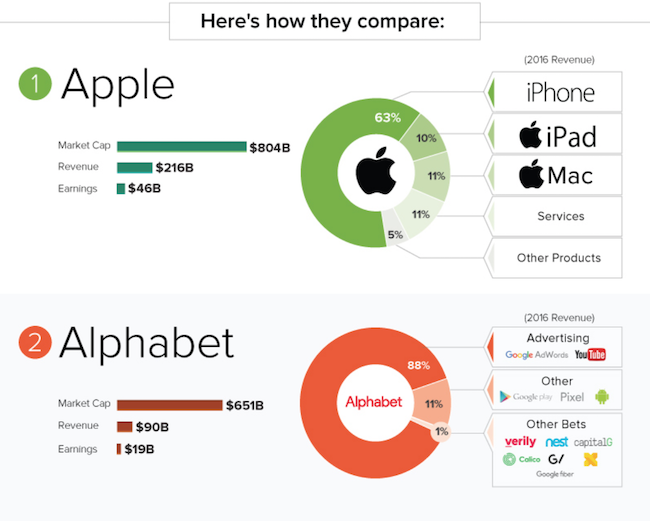
Here is a nice graphic showing the breakdown of revenues for the largest tech companies. Notice that with age the more diversified they become, which is what you want to see as an investor - Chart: Here's How 5 Tech Giants Make Their Billions


Wow, the wonders of AI. This way your alarm is always on but doesn't get triggered by family and pets - This Home Camera Can Tell Who's There. What happens when you have guests come over?

When people look to the past many people think that investing was easy, it is human nature to look to the past and think that the course of history was the most obvious course - Everything, in retrospect, is obvious. Good read with a nice one liner from Tom Cruise:

    "Everything ends badly, otherwise it wouldn't end."


Home again, home again, jiggety-jog. Stocks are mixed to start with. Naspers is at another all time high, courtesy of the positive Tencent momentum. A stronger Rand in these parts, thanks to positive momentum for emerging markets. Woo hoo.


Sent to you by Sasha, Byron and Michael on behalf of team Vestact.

Email us

Follow Sasha, Michael, Byron, Bright and Paul on Twitter

078 533 1063
Thursday, 11 May 2017

Stryker, Cutting Edge

"I am excited by the business of Stryker. They really are at the (excuse the pun) cutting edge of healthcare technological advances. Less invasive surgeries will lead to more procedures and more importantly for a company like Stryker, more quality equipment sold."


To market to market to buy a fat pig OK. I have seen a lot of people upset with the way that Trump just fired the FBI director. I hear their pain, it is part of the processes of the separation of power, who can and cannot make the decisions that have implications, not only for the short term, equally in the long run. According to the chattering classes, this was supposed to be very negative and as such, they were expecting a big sell off in the equities markets. So do not be surprised with reading headlines of shock/horror such as this one from Barron's: Shrug: Dow Drops 30 Points as Not Even Comey's Firing Can Move This Market.

This Market? It seems like the author, Ben Levisohn, is somehow bemused that a FBI agent firing doesn't see equities sell off. OK, what is the theory? Quite simply, this may be a roadblock in trying to get stuff done. If the president of the most powerful economy on the planet (no, not North Korea) is making executive decisions that peeve some folks, that may not lead to tax reform legislation getting passed. Look, there are tons of what ifs in there, and what could and might happen. From where we sit, you should never invest on the basis of what politics may, or may not pan out. Levels of markets are "targeted" by market strategists, based on momentum, or whatever.

Ben does not seem like the biggest optimist to me. I am naturally cautiously optimistic. As an investor, you have to always believe, after you have done your thorough research, that the thesis will hold true over time. Otherwise, you should go into the business of candles, paraffin, shotgun shells and baked beans. People spend way too much time on the Fed, or politics or forecasting, or targets or worrying about what can happen next. Investing is not like following your favourite sports teams. There are more ups and downs there. You have little control over team selection in sports team supporting, you can choose your entire portfolio without compromising the team inclusion or exclusion. You are Arsene Wenger. Goodness, I hope that Arsenal qualifies for Champions League, that would make some people sit down.

In closing this piece, know a few things about investing. You have absolutely no control over market levels and share price movements. Zero. You have complete control over what you own and what your holding period is likely to be. Peter Lynch once said in an interview: "I mean I deal in facts, not forecasting the future. That's crystal ball stuff. That doesn't work. Futile." He was a great investor on the back of human emotion and could recognise it better than most. In other words, he could see through the fear and greed. Nobody knows what is going to happen next and I think for many retail clients, that scares the proverbial investing pants right off them. No, it is too risky. In reality, that couldn't be further from the truth.

You have control over your investments. The calls I have fielded over the years about anxiety and wanting to sell to go to cash are forgotten in the mists of time as equity markets rise. Markets go up and down, the company that you own, lives, breathes, has real life customers and employees and managers, they make real life decisions on spending shareholder money to create new services and products. There are real life consumers of their products and services, looking for quality relative to the price they are willing to, or can, pay. So whilst Ben worries what may move This market (and that is his job), you must know you own a piece of a business, that happens to have a second by second quoted price with deep liquidity. And it is that simple. What you choose to do with it from there, well .... that is up to you.

I definitely subscribe to theory and practices of a simple line in the 1988 Warren Buffett annual Chairman's letter:

    "In fact, when we own portions of outstanding businesses with outstanding managements, our favorite holding period is forever. We are just the opposite of those who hurry to sell and book profits when companies perform well but who tenaciously hang on to businesses that disappoint. Peter Lynch aptly likens such behavior to cutting the flowers and watering the weeds."


And there ends the investing lessons for the day. I am sure this is a drum we have beaten on five years/ten years ago and before, and over the next decade too. Keep on keeping on.


OK, a quick market look then. The Dow gave up 32 points (0.16 percent), as you saw above. The broader market S&P 500 added just over one-tenth of a percent, whilst the nerds of NASDAQ added 0.14 percent by the close. Disney was in the spotlight, many people still very anxious about the ESPN business. This business is intriguing for me, the longevity and the ability to span multiple generations across many different cultures. Heroes and villains for children of all ages. The stock sank over two percent. NVIDIA soared nearly 18 percent to an all time high, those results (we wrote about them yesterday) were very well received.

Locally, stocks added 0.15 percent as a collective. Industrials lost around that amount (0.15 percent), the Rand was stronger (on account of the Dollar being weaker). AngloGold, Amplats and Remgro were the big winners on the day, South32, Steinhoff and Shoprite were the big losers on the day. There was a complicated and multiple moving parts trading update from Netcare, the stock barely moved on the day. Over the last three years the stock is basically flat in Rand terms.


Company Corner

Homer Stryker was a pretty late starter, as far as business formation goes. Born in 1894, he only discovered a decade and a half into his medical career that he was most interested in orthopaedics. Fair enough, rather late than never! And sooner than Ray Croc (the McDonald's guy!). Little did Dr. Homer Stryker know that medical science would get to the point nowadays where the company he founded (and was named after him), Stryker, would be at the point where the company is responsible for Craniomaxillofacial and Spinal implats. We are talking about reconstruction of skeletal structures here, ones in which people can have multiple "parts". Knees, hips, your foot, your ankle, pins in bones, machines that help surgery (Mako), which include truly futuristic technology, after and pre care (ambulance stretchers to beds), and the original power tools business.

It was Homer after all that that patented the oscillating saw, to remove plaster casts. The website under history notes the following (from 1947): "As a result of a late-night brainstorm, Dr. Stryker hit on an idea for a powered cast cutter. The first prototype, created on the premise that an oscillating saw blade cuts hard material but not soft surfaces, incorporates a motor from a malted milk mixer. The once long and laborious process to remove a plaster cast now takes only minutes with the cast cutter. The saw cuts hard cast material, but not human tissue, and is the forerunner to a broad line of surgical instruments." Thanks to Homer not sleeping at night, we can all be grateful for the amazing ranges of tools at surgeons and health caregivers disposal. And technological advances in software and computer based technologies.

The company will leverage off the same healthcare growth that our other investments in the sector will benefit from. At the end of the day, modern technology will save money and boost the outcomes for the better for all parties. Better outcomes from the patient to the healthcare insurance businesses. And definitely allowing the professionals and hospitals to focus on what is important, the outcome. Watch this video (it is obviously from the company) to see what is available to patients, the technological innovations that Stryker supplies to surgeons, for less invasive surgery - Aim Platform, scroll to the bottom of the page.

The business is really well diversified, within their three core divisions, namely MedSurg, Orthopaedics and Neurotechnology and Spine, no one subsegment is more than 14 percent of total sales. In fact, here is the breakdown from the 2016 annual report: Instruments - 14%, Medical - 14%, Endoscopy - 13%, Knees - 13%, Trauma & Extremities - 12%, Hips - 11%, Spine 7%, Neurovascular - 5%, Neuro Powered Instruments - 4% and Craniomaxillofacial at 2%. Various "other" makes up the balance.

MedSurg was the standout, thanks to new products and acquisitions in that area. Growth outside of the US in revenue terms was around ten percent better than the corresponding quarter. The business is essentially still very much a US based one, roughly 30 percent of the business is outside of the US. This is good, it means that their ability to continue to attract big business from other territories. Europe, Canada and Australia, where there are loads of rich people.

I am excited by the business of Stryker. They really are at the (excuse the pun) cutting edge of healthcare technological advances. Less invasive surgeries will lead to more procedures and more importantly for a company like Stryker, more quality equipment sold. Stay long and accumulate on weakness, this is a fabulous business with a very fair share price at current levels. You must own this company in your long term portfolio. It is a must!


Linkfest, lap it up

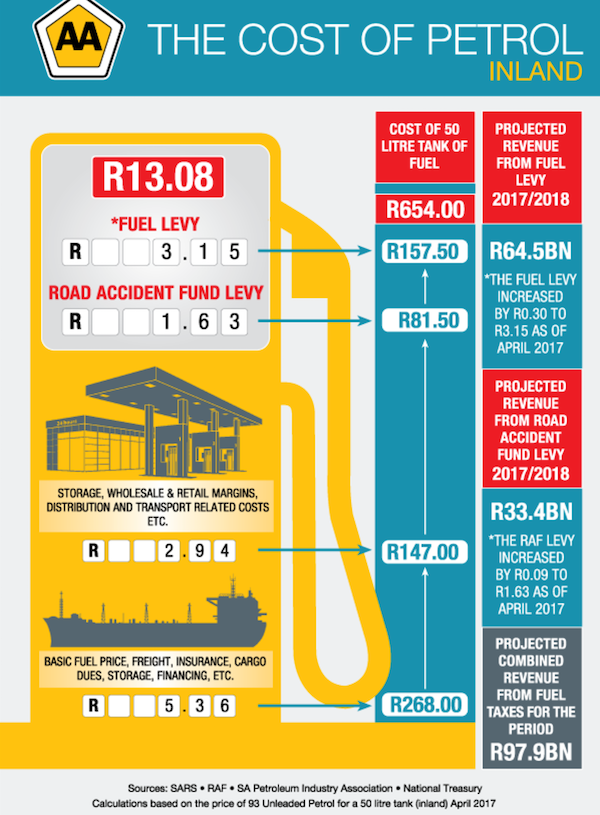
The AA regularly makes a nice breakdown of what we are paying for when we fill up our cars - The petrol price - all you need to know.


Here is a graphic showing that we drive on the wrong side of the road. A bit of Googling tells me that knights would keep left because their swords were in their right hands, people rebelling against the colonial system of doing things decided to then ride on the right hand side. Not sure how true it is but makes for a good story - Which Side Of The Road Do You Drive On?

Infographic: Which Side Of The Road Do You Drive On?  | Statista You will find more statistics at Statista


Home again, home again, jiggety-jog. How was that moon this morning sportslovers? It was lovely. No ... it was spectacular. Stocks across Asia are all higher, on balance, if not by a huge amount. The Nikkei nearly broke the 20 thousand mark again! A long way to go to the 1989 level of the high 30 thousands though.


Sent to you by Sasha, Byron and Michael on behalf of team Vestact.

Email us

Follow Sasha, Michael, Byron, Bright and Paul on Twitter

078 533 1063