Tuesday, 11 April 2017

The Tesla Coil

"There is no other company that is written about as much as Tesla, perhaps Apple is right up there. It is no coincidence that both companies make beautiful things and were/are spearheaded by obsessive leaders."


To market to market to buy a fat pig Stocks in the city founded on a monster pile of gold added just over half a percent as a collective. Resources rallied over a percent and a half by the close, industrials added nearly half a percent and Banks slipped a little. Sounds like recent same old, I am afraid for the investors in financials and banks. Some of them look exceptionally cheap. Undue, or cheap for a reason? We will see what transpires with the Moody's review and then I suppose most importantly, how the new issuances by Treasury are priced and what levels of interest they attract. I suspect that we will all be following those very closely for the foreseeable future. It is funny how you expect and take stuff for granted, until something changes, that is very, very important.

A crowd called Elliot, a hedge fund crowd from the US, have taken a 4.1 odd percent stake in BHP Billiton. They have requested that BHP spin off the US petroleum business, list that separately and then fully incorporate the business in Aussie (and not in two places), in order to be more tax efficient. Elliot have made a number of demands, the company promptly turned around and said that would be too expensive and wouldn't work. Thanks for that Elliot, and then a wave. Get it? Elliot wave? BHP Billiton was one of the best performers yesterday, the stock was up three and three-quarters of a percent by the close of business in Jozi.

A stock just above that company, in terms of the day performance, was Mediclinic. There was news released by the company, simply titled Swiss regulatory update. It is more than a little complicated, I would urge you to read it from top to bottom. In short and to try and be as brief as possible, the canton of Zurich (the district) parliament voted not to institute a levy on a segment of private healthcare patients.

That is good news for Mediclinic's business in Switzerland, it means that their more marginal users (sensitive to price) will not pay the levy (along with the wealthier ones, who pay top dollar for private healthcare). At least for now. The Hirslanden CEO says the following about the authorities, who "recognise that ongoing dialogue and engagement with the relevant public authorities is key to ensuring that we can continue to deliver high-quality, cost-efficient, healthcare to our patients." I guess this differs on a canton by canton basis, they (cantons) are member states of the country. And guess what? Zurich has the highest population density amongst the 26 cantons of Switzerland, Hirslanden has two hospitals in Zurich. The next big one would be Bern (four hospitals), and then Vaud (where Lausanne is), with two hospitals, those are the next most populous regions of Switzerland.

We view this as a positive for their biggest business. We know that the share price has done badly, recently. Since their listing in London, where Mediclinic reversed into Al Noor, things have looked scratchy in the UK and that has impacted the Pound share price of Mediclinic. It should mean that the revenues and profits from their "offshore" (not from the UK) businesses should be good. Problems in the UAE with the integration of the two businesses and with the pay in (another state medical aid slippage in healthcare benefits) settling in the coming year or so, we should see some normalisation. I expect the business to do deals where they see fit, backed by an anchor shareholder in Remgro. We remain patient (no pun intended).


Across the oceans and deep blue seas, stocks in New York, New York settled lower from their best point, equally higher from their worst point. The Dow Jones Industrial Average added less than two whole points, up 0.01 percent on the session. Snooze and sleep another 7 (or is it 9?) minutes ..... The broader market S&P 500 added a mere 0.07 percent, whilst the nerds of NASDAQ added 0.05 percent by the time the closing bell rang. At one stage stocks were up half a percent, at another stage they were down nearly one quarter of a percent. The flat closing masks the intraday moves, the evidence lies in the VIX, which was up 9 percent on the session to a little over 14, the highest levels since early December. That tells you something, at least.

There was much chatter about the two Wells Fargo execs that have to hand back some serious tom, a 113 page internal report released by the company names some very high profile people who should account to the owners of the business (the shareholders) and broader society and most especially to their customers. Without the customers, there is no business whatsoever. John Stumpf, who was heading the business at the time and Carrie Tolstedt, head of the retail business were in the cross hairs of this report.

The upshot of it all is that there are cancelled options and clawbacks to the tune of 47 million Dollars for Tolstedt and 28 million Dollars for Stumpf. Tolstedt was found to have hidden the size and scale of the "cross selling", Stumpf once called her the best banker in America. The independent board members have launched a scathing attack on the two, too little too late is the tarnished image of the bank, even though the scale of the abuse is relatively small in monetary standards, (an apple may not be a cart) the bad aftertaste will linger for some time.

I suppose the message is to send a solid warning to the custodians of shareholder capital, the independent board will act, and hopefully harshly in this situation. I wouldn't feel too sorry for either Stumpf or Tolstedt, they are still "well off". A quiet spot down in the Caribbean is perhaps the perfect place to go for a few years. It is like she has been removed from Wells Fargo history, sorry, the profile you are looking for has been fired. We have also cancelled 47 million Dollars of options she had pending. Have a nice day.


Company corner

And then a whole lot of "stuff" around Tesla. Again. The company that attracts an enormous amount of attention, warranted I think. There is no other company that is written about as much as Tesla, perhaps Apple is right up there. It is no coincidence that both companies make beautiful things and were/are spearheaded by obsessive leaders. The company, thirteen years old, now has a bigger market capitalisation than General Motors. Elon Musk, has in less than two decades shaken up the whole motoring world. He has made them all push for electric and driverless systems. My best guess is that he has succeeded and that he has set something in motion. Something big in the way that we transport ourselves across the length and breadth of the planet, and even beyond in his case (and Jeff Bezos), to Mars and beyond.

Tesla's competitors think this is crazy, their valuation, based on the fact that the company does not make money. That is right, you read that correctly. The company is expected by some counts to be cash flow positive next year. They still produce only 100 thousand vehicles this year, all luxury ones, really. The Model 3 is the "next big thing" and may well turn out to be the catalyst for something bigger. Whilst I agree with the observations in this article - Tesla's 'crazy' climb to America's most valuable car company, there are many things about Musk and most importantly, the customers of Tesla that people have not learned.

For every bullish article about Tesla, there are almost three to four negative ones. That is what I have found. People cannot come to terms with the valuation that the market is affording the company. It is a company that investors and most importantly, customers, do not want to miss out on. If the customer can get their hands on a Tesla, they surely will. The company cannot manufacture these fast enough. There is a pretty cool SeekingAlpha piece on Tesla - 4 Myths And 4 Little-Known Facts About Tesla. A *nice* read, with obvious bias. We continue to stay long, it is a small interest investment at the fringes of the portfolios.


Linkfest, lap it up

Cannot trust a driverless taxi? You are not alone. Which is why these drivers think that their job is safe for now - Uber Drivers Aren't Worried About Self-Driving Cars - Yet.

The self driving car revolution (another one) is much closer than many people think - Quarter of Miles Traveled in the U.S. by 2030 Seen as Driverless. The big number from the report is how much money the average person will save a year, it is estimated that the average person in Chicago will save $7 000 a year. With numbers like that people will move to self driving cars quickly. So who is right, the drivers or the manufacturers? The customers will dictate.

Thanks to the frackers, oil prices have come down. Will it remain at these levels though? - Oil surplus or scarcity? Shale makes it even harder to predict. As a consumer I hope the price movements are to the down side.

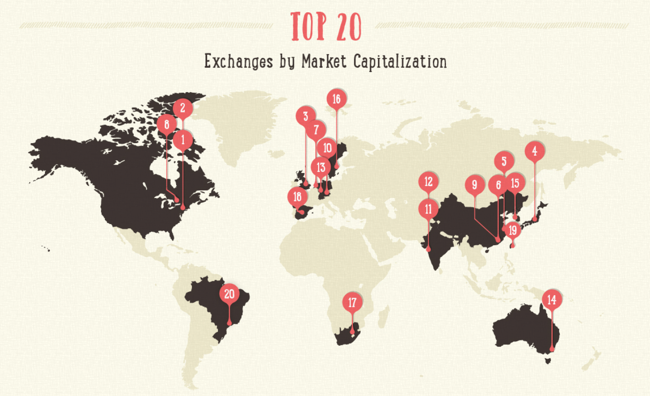
Always nice to see Jozi on the list, we punch above our weight, thanks to the Visual Capitalist for this wonderful bunch of drawings. The stock market here is the 17th biggest in the world. Bigger than Brazil, bigger than Spain. Bigger than Taiwan. What is most surprising is that Frankfurt (431 years old) and Bombay have the two biggest amounts of listings and companies available. They are possibly of a very low quality. The 20 Largest Stock Exchanges in the World.


Home again, home again, jiggety-jog. Paul clocked 1000 days of continuous running over the weekend. That is at least one mile (he averages closer to 15km) a day for the last 1000 days plus. This is an incredible achievement, keep it up. Next stop, 10 thousand. Stocks have started mixed to better on this side.


Sent to you by Sasha, Byron and Michael on behalf of team Vestact.

Email us

Follow Sasha, Michael, Byron, Bright and Paul on Twitter

078 533 1063

Monday, 10 April 2017

What a Fitch

"Pitch and their pitchfork came to town Friday, another downgrade and this time both sets of debt, local and foreign currency denominated. Either way you look at it, there is no way to paint lipstick on the proverbial pig. The one thing that it may well do is galvanise us, and government, into thinking more about austerity. Make no mistake, there are the resources available, it is how they are used."


To market to market to buy a fat pig Pitch and their pitchfork came to town Friday, another downgrade and this time both sets of debt, local and foreign currency denominated. Either way you look at it, there is no way to paint lipstick on the proverbial pig. The one thing that it may well do is galvanise us, and government, into thinking more about austerity. Make no mistake, there are the resources available, it is how they are used.

I saw a story a few weeks back, that is loosely associated with the story of debt that belongs to the collective, i.e. the citizens of the land - It only took a few centuries, but Denmark has finally repaid all its foreign debts. Denmark only own internal creditors now. Will they ever pay them off? Maybe. Perhaps. Norway and Germany do not borrow externally either. It is not to say that foreigners do not own Danish debt, they do, as per the article, 40 percent of all debt is owned by folks who are not Danish. And with government debt being 23 percent of Danish GDP, we may well see lower debt levels, which may mean lower tax rates in the future.

Back here however, we have to deal with the reality of higher borrowing costs. And potentially an economy that slides further. You cannot dictate terms to people who you want to lend you money, that is how it works. Have y'all read that book This Time Is Different: Eight Centuries of Financial Folly? Although some high level students did pick holes in the research, it is still an excellent read, I read it when it came out over a December holiday once. It may hold some truths and scenarios, the market ultimately dictates to people at what rates to borrow money.

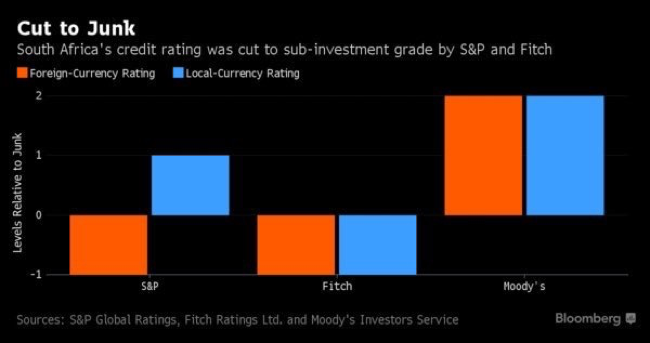
I found this via the Twitter-verse Friday (via Bloomberg), this is a graph of the three ratings agencies:


Stocks Friday locally closed lower, we were however off the worst levels of the session. Resources sank three-quarters of a percent, financials actually rallied nearly one-quarter of a percent. The stocks at the top of the leaderboard were the precious metal stocks, Amplats and AngloGold Ashanti rallied hard. Kumba and Anglo American were on the opposite part of that, in the down section. It was of course non-farm payrolls Friday, roundabout the same time as the Fitch review and release. The headline number, the number added was a "miss", even though average hourly earnings and the unemployment rate was a meet and beat. As such, the Dollar actually lost some ground and the Rand strengthened for a while. There are many internal watchers who must be confused with this scenario, not realising the world does not end at Alexander Bay and Simon's town/Simonstown. "Boulders" is not the end of the known universe, that is all you need to know. Oh, and that Moody's are on a look see ......

What this means for consumers is that basically for each and every million Rand worth of home loan debt, the cost rises over 8000 Rand per annum for every percent that the interest rate goes up. Which the central bank may be forced to do, in order to combat inflation. Which may, or may not emerge as a result of higher prices in the form of fuel, transportation and basic foodstuffs, all priced in Dollars ultimately. So this will impact on people with fewer resources available for transport and food, at the end of the day, it is ordinary people who are impacted on the most. We are a watcher in these situations and will advise if there are any steps to take.


Across the oceans and vast deep blue seas, across the equator, stocks in New York, New York closed mixed to lower. The Dow Jones slipped 0.03 percent, the nerds of NASDAQ ended 0.02 percent lower, whilst the broader market S&P 500 ended the session down 0.08 percent. Stocks were down around one-third and up one-third during the course of the session. The Employment Situation Summary, showed "(t)he unemployment rate declined to 4.5 percent in March, and total nonfarm payroll employment edged up by 98,000". At a headline level, the number of jobs added seems weak. The unemployment rate was lower than people anticipated. So whilst there was some to like, there was some to not like.

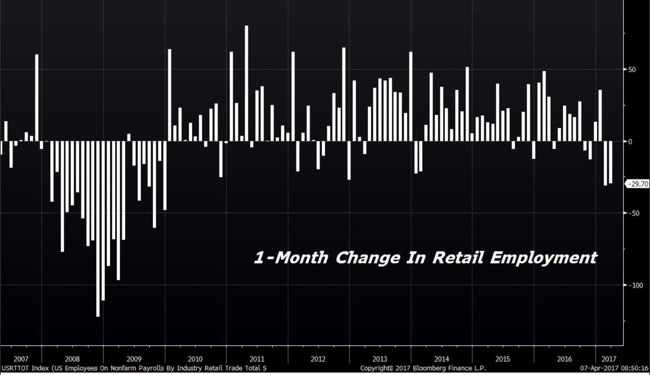
Over here at Vestact we own companies. Not the Fed or any other central bank, not monetary policy, not politics, not the macro picture ..... just companies. And we try and make sure that they are the best ones, in industries that are likely to grow, ahead of the rest of the world. Walmart caught a bid, some folks believing that their online offering has gotten better. Talking of retail, this is the worst retail report for a long time, I found this via the Twitter-verse:


So what is happening here? More online shopping and fewer retail activities taking place inside of the brick and mortar stores, I think is the general consensus. The bigger and specialist retailers will have the correct channels, the bigger and older diversified chaps, it is going to be harder.


Linkfest, lap it up

This is a nice problem to have. It is interesting that the power demand has also been dropping in the UK, people moving toward more energy efficient appliances and "green" houses - The UK's electrical grid is so overrun with renewable power, it may pay wind farms to stop producing it.

The problem with some big capital intensive projects is that there is a big lag time from the time of order to the time of delivery. The result is that the shipping industry goes through periods of over supply and then under supply, the last few years have been tough for ship operators - Slower global trade is sending more ships to the graveyard

An interesting read on how your reading of fiction might not be a distraction. Five Ways Reading Fiction Makes You Better At Your Job.

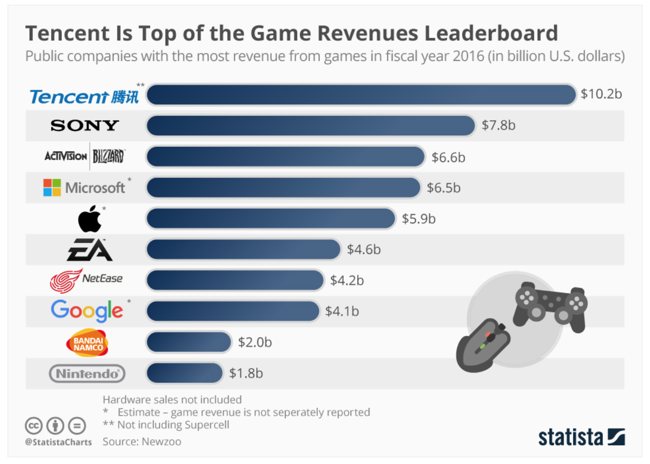
This is awesome, and you are possibly an owner of it (via Naspers) - Tencent is Top of the Game Revenues Leaderboard.


Home again, home again, jiggety-jog. Sergio Garcia, finally. That took a while, just like investing. If you keep "chipping away", things will change for you. Elliot have taken a stake in BHP Billiton, who wants to break this business apart, the stock is up sharply. A weaker Rand has boosted the market to begin with.


Sent to you by Sasha, Byron and Michael on behalf of team Vestact.

Email us

Follow Sasha, Michael, Byron, Bright and Paul on Twitter

078 533 1063
Friday, 7 April 2017

Banking Spanking

"That is all very nice and theory is excellent (who doesn't love a good equation?), what does it mean in practice? The consequences might actually see a conservative banking sector pull their horns in even more, to reduce risk. And that may well mean that unfortunately Mr. and Ms. Consumer will find it harder and harder to borrow money."


To market to market to buy a fat pig Local banks were sold off, again. A downgrade on banks debt, local banks that is. Banks in South Africa have always operated in a very favourable environment, from a regulatory point of view. They have always been well capitalised. They have always been prudent. They have always been well managed, they certainly attract some quality people. Whether or not the seven banks and financial institutions are at a "price" that is right, that is different.

S&P - Ratings On Seven South African Financial Institutions Lowered Following Similar Action On Sovereign.

    "We lowered our ratings on the financial institutions because we do not rate South African banks above the foreign currency sovereign credit ratings. This is because of the likely direct and indirect influence of sovereign distress on domestic banks' operations, including their ability to service foreign currency obligations."


There was a special HotStocks show yesterday, our own Paul was unconvinced that all the bad news was baked in the cake. So whilst the stocks have taken a leg down, there may be major bumpiness in the coming weeks and months. Here is a piece that has Paul and Adrian Saville, with Bronwyn Nielsen asking questions - Despite downgrade S.A's banks are well capitalised.

Mike Brown, the CEO of Nedbank was also on the box, trying to explain the downgrade. Standalone view of the institution first and then a wraparound at a country level. Brown speaks of a valuation metric called the Gordon growth formula (Dividend discount model), which takes into account the ability to grow the current dividend. Of course, the model does not take into account a situation where dividends are flat, lower or even suspended. It is basically to find the net present value (the share price today) based on the future dividend flow.

Heck, your guess is as good as Gordon and Shapiro, the two folks that put the valuation metric forward in 1959, based on work done pre the Second World War, by a chap called John Burr Williams. A doyen of fundamental analysis, Williams is not spoken about enough. Williams "invented" the theory of discounted cash flow analysis, which utilises the concept of time value of money. Now, and bear with us a little, the weighted average cost of capital (WACC) or just the "cost of capital" is the cost of the companies funding.

And in this case, the banks cost of funding will increase as the risk is heightened. i.e. they (the banks) will have to pay more. And as such, Present Value (the current value of the share prices), must be lower to compensate for the higher cost of funding.

That is all very nice and theory is excellent (who doesn't love a good equation?), what does it mean in practice? The consequences might actually see a conservative banking sector pull their horns in even more, to reduce risk. And that may well mean that unfortunately Mr. and Ms. Consumer will find it harder and harder to borrow money. Sadly that does not bode well for local economic growth. That is what we think may happen. Of course, the situation is very fluid. Stand by for more volatility in ZA inc. stocks, in particular the banking stocks.

Let us try and look at their returns in Dollar terms, we know their Rand returns since last Monday, when the Rand clocked 12.30 odd to the US Dollar. Currently around 13.81 to the US Dollar. We don't have access to all of these share prices, as they are not all listed in different places. Investec and Old Mutual are. Old Mutual in London is down nearly 17 percent in 9 trading sessions. Investec is down nearly ten percent. Standard Bank has a rather illiquid ADR program, it trades in the OTC market under the ticker SGBLY in New York. Since last Monday, the stock is down 22 and a half percent in Dollar terms. For the record, Standard & Poor's do not rate Standard Bank. There is an unsponsored FirstRand ADR with no liquidity whatsoever, that is down 25 percent since last Monday. I would not take anything from that, the liquidity is horrible.

So the offshore holders of FirstRand, Standard Bank and Nedbank, and the others, have taken a caning. The banking index has lost over ten percent since last Monday. And in Dollar terms, much worse. I feel for the Chinese and their investment in Standard Bank, they (ICBC) bought and subscribed for new shares at an average price of around 123 Rand. The Rand to the Dollar was around 6.80. 18 Dollars a share, more or less in October 2007. The Dollar price of Standard Bank shares is around 9.90. In a decade, the Chinese bank, who bought an African powerhouse in the banking sector, has lost nearly half of their money.

Session end, our markers had given back 0.14 percent, financials had lost half a percent, banks gave up one and three-quarters of a percent. Industrials were up a little. There were unfortunately a whole host of new twelve month lows, Coronation, Life Healthcare, Remgro and Italtile. In the 12 month high category, Sappi, Exxaro, Northam and Kumba, exposure to resources and geared to the Rand.


Over the seas and across the oceans, stocks in New York, New York, registered a marginal gain. The Dow climbed 0.07 percent, the nerds of NASDAQ added one-quarter of a percent, whilst the broader market S&P 500 added one-fifth by the time all was said and done. Amazon finally lost some ground, that story knocking around about Bezos looking to fund his rocket business coming to the fore. Blue Origin is the name of the business, it has been around for 16 years. Bezos apparently spoke about space in his valedictorian speech. They (Blue Origin) have had many launches. They have some collaborations with Boeing and NASA. Imagine, a little guy from Joburg and a little fellow from Albuquerque are shaking up the space race.

Evan (Ev) Williams, the Twitter co-founder is selling 30 percent of his stock. That sucks for long term holders. He is the largest single shareholder at an individual level. Check out his post - Why I'm selling some Twitter shares. Reasons:

"It actually pains me to be selling at this point, but this sale is all about personal context, not company context. Here's the short story: I like to invest a lot in things I care about. For example, I'm the largest LP at Obvious Ventures, which has invested in over 35 world-positive companies. In addition, my wife and I have done a fair amount of philanthropic giving and-especially in the last year-upped our political donations significantly"

Obvious Ventures? Ev, good luck with that!


Linkfest, lap it up

The speed of fast retail is something that astounds me, it is amazing that from start of concept to in the customers hands is less than a month - A new generation of even faster fashion is leaving H&M and Zara in the dust. Quick, cheap and only valid for 1 season is where the retail industry is currently sitting.

Making things as easy as possible for entrepreneurs to get going is important, it helps fuel growth and job creation - $9 billion startup Stripe is automating the complicated process of starting a company. Have you recently tried to open a company bank account with all FICA hoops to jump through?

Given that Visa is one of our core holdings, it is always good to know which card people search for the most in each country - Most Popular Credit Card By Country: Visa, MasterCard Or Amex.

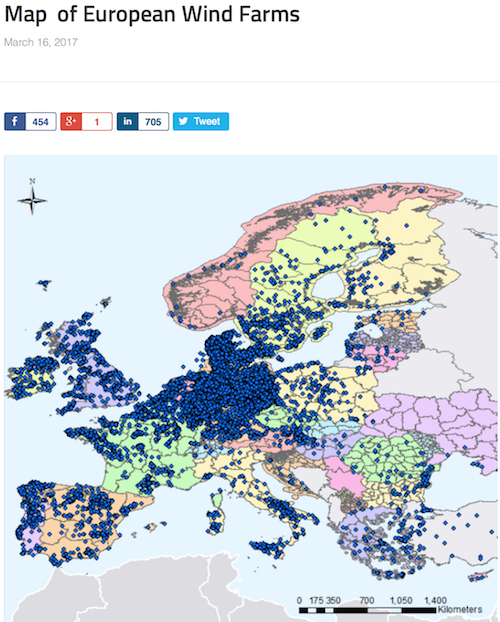
I didn't realise that Europe produces so much power from wind - Map of European Wind Farms. For perspective Medupi will produce around 4 800 MW of power, once it is completed.


Home again, home again, jiggety-jog. Non-Farm payrolls today. Yes. That is the truth sports lovers. Nice rain everywhere last night. Marches, if you are partaking, good luck with that. Give it your best.


Sent to you by Sasha, Byron and Michael on behalf of team Vestact.

Email us

Follow Sasha, Michael, Byron, Bright and Paul on Twitter

078 533 1063
Wednesday, 5 April 2017

Whatever Floats your Boat

"I think that the point that I am trying to make is that using a broad based brush to paste the same bunch together is "wrong". All boats may be floated at the same time, and all boats go lower when the tide goes out, not all boats are the same."


To market to market to buy a fat pig Locally in Jozi, again with a weakening currency, stocks closed the day out higher than where they started, in fact nearly at 53 thousand points again on the Jozi all share. That is up nearly two-thirds on the session yesterday. We had traded around these levels in January, 53 odd thousand points, we did cross this level in February 2015. It has been pretty much stop-start since then I am afraid, the economy finds itself in a bit of a funk, the Rand has been all over the show since Feb 2015. Eleven and a half then to nearly 17 in the middle of Jan 2016, back to current levels of 13.80 to the US Dollar.

Different businesses have performed with different returns, you may think that the Resources 10 has had a good 3 years, you would be very wrong, just parts of it. In Rand terms, down nearly 40 percent over that time. The Financial 15, for all the battering that they have had to withstand, 4 finance ministers, lower sovereign credit ratings, Emerging market jitters, have held up pretty well, a total return of just over four percent in that time. In Rand terms.

Industrials have been "the place to be", with a return of nearly 30 percent over the last three years. That is not exactly a great return, it is better than the rest of the market. The All Share over three years is up a mere 10 and three-quarters of a percent. It has been really tough to be invested locally, it may well turn out that the businesses accumulated during these tough times are "good value".

Bidcorp announced a transaction yesterday, they are buying 90 percent of a business in Spain, called Guzman Gastronomia and Cuttings. The business turns over 100 million Euros a year, so roughly 1.5 billion Rand. At the half year stage, that just "finished", Bidcorp clocked half year revenues of 67.8 billion Rand, this is a small acquisition relative to the overall business. It does however give them a foothold in another territory, and the company continues to talk about the "out of home" growth in foodservices. i.e. more people eating out, more people get ready made and prepared foods. We continue to like the Bidcorp story long term, we think that the slow and steady approach sneaks up on you.


New York, New York! Yeah baby. Let us digress for a second here. I saw an insert on a fellow who looks for artefacts (my youngest loves that program) and he was in Tokyo, the busiest underground transit system in the world, taking 8 million passengers a day. 3.33 billion trips a year! What was more amazing was that everyone was completely still on the metro, nobody talks. Not a peep. The New York subway system is the 7th busiest in the world, 1.7 billion trips per annum. It is a whole lot nosier, in true land of the free style. And that is where we have stock holdings, the hustlers with the laws to back it up, make it a great place for investors.

Not last evening, at least not for the bulls. It was a tale of two markets, the first half and the second half. Stocks were enjoying strong gains after a decent ADP jobs report (the precursor to the non-farm payrolls on Friday), all three major indices up comfortably over half a percent. And then the Minutes of the Federal Open Market Committee, March 14-15, 2017 were released. Some Fed members cautioned against current valuations, it wouldn't be the first time and it definitely will not be the last time.

    "Broad U.S. equity price indexes increased over the intermeeting period, and some measures of valuations, such as price-to-earnings ratios, rose further above historical norms. A standard measure of the equity risk premium edged lower, declining into the lower quartile of its historical distribution of the previous three decades."


And another nugget:

    "Many participants discussed the implications of the rise in equity prices over the past few months, with several of them citing it as contributing to an easing of financial conditions. A few participants attributed the recent equity price appreciation to expectations for corporate tax cuts or to increased risk tolerance among investors rather than to expectations of stronger economic growth."


Do you remember the time that the Fed worried about Biotech and Technology stock ratings? In the middle of 2014, Janet Yellen spoke of stretched valuations - Monetary Policy Report, July 15, 2014 - "Equity valuations of smaller firms as well as social media and biotechnology firms appear to be stretched, with ratios of prices to forward earnings remaining high relative to historical norms. "

Since then, the Twitter stock price is down 62 percent and Facebook is up 114 percent, so which one was she talking about? Since then, Amgen is up 32 percent and Valeant is down 94 percent, again, which one were they talking about?

I think that the point that I am trying to make is that using a broad based brush to paste the same bunch together is "wrong". All boats may be floated at the same time, and all boats go lower when the tide goes out, not all boats are the same. As Byron said, the Fed is not particularly good at picking market tops and bottoms (that is not their job) and you have to be a stock picker over time! Equally, I am really looking forward to the current earnings season, which will kick off over the next few weeks, and will wrap up in around 6 weeks from now. Post that, we will have a much better idea of what valuations are likely to look like, and whether they are too rich currently. We always remain the course, regardless of what people say at any given point.

Session end, the Dow had lost one-fifth of a percent, the nerds of NASDAQ were down nearly six-tenths of a percent whilst the S&P 500 lost nearly one-third of a percent. Amazon didn't stop, the stock is up six sessions in a row, approaching some sort of a record, as far as I understand it. All this as Bezos sells 1 billion Dollars of stocks in order to fund his rocket project. Michael said, tax to pay and rockets to build, there is 70 billion or so of Amazon shares, why not?


Linkfest, lap it up

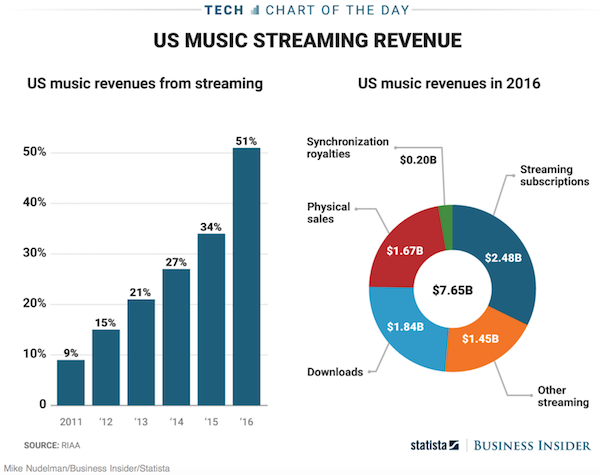
Spotify is a music streaming service where you can have the free version with regular ads or the paid version with no ads, that used to be the only main difference between the two offerings. Now the music industry is pushing back saying that new releases should only be available to paid subscribers for a time period - Spotify to host top stars' albums for premium subscribers only. I think this is the correct decision.

Here is why signing this new deal with Spotify is important for universal - Streaming services aren't the future of music - they're the new normal


What creates economic growth? Confidence plays a big part in making the pie bigger. Confidence leads to spending and investing which then leads to growth which leads to higher employment and salaries which leads back to spending and investing. Then the cycle repeats itself - Public Confidence In The U.S. Economy Hits 10-Year High

Infographic: Public Confidence In The U.S. Economy Hits 10-Year High  | Statista You will find more statistics at Statista


Home again, home again, jiggety-jog. Stocks across Asia are mixed to lower, the sell off overnight has definitely spilled over into Asia. We could start the same way here.


Sent to you by Sasha, Byron and Michael on behalf of team Vestact.

Email us

Follow Sasha, Michael, Byron, Bright and Paul on Twitter

078 533 1063
Quarter by Quarter

"The end of the first quarter for stocks in New York pointed to a sixth straight quarterly gain for equities. Consumer confidence is at the best levels since late 2000. The housing market seems pretty strong. Economic growth is not exactly tearaway, above two percent is the envy of not only the developed world, some parts of the developing world would love that too. Yes sir. "


To market to market to buy a fat pig Friday. Whoa! Equities ended near the worst point of the day, the local currency did strengthen from its worst levels. The Rand is trading, to the US Dollar, at the same point as in late January. That is right now. Depending on what happens next, this is where politics and markets really do collide. Mr. Market is making decisions based on what they think is likely to happen next in politics, and that my friends is harder to predict than the next two years of revenues for any particular business.

Financials and banks were whipped, in the losers columns were the likes of Nedbank (down 7.35 percent), Barclays Africa (down 7.16 percent), Standard Bank (down 6.47 percent), PSG (down 6.21 percent), FirstRand (down 5.62 percent), Investec (down over 5 percent) and RMB Holdings (down 4.86 percent). In the winners column were the obvious ones, Intu up nearly seven percent, Richemont up over five percent, Hammerson up nearly five percent, AB InBev added nearly four percent and BATS up three and three-quarters of a percent. Basically, if you had a listing elsewhere, or if your revenues are boosted by a weaker currency, you were in the "winners" column. British American Tobacco in London actually ended the day weaker, it just goes to show how much the currency had an impact on the day's trade.

What can you do about all of the political noise? That is clearly worrying many, many people. Many older members of the ruling party are deeply worried. Many are saying nothing. Many are equally excited about the new dispensation. It all depends where you sit in the political spectrum. It is important to remember that not everyone thinks like you, and that is a good thing. In a week, we have seen major changes to the direction of our young democracy. In a weeks time there may be something different. Who knows ..... Should you act on these swiftly moving parts?

The questions of investing are numerous and never ending. In other words, you will never know the answers. Which is what makes investing so very tricky. I saw commentary from Senator McCain (remember the guy that run against Obama?) that this was the most worrying time for the US in like ...... ever. It depends where you sit in the world, as to what counts as desperate or not. We continue to watch events unfold, knowing that most of our portfolio holdings are geared for businesses that have much exposure offshore. It is not something we actively push, it is just that in order to own a growing business, you have to be able to have exposure to more than just 55 odd million South Africans. You know what I mean?

Nonetheless, we have and continue to have options, in which investors can send either an allowance or funds offshore via an investment amount. South Africans, as a result of exchange controls, are not as accustomed as those who have lived inside of areas where there are no exchange controls. Exchange controls in South Africa were promulgated in 1961, it is post the break from the commonwealth. It was meant to stop people getting money offshore. It is not the best tool for local investors, who feel like they have few options. At the moment, as the rules are applied to the letter of the law, you can use 1 million Rand for the purposes of "discretion", which can mean investing too. You can then apply for an extra amount, that is up to 10 million Rand per person. Of course there are fewer people who have that sort of money, the options do exist.


School is out! Ooops, sorry, wrong one. The quarter is out, never to be repeated. The end of the first quarter for stocks in New York pointed to a sixth straight quarterly gain for equities. Consumer confidence is at the best levels since late 2000. The housing market seems pretty strong. Economic growth is not exactly tearaway, above two percent is the envy of not only the developed world, some parts of the developing world would love that too. Yes sir.

That said, according to Morgan Stanley, the spread between real hard data and sentiment (drawn from consumers) is at highs not seen in decades. Confused? Read this WSJ article - Sentiment vs. Reality: The Economy Is Telling Two Different Stories. There may of course be a very "real" lead and lag cycle. In other words ..... when your behaviour changes, you will borrow more, spend more, and that will kick into the economy down the line. There are all sorts of graphs, based on real and sentiment.

The metric I was most pleased to see in the favourable column was that quarterly profits, for the S&P 500, rose 22.3 percent year over year in the fourth quarter. That is the strongest growth in over five years. Admittedly, as a result of a weak Q4 2015, where oil prices were low and manufacturing was weaker, it was bound to be "better". Year to date (and by extension the last quarter), the S&P 500 is up over five and a half percent.

Friday was a day where the markets sold off at the death, The Dow Jones Industrial Average lost around one-third of a percent, the broader market S&P 500 sank just under one-quarter of a percent and the nerds of NASDAQ just dipped into the red by the close, down just under one-twentieth of a percent. Amazon enjoyed yet another day of "success", the stock rallied over a percent again. Oil and banks were losers, energy stocks and financials as a collective dragged stocks lower on balance. New quarter, filled with political events and the Fed, luckily for us, who are in the business of analyzing stocks and ideas, earnings season will start soon. And that is one of our favourite 4 quarters of the year, earnings season.

News from yesterday - Tesla Q1 2017 Vehicle Production and Deliveries. Around 25 thousand vehicles, which is a quarterly record. That is roughly 279 vehicles a day, or in a 24 hour day, 11.63 vehicles an hour. Which does not really sound like a lot. To reach the 500 thousand target, or 125 thousand a quarter at full tilt, the company would have to produce 57 vehicles an hour, or around one a minute.

Added to that production number is that Tesla plan to start taking orders for their roof shingles, the captain of Tesla (Elon Musk) tweeted as much last week. Cheaper than a normal roof? It is the storage part that is "tricky", becoming cheaper and cheaper. Tesla is definitely on the move, investors are clearly split on the stock, it attracts an enormous amount of attention. I think the most important thing to remember is that the company is relatively new, and is like nothing you have ever seen before. And as such, it will be very tricky to predict what is likely to transpire from here. We own them at the fringes.


Linkfest, lap it up

Moving online makes things more accessible for more shareholders, I do think though that the online functionality should only be part of the unperson meeting. I think there is a different level of accountability when you have to talk to someone face to face, instead of "hiding" behind a computer screen - US companies defy investors with switch to online annual meetings

Huh? "Many famous scientists have something in common - they didn't work long hours." Via Barry Ritholtz comes an article titled Darwin Was a Slacker and You Should Be Too. I guess we are not all scientists, that is the big difference, certainly quality trumps quantity.

Sasha found this great link last week - The Oldest Living Things in the World. Some of the "younger" things on this list were around before the pyramids of Egypt!

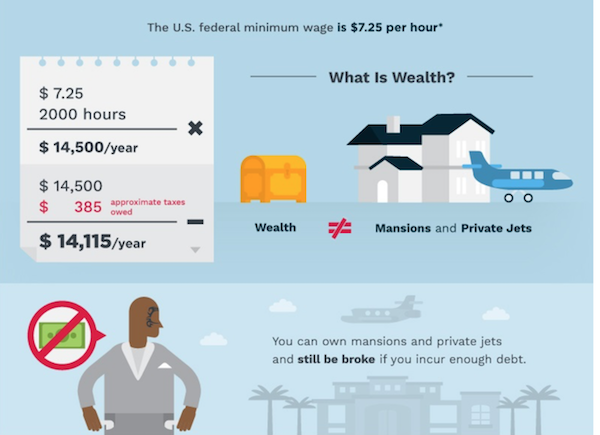
If you are reading this, you probably don't earn minimum wage and already have some form of savings. It puts things into perspective though, if you are willing to cut back on some expensive luxuries your savings rate can increase dramatically - How You Can Build Wealth on Minimum Wage. I suppose the question is how badly do you want to be financially independent?


Home again, home again, jiggety-jog. Stocks across Asia are on balance higher across the board. Where we are likely to end up from here, your guess is as good as mine.


Sent to you by Sasha, Byron and Michael on behalf of team Vestact.

Email us

Follow Sasha, Michael, Byron, Bright and Paul on Twitter

078 533 1063
Feeling Moody about SA

"Bondholders (i.e. who the company owes money to), are either forced to take a haircut (cents in the Dollar) or take equity. Equity holders are normally wiped out. In the case of GM, they did (and still do) have major pension fund obligations to meet. i.e. to pay their retirees. As medical health has improved markedly, people live longer."


To market to market to buy a fat pig The Rand weakened overnight and then strengthened through the session. Politics and sentiment collide with the markets, there are people making real life decisions on the ground. Whether or not to invest in something that is cheaper and lasts three years, or whether to buy the equipment or install something that lasts 5 years or more. There is much that has changed for the positive in South Africa over the last quarter of a century, a lot of it is a vibrant and cheerful youth, that is demanding. You get to see a lot of that in the urban areas.

And then there was a report by Moody's, another one of the ratings agencies - Moody's places South Africa's Baa2 ratings on review for downgrade. That was a couple of night's back. Their rationale is simple and I guess to the point: "Changes within a government do not generally signal material changes in a country's credit profile. Here, however, the timing and scope of the reshuffle raises questions over the signal they send regarding the prospects for ongoing reforms, the underlying strength of South Africa's institutional framework, and the fragile recovery in the country's economic and fiscal position."

Why should one care about what a ratings agency thinks of sovereign creditworthiness? Think of it this way. You have a pension. Your pension fund has obligations to meet monthly, i.e. to pay out their pension fund holders their monthly salaries. They need income by way of dividends and interest payments from fixed income instruments, that includes cash, property rental payments and of course debt issuances by both governments and businesses. They can also sell assets to shore up cash reserves.

Some debt is more risky than others, for instance, General Motors, one of the most powerful businesses in the world once upon a time, went bankrupt and "reorganised". A Chapter 11 bankruptcy, mostly used by big institutions. At the time of the GM bankruptcy, the company reported nearly 173 billion Dollars worth of debt and obligations and only 82 billion Dollars of assets, you can read the Wiki entry - General Motors Chapter 11 reorganization.

Bondholders (i.e. who the company owes money to), are either forced to take a haircut (cents in the Dollar) or take equity. Equity holders are normally wiped out. In the case of GM, they did (and still do) have major pension fund obligations to meet. i.e. to pay their retirees. As medical health has improved markedly, people live longer. And pension fund obligations run longer than their actuarial calculations. In other words, they have to pay more people for longer. The successes of the healthcare industry was and is a series of own goals for the GM pension fund. The financial crisis was the last straw, sales cratered and the company folded.

In the lead up to GM folding, bondholders would have looked for advice of whether or not the rather "cheap looking" bonds of GM offer value. What is the ability of the organisation to pay back their money, to meet their coupon or interest payments? That is the function that credit ratings agencies fulfil. They let the investment world know. The advice is either the dumbed down press release, or you can actually buy (in this case, the Moody's document is 250 Dollars) the report. It may be the best (or worst) 250 Dollars you ever spend. Their advice is paid for, by investors who have much to lose or gain, by owning sovereign bonds of multiple different countries.

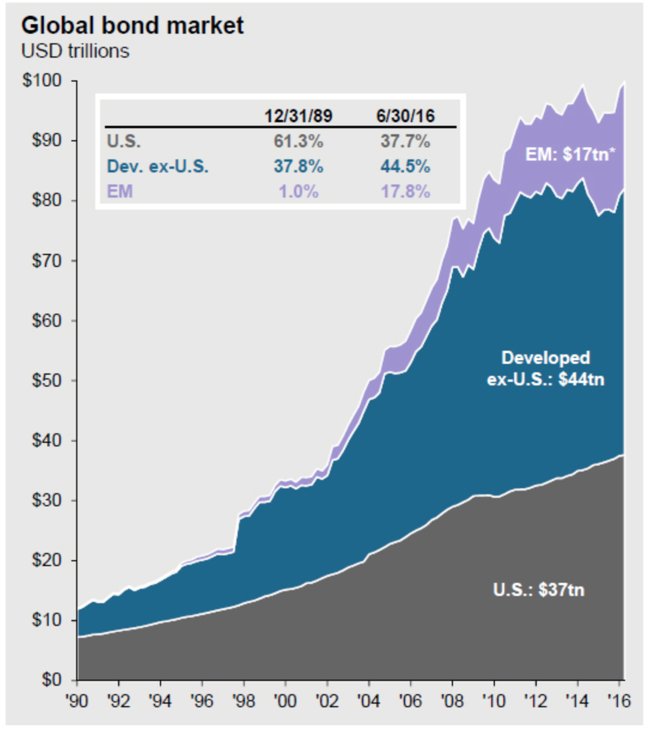
For instance, in the US (as per the third quarter of last year - Debt securities issues and amounts outstanding, in billions of US dollars), there is nearly 38 trillion Dollars in debt securities. Nearly 16.8 trillion is US government, 15 trillion of that is financial institutions and 5.83 trillion is non-financial corporations (like GM of course). The pool is very deep and very liquid. It suddenly makes our 2.3 trillion Rand (170 odd billion Dollars) competing for these flows look hard. South African debt issuance is less than half a percent of total US issuances. So ..... you see what I am saying? And if foreign ownership of Rand issuances is 35 percent, those folks have multiple choices. In a deep and liquid pool. See what I am saying?

There is apparently 217 trillion Dollars of global debt, 100 trillion Dollars worth of government debt. Our 170 billion Dollars is a drop in the ocean. Courtesy ZeroHedge (I know, my least favourite place), is the graph of the global bond market:


I think the only point is that people have choices. That is all that I am trying to say. If they are lead to believe that the debt is riskier, then they will go elsewhere. Remember of course that debt issued is an asset elsewhere, something that the person lending the money knows. They expect their capital and interest payments to be honoured, the person borrowing the money has every intention of doing exactly that, paying it back.


Stocks in Jozi, Jozi added nearly four-tenths of a percent by the close. Amplats, AngloGold Ashanti and South32 were the best performers on the day, Mediclinic, Bidcorp and Aspen were not. There were quite a number of 12 month lows, the JSE (the company) share price continues to rattle lower, Remgro too. Noticeably, Netcare and Life Healthcare (involved with rights issue currently) are on that trajectory.

In the 12 month high category, we saw Richemont, Sappi, Northam, Mondi and Exxaro, all companies that benefit from a weaker Rand. Exxaro may benefit from the flooding in the aftermath of the terrible weather in Queensland, Australia. How so? Well, with some of the big coal country being flooded and temporarily unable to produce, coal prices may head higher for a while. That is good for Exxaro, see - After Australian cyclone, coking coal spikes as China chases U.S. supplies.

Resources added nearly a percent and a half on the day, as a collective the 10 companies there are up nearly ten percent in 7 trading sessions. Over five years resources 10, the index of the 10 biggest, is still down around one-third. The overall market is up 56 percent in that time, Industrials are up 116 percent. It matters what you own, if you own the overall market and continue to invest over time, you will find the index helps most retail investors than structured products, that are expensive and opaque.


Stocks across the oceans, in New York, New York, finished higher, driven by energy and non-cyclical consumer goods. The Dow closed around one-fifth better on the day, the broader market S&P 500 and the nerds of NASDAQ had more muted returns, a winning session nonetheless. Did you see this? Richmond Fed President Lacker says he was involved with Medley leak, announces immediate resignation.

Amazon had another good session, news came late that they were going to be streaming some Thursday night NFL matches. Not really that big, in monetary terms, 50 million Dollars is not "huge". It is however another sign that the streaming businesses, in this instance, Amazon Prime, are looking at content in the sports arena. It may mean that the company has users that are able to pick and choose. Choice is a good thing for the consumer, it drives prices lower and improves the experience. For the record, Apple clocked an all time high. The market cap is now comfortably over three-quarters of a trillion Dollars. Or over ten trillion Rand, 10.242 Trillion Rand. Wow. That is quite a lot now, isn't it?


Linkfest, lap it up

How would this work, Robot tax? Surely the business pays taxes? One San Francisco Politician is exploring a tax on robots

My goodness. A diamond that is so big that it weighs your hand down. You could not really wear this, could you? Sotheby's Sells Record $71 Million Diamond to Chow Tai Fook.

Talking of streaming and sport, ESPN has the most to lose if they don't adapt to the changing landscape. This is a comprehensive look at ESPN, where they have come from and going - ESPN Has Seen the Future of TV and They're Not Really Into It

The story starts out as follows: "What can blind tadpoles teach us about improving organ transplants, correcting birth defects and curing cancer? A lot, it turns out." Migraine drug activates transplanted eyes in tadpoles. Not science fiction!


Home again, home again, jiggety-jog. Stocks locally have started marginally better. Stocks across Asia are higher on balance. The sun came up. Brexit was still real. And some less desirable candidates in France lost some ground in a presidential debate last evening. We shall see my friends.


Sent to you by Sasha, Byron and Michael on behalf of team Vestact.

Email us

Follow Sasha, Michael, Byron, Bright and Paul on Twitter

078 533 1063
Tuesday, 4 April 2017

You've been junk'd

"Junk is not investment grade. Junk means that the pool of lenders is smaller, those willing to take sovereign risk at that level is less. It also means that any new debt has to be issued at a higher interest rate, to compensate the investor for the risk they are assuming. Which means that the government pays more in debt, rather than using the funds for infrastructure development."


To market to market to buy a fat pig You've been junked! I mean punk'd. Whatcha gonna do with all that junk, All that junk inside your trunk ... One is a Black Eyed Peas song and the other is a TV show from over a decade ago, that ran on the MTV network here. Yowsers, that old? The other, the junked, well .... that is real. The credit ratings agency, Standard & Poor's decided South Africa Long-Term Foreign Currency Rating Cut To 'BB+' On Political And Institutional Uncertainty; Outlook Negative. You may well need to sign up, it is for free and you get to read the whole statement.

It is an opinion. Investors of course can do what they want, there are another two ratings agencies that are likely to act in the coming days possibly. Most importantly for us, as per the release: "We are therefore lowering our long-term foreign currency sovereign credit rating on the Republic of South Africa to 'BB+' from 'BBB-' and the long-term local currency rating to 'BBB-' from 'BBB'." So local debt still carries a credit worthy rating, the foreign denominated one comes with a warning signal. Junk is a strong word for non-investment grade. It doesn't mean you cannot pay your debts, it means that you are going to struggle to pay your debts.

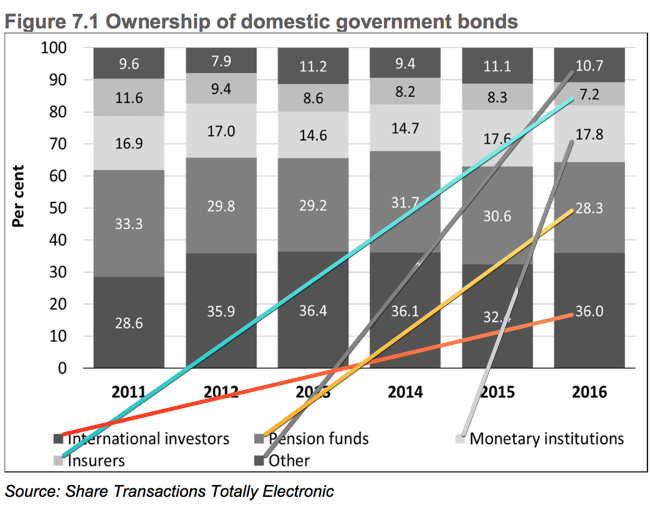
Government debt, like in many places around the world, has risen in recent years, S&P does expect it to stabilise in the coming years: "On a stock basis, general government debt net of liquid assets increased to about 48% of GDP in 2017 from about 30% in 2010, and we expect it will stabilize at just below 50% of GDP in the next three years." What does local denominated debt look like? Michael found a "nice" graphic which I tried my best to draw lines on:


As per the Standard & Poor's release, it breaks it down: "Although less than one-tenth of the government's debt stock is denominated in foreign currency, nonresidents hold about 35% of the government's rand-denominated debt, which could make financing costs vulnerable to foreign investor sentiment, exchange rate fluctuations, and rises in developed market interest rates. We project interest expense will remain at about 11% of government revenues this year."

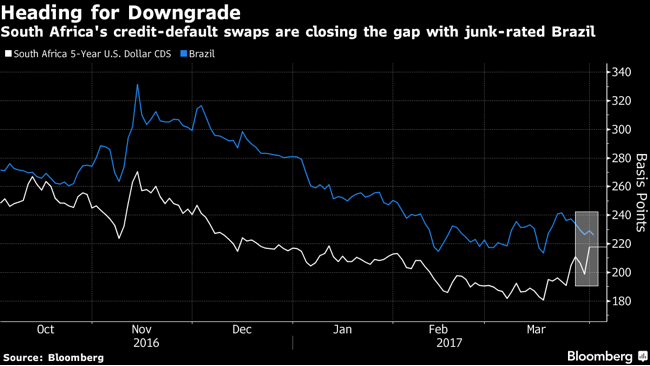
There may be investment mandates by some of those holding Rand denominated debt that does not enable them to own debt at a certain credit rating. They may be forced sellers at some level. Although, having said that, the credit default swaps (insurance on our sovereign bonds) spreads have been widening over the last "little while", as per this Bloomberg graph below (Traders Prepare for South Africa Credit Downgrade to Junk: Chart):


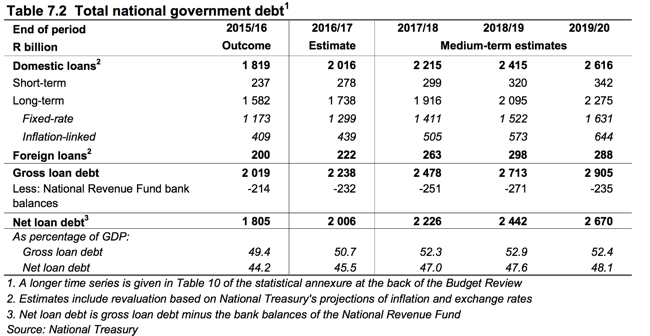
What about the foreign denominated debt? The one that has been downgraded to "junk"? Estimates by Treasury are that 222 billion Rand in foreign loans, relative to 2.016 trillion Rand in Domestic loans. If the medium term estimates expect that to grow, it may well come at a cost. Here is a table that Michael captured from the full budget review in February 2017:


It seems that in recent days and weeks, folks were preparing for this. Which is natural, the market does anticipate events. OK, so what does this mean? Is junk bad? Junk is not investment grade. Junk means that the pool of lenders is smaller, those willing to take sovereign risk at that level is less. It also means that any new debt has to be issued at a higher interest rate, to compensate the investor for the risk they are assuming. Which means that the government pays more in debt, rather than using the funds for infrastructure development, for instance. Greater infrastructure advances economic growth, which equals higher tax collection as a result of greater economic activity. Which equals more money to use for social programs.

In the end the poor pay the price of a lack of policy. A lack of investment and a lack of growth means higher borrowing rates and more money spent paying interest, currently we pay 11 percent of revenues by way of interest. Less money for schools, clinics, roads and so on, if you are paying more interest. Equally, imported inflation means that we have to pay more for food and energy. The projections, at least by Standard & Poor's, point to a low growth trajectory to 2020 and an inflation rate around five and a half percent. There is little wriggle room for the Central Bank to provide stimulus.

As we look at it, the Rand is trading at nearly 13.90 to the US Dollar, having lost over ten percent in 8 days. 17.26 to the Pound Sterling. 14.82 to the Euro. These are levels seen at the end of last year. You can imagine that there is likely to be a continued negative reaction that may result in further weakness. Know that, not necessarily by design, our portfolios are more geared to a weakening currency. As such, we expect client values in Rand terms to not be as impacted in this weaker environment, this is also due to our lack of exposure to the banks and financials, that part we have chosen. If you have queries and questions, feel free to direct them at us.


Across the seas and vast blue oceans, in New York, New York, stocks finished comfortably off their worst levels of the session. The Dow Jones Industrial average lost 0.06 percent, the nerds of NASDAQ was down nearly one-third of a percent, whilst the broader market S&P 500 ended the session in the middle of those two, down 0.16 percent. The biggest story on the session was without a doubt the Tesla production numbers (see yesterday - Q1 production numbers), as well as the seemingly cryptic tweet from Elon Musk:


What does he mean by all of that? Well, for starters, check out the Tesla, Inc. Short Interest.


And the upshot of it all? Tesla stock up seven and one-quarter of a percent. Bigger than Ford, the market cap that is. A short squeeze. The message is that Tesla are morphing into something else, the share price may have run exceptionally hard, and is very volatile at the best of times. As a holder, you have to accept this. Josh Brown, aka the "Reformed Broker" responded to someone when making the comparison to Ford and Tesla: "Apples and Oranges. Tesla is a battery company or a platform company I am told. Ford makes metal carriages." And there you go.


Linkfest, lap it up

OK, this is complicated. Very complicated. Worth a read and maybe you have an opinion on this - Age Makes You Happier - And Poorer. The short message, don't get grumpy and conservative as you get older, as an investor that is. For kids and dogs running on your lawn, that is different.

How much would you pay for a piece of history? It turns out quite a lot: Relatively Pricey: Einstein Letter Fetches $54K at Auction.

This was a fun read this morning, it shows the weird logic that is used when the investment community is compared to every day life. There seem to be some double standards - What If Other Areas of Life Operated Like Wall Street?


Home again, home again, jiggety-jog. We have started marginally better here, around one-third of a percent to the good. Banks and SA inc. are down, Rand hedges are flying. It is a tale of two halves, again.


Sent to you by Sasha, Byron and Michael on behalf of team Vestact.

Email us

Follow Sasha, Michael, Byron, Bright and Paul on Twitter

078 533 1063